Things have been a little different in Ed and Lise’s world for the past couple weeks. We did a short post-Thanksgiving trip back to Delaware, via family stops in Pennsylvania. Delaware was fun as usual. Did some work around our trailer, got in a little birding giving us three new species for the year, and soaked up the shore culture. Not much photography time but when you’re walking Cape Henlopen Point in some wicked winter winds, photography doesn’t really work.
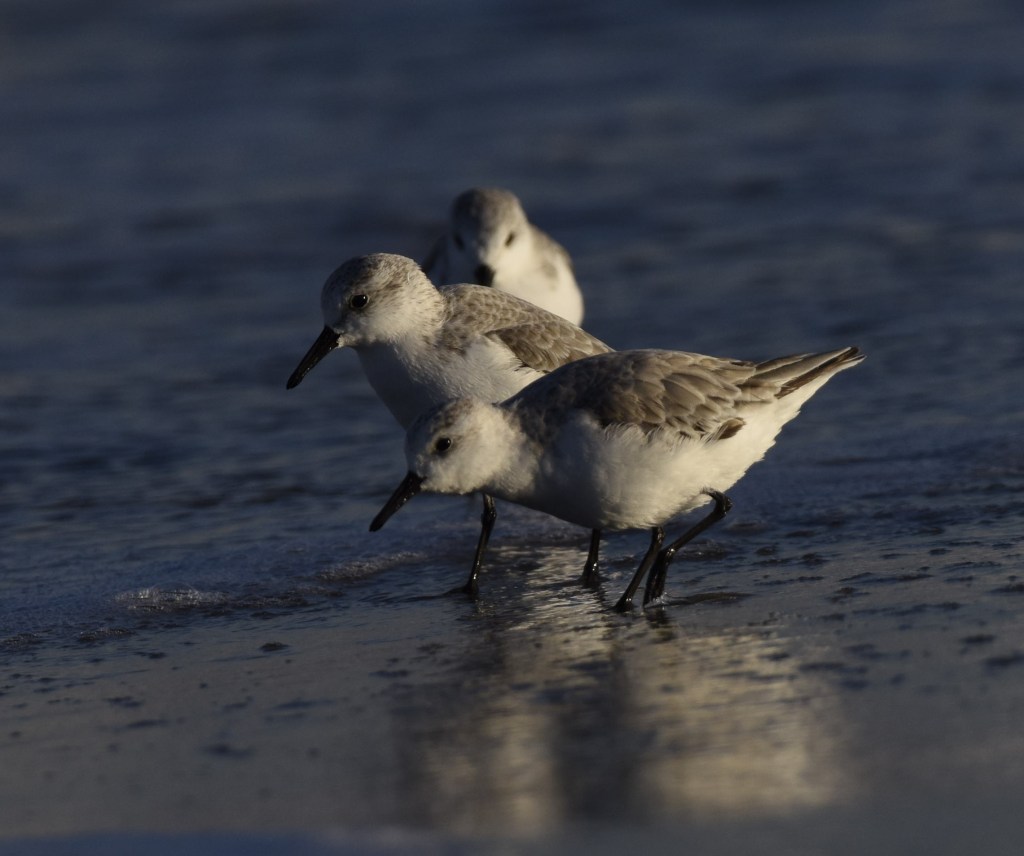
Sanderlings on Cape Henlopen Point.
Dunlin at Cape Henlopen Point.
A couple days after returning, I had eye surgery. Last September, I had cataract and laser correction surgery. That surgery revealed some other issues in my eyes. While poking around in my left eye, my eye doctor found a hole in my macula. Not good. He referred me to an eye surgeon down in Indy. The surgeon informed me that not correcting the hole soon would lead to a large dark spot in the middle of my vision. So, back under the knife I went.
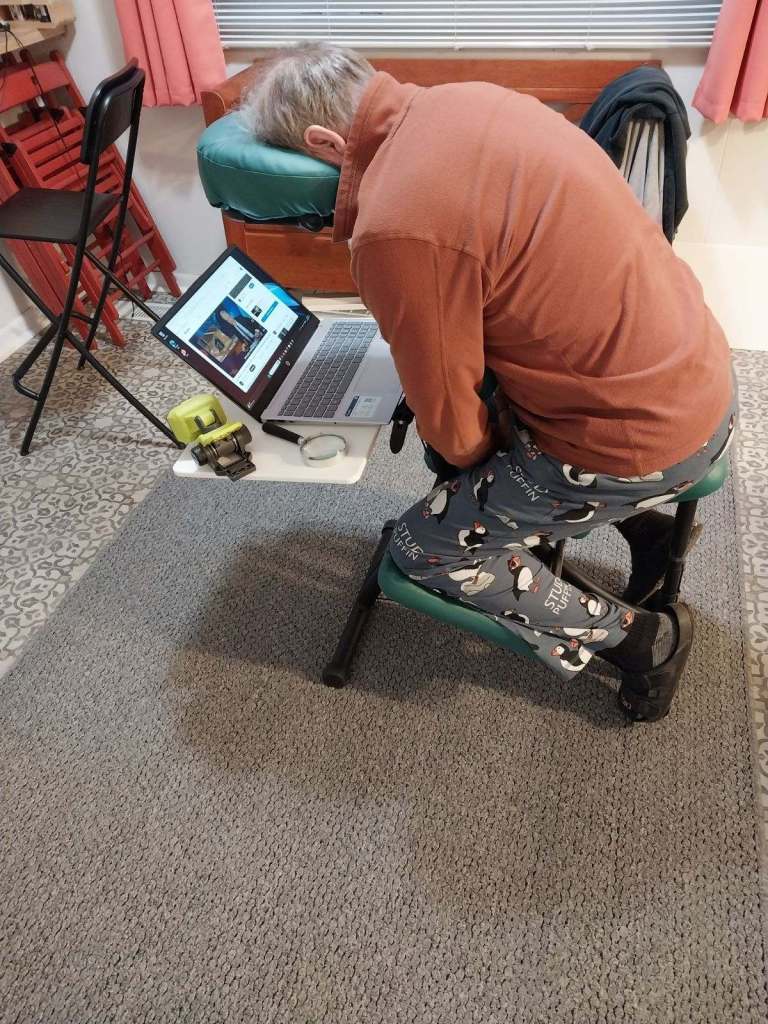
Part of the surgery required inserting a nitrogen gas bubble into my eye. The bubble is supposed to apply pressure on my macula, forcing new tissue into the hole and holding it in place. This has resulted in some interesting consequences. Starting with having to be face down 24 hours a day for a week. I was ambulatory. I could walk around but had to keep my nose pointed towards the floor. Using the good eye I could see my feet, but nothing directly in front of me.
We rented a contraption that looks like a modified massage chair for sitting face down. It did the job but would have been better if it had casters. Then Lise could have kept me oriented towards the sunlight. Or push one through the neighborhood on a walk. Maybe wheel me through the grocery store aisles. Or play crack-the-whip on the playground. Instead I just sat around like a potted plant.
My life for a week.
Another interesting consequence of a gas bubble in your eye is highly altered vision. Seeing through the bubble is like looking through a powerful magnifying glass. An inch away from my eye I can see incredible detail. More than an inch away and the world goes crazy blurry. We evolved binocular vision for a reason. It’s a really good thing. It keeps you from walking into things or ramming the car in front of you. Unfortunately, binocular vision requires two good eyes that focus in roughly the same plane. Binocular vision is a benefit of human evolution that I do not enjoy right now. Also, having eyes that focus at very different distances tends to throw your balance off.
Eventually the gas bubble will dissipate and my vision should return to something close to normal. At least normal for my eyes. This will take several weeks. Apparently starting as a line across the top of my eye, slowly sinking lower across my eye and bringing me clear vision. Until then I can’t ride in airplanes. Or go to high elevations. The change in air pressure could cause the bubble to make my retina detach. That would be bad and I really do not want that to happen. Luckily elevation change is not an issue in northern Indiana. Highway overpasses count as an elevation change here.
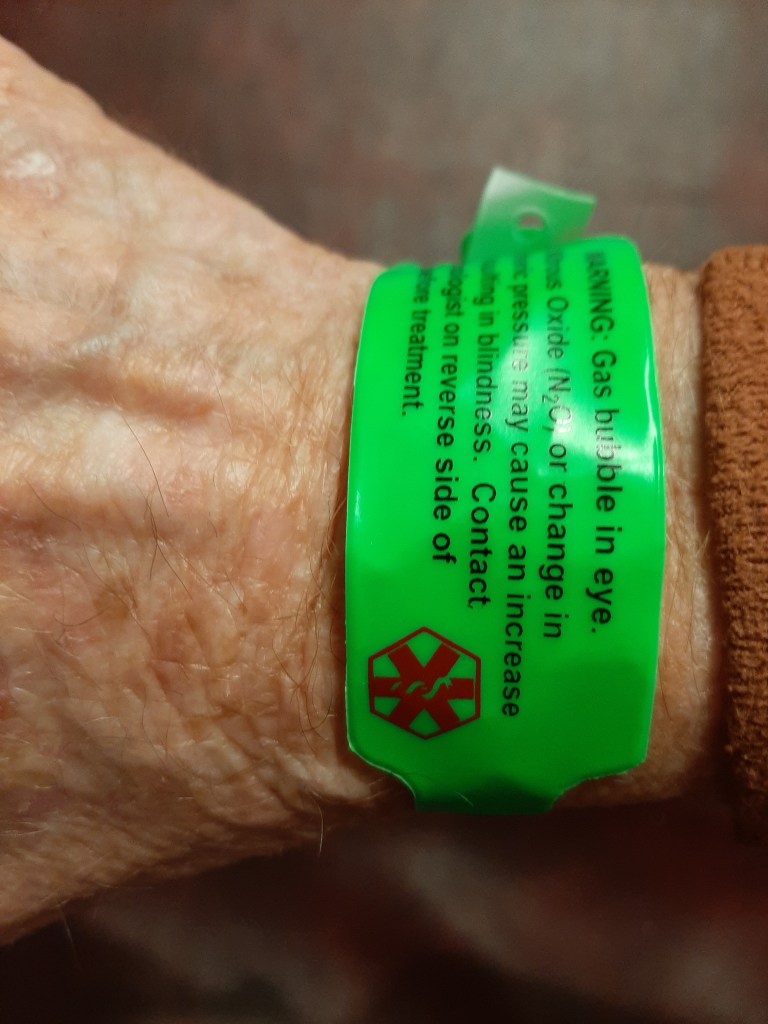
And finally, I have to wear a fashionable chartreuse wrist band for the next several weeks. In the event of something requiring medical care everyone will know I have a nitrous oxide gas bubble in my eye. Just in case they decide to put me in a decompression chamber to treat the bends or something.
My wristband to inform those that need to know to not put me in a decompression chamber.
A few weeks ago we did an eight-day trip to Puerto Rico, the Rich Port. We spent several days with Molly and Mitchell, then a few more by ourselves. We stayed a couple days in Old San Juan, a couple days on Vieques Island, and a couple days on the west side of the island.
I like seats where I can make sure the engine is still attached. This is a Boeing aircraft after all. Never know what may fall off.
Puerto Rico is part of the Greater Antilles Archipelago, about a thousand miles southeast of Miami. Way closer to the equator than West Lafayette, IN, and a lot more fun. Especially in November.
Puerto Rico was originally settled by the Taino people. They lived on the island for centuries until Hell came to them in the form of the Spanish. Through diseases, slavery and outright murder, the Spanish colonization essentially obliterated the Taino culture. Apparently there was some interbreeding though. A very large portion of the current population has some Taino genes in them.
Our first couple days were in old San Juan. Old is the operative word. The Spanish founded San Juan in 1521. That’s less than 30 years after Columbus arrived in Hispaniola. For perspective, the Pilgrims landed at Plymouth in 1620. One shopkeeper was lamenting her remodeling problems. Her shop building was over 300 years old, and not designed with electricity or indoor plumbing in mind. Every day provided a new remodeling adventure.
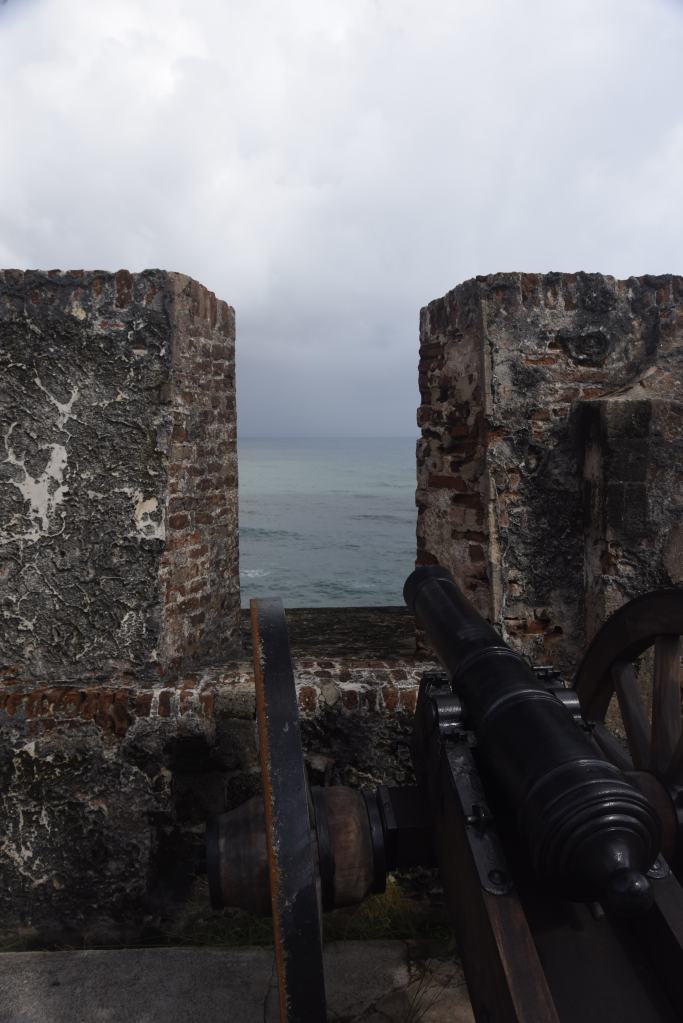
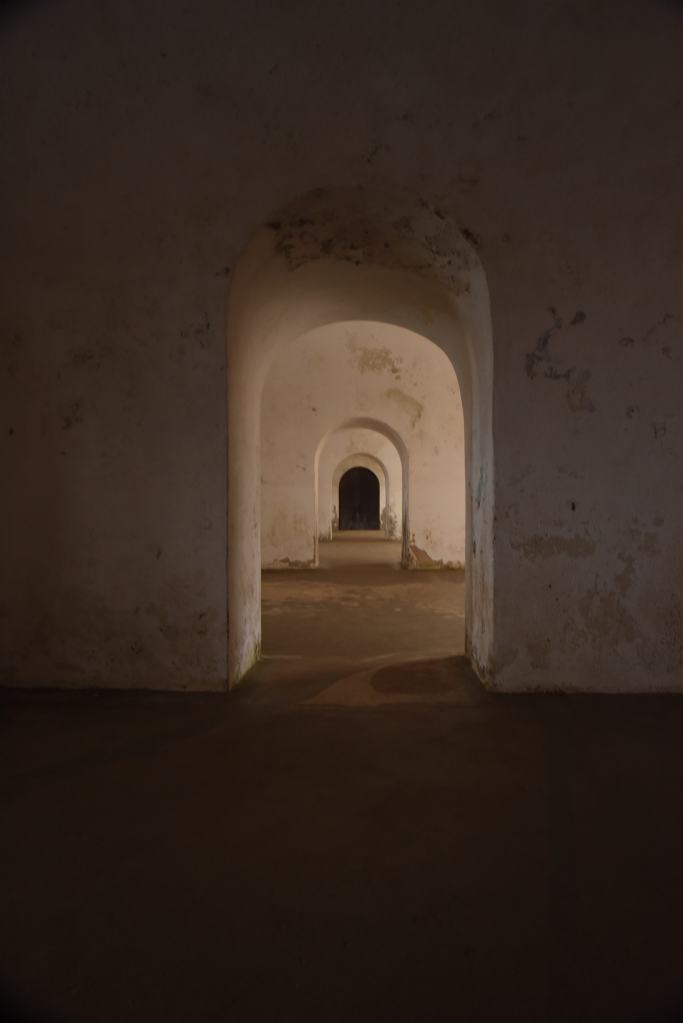
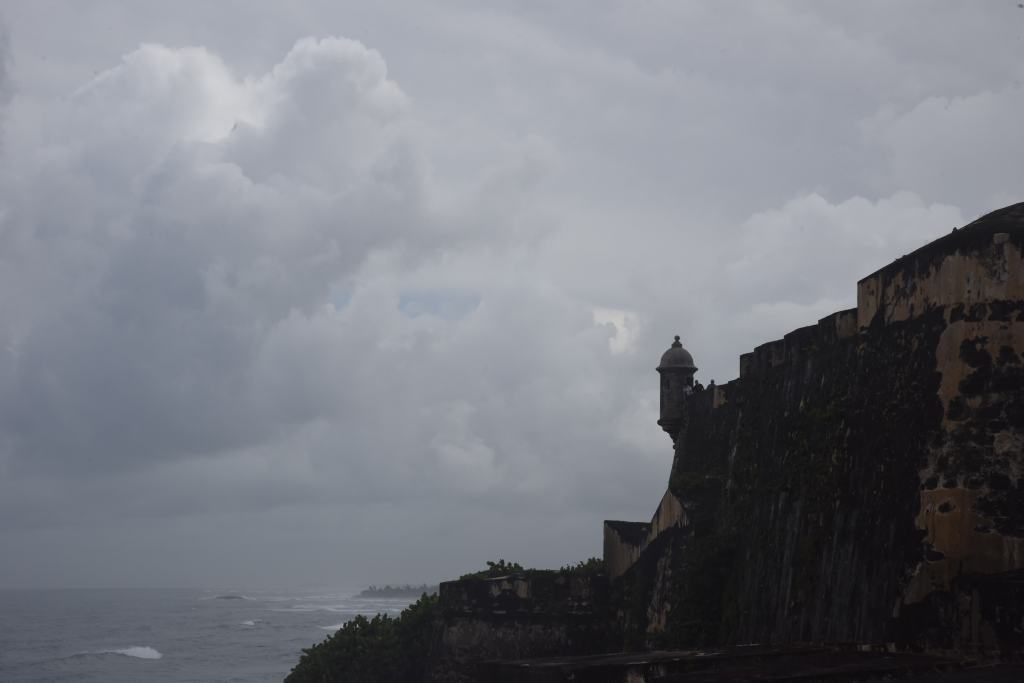
Castillo San Felipe del Morro. The fort built by the Spanish in the 1700s to guard the port. Used by the U.S. until the end of WWII. Wouldn’t it be fun to be in the lookout towers waiting for an English bombardment or the next hurricane?
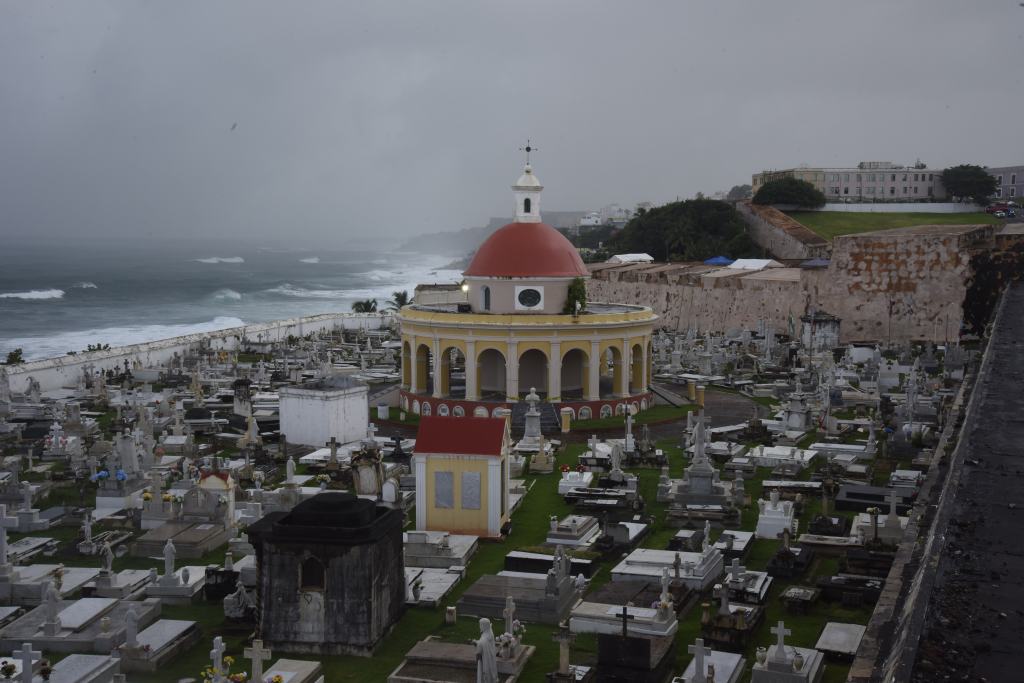
Cementerio Santa María Magdalena de Pazzis, at the base of the fort.
Puerto Rico was a key strategic holding for the Spanish as they colonized the New World. The U.S acquired Puerto Rico as a prize from the Spanish-American War. We acquired other territories at the same time, like Cuba and the Philippines, that have since become independent nations. But, because of its strategic significance, we kept Puerto Rico. So now Puerto Rico is a U.S. territory and its inhabitants are U.S. citizens. Sort of. They don’t get to vote for president and have no voting presence in the U.S. Congress. Kind of like Washington DC residents except that DC residents have to pay federal taxes.
Puerto Rico is hard to describe succinctly. It’s a place of contrasts. Kind of a mixture of the industrial world and the second or third world. It is not a rich place. Over 30% of Puerto Rico’s population lives below the poverty line. Compared to individual U.S.States, Puerto ranks below Mississippi in terms of wealth. That’s low. One would think that Mississippi would support Puerto Rican statehood to elevate Mississippi’s standing in the union.
While not wealthy, their limited access and multi-lane highways are as good as anything on the mainland. Actually better than some U.S. states I have driven in. The one exception is exit sign placement. For some reason the exit number signs are placed after you pass the exit lane. Instead of “Exit 7” the sign should say, “You just missed exit 7”.
Roads off the highways are a different story. Narrow, curvy pothole-filled roads would make West Virginia drivers feel right at home. I will say that everywhere we drove, Puerto Rican drivers were incredibly courteous and forgiving to confused mainlanders. Except for maybe the person that fully stopped in the limited access highway passing lane because they were about to miss their exit. We blew past just as he stopped but could see the cars piling up behind him.
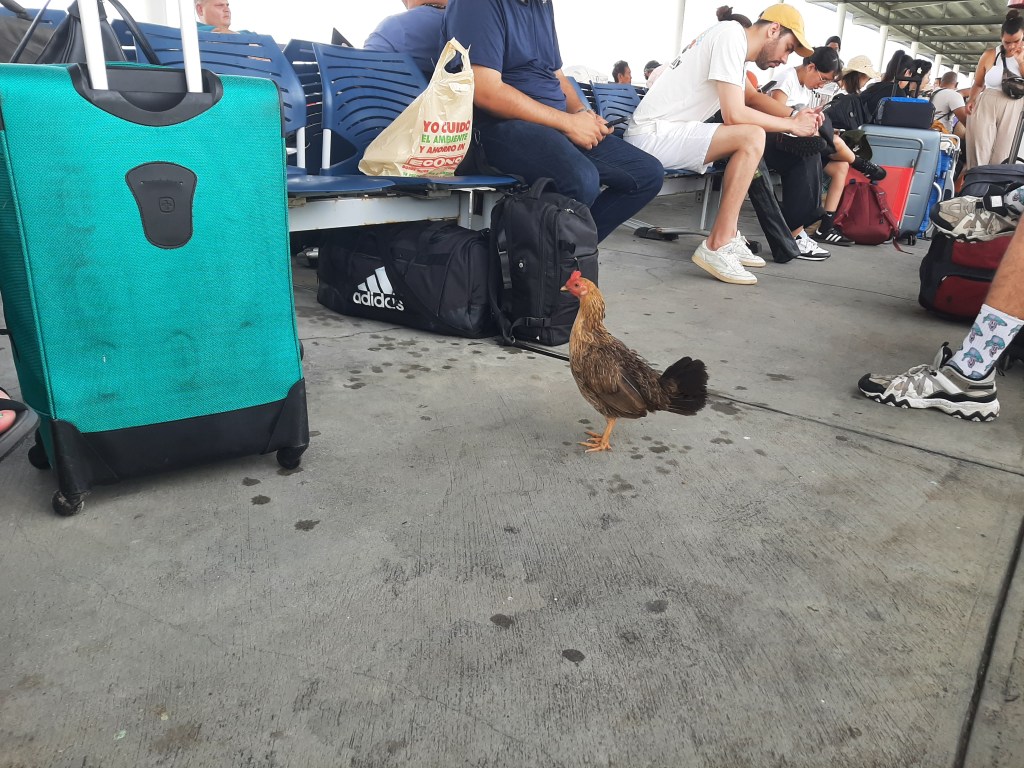
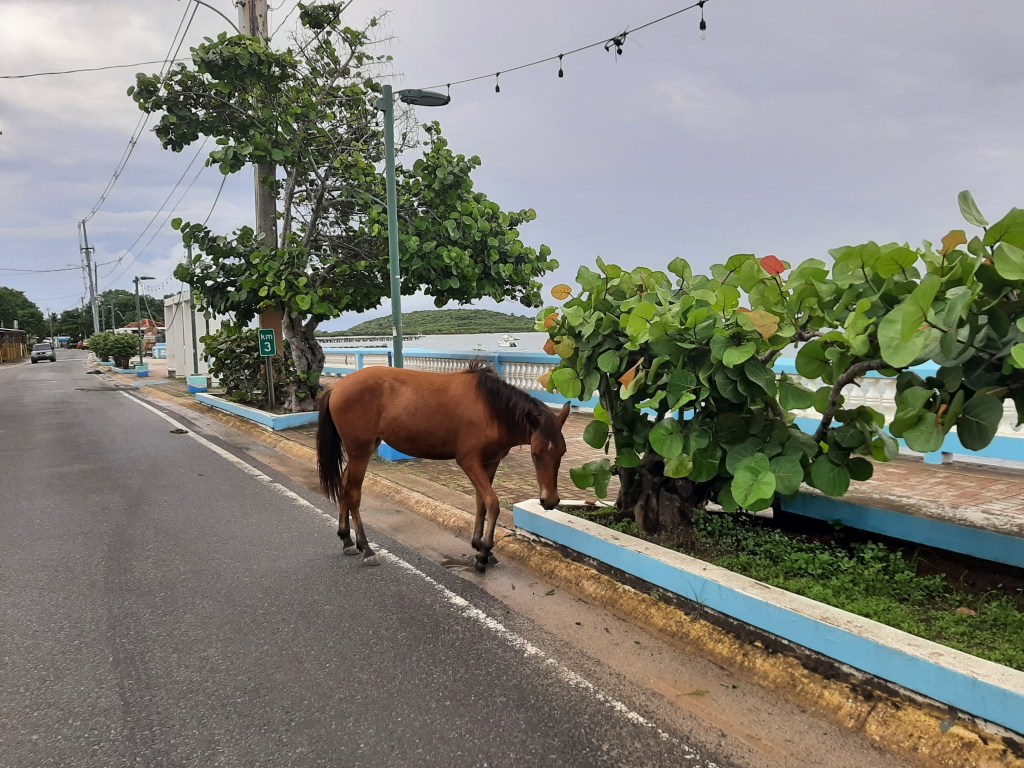
Then there’s the chickens. Chickens were roaming loose almost everywhere we went. They didn’t seem to belong to anyone. It’s not like they had brands or anything. They were a noisy constant presence. Adding to the free roaming fun, Vieques Island had free ranging horses strolling around to compliment the chickens. Not as noisy as the chickens but a lot larger excrement piles.
Chickens hanging out.
Horses hanging out
Puerto Rico has some systemic problems that are not easily fixed. Like high unemployment. And a failing medical system. Puerto Rican doctors and nurses can hop to the mainland and make a lot more than they do on the island. The island is losing its population. As people leave, there are fewer people to support systems like the medical system. That gives people more reason to leave, creating a downward spiral. But despite the negatives, people we met loved their homeland. And we met a number of ex-pats that love living there. They are there by choice and can’t see living anywhere else.
We had a great time. The food was good, the rum was great, the beaches and natural areas fun, and the weather was tropical. We missed most of hurricane season but we did have rain every day. Temperatures were pleasant enough that the rain was a minor nuisance, not a vacation killer. The only weather disappointment was the cancellation of our bio-bay tour because of lightning.
Enjoying some raw clams and oysters, ankle deep in rainwater at a roadside stand.
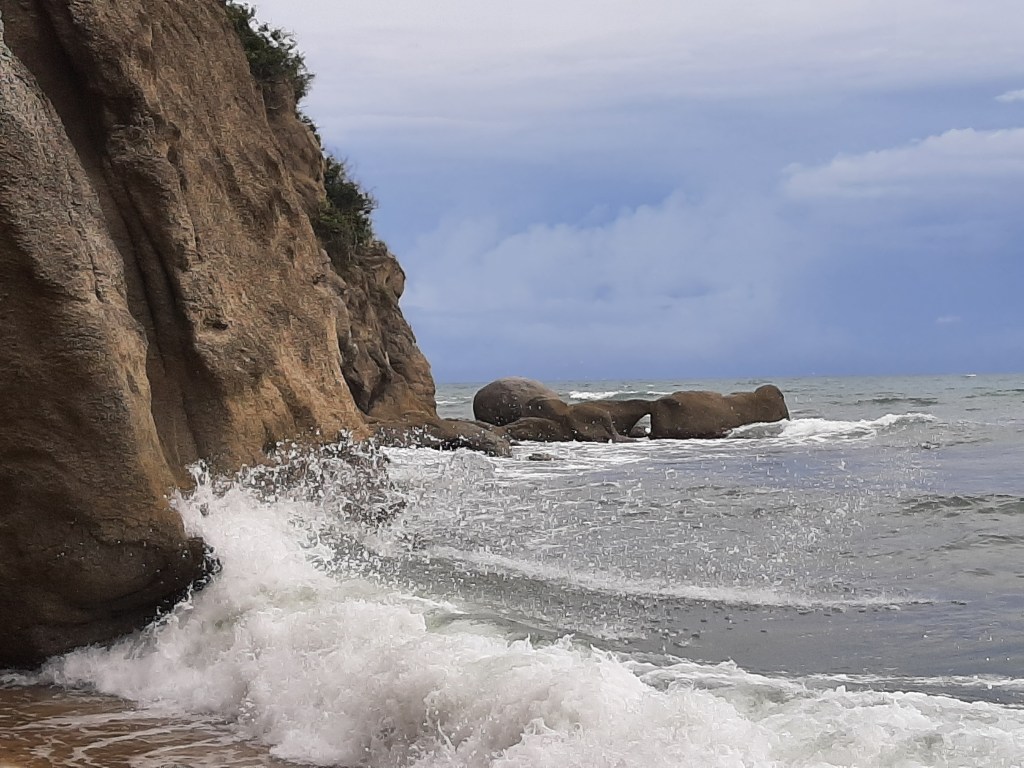
Enjoying a beach, Vieques Island.
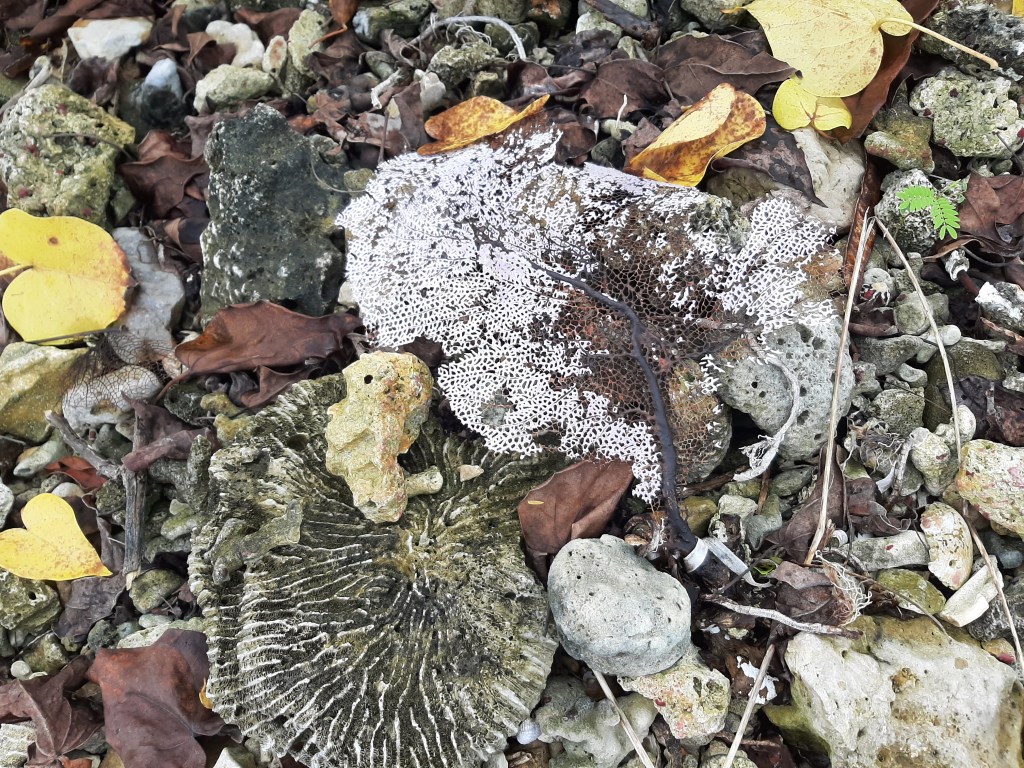
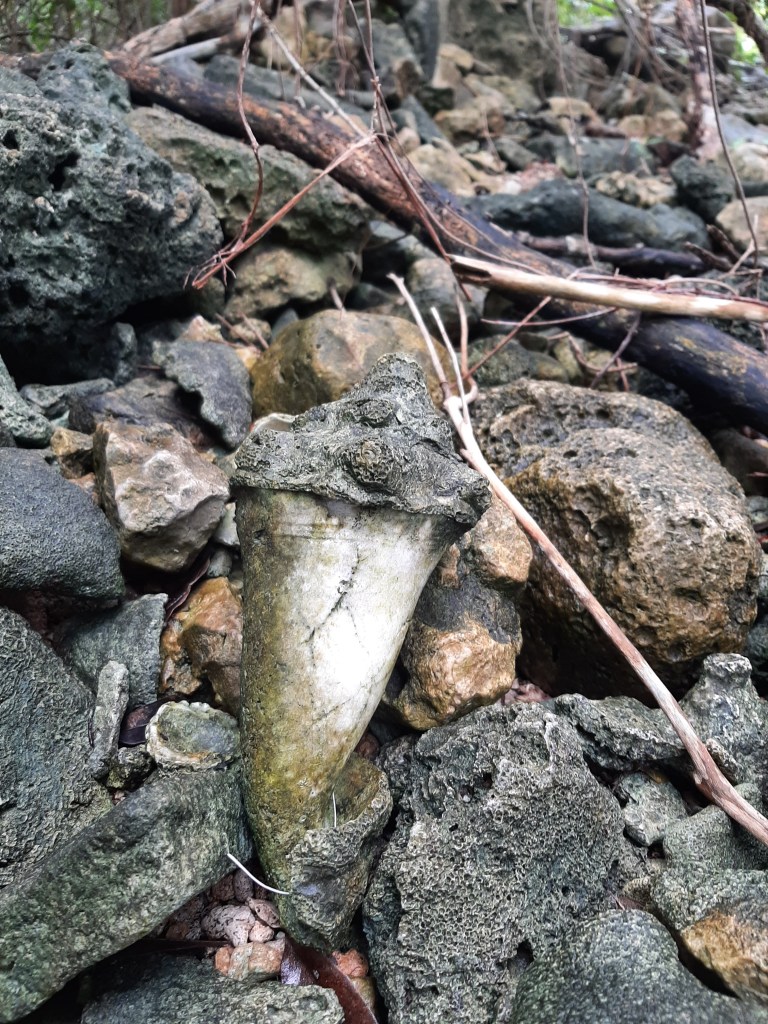
You never know what you’ll find beach-combing.
Washed up corals and hermit crabs.
High tide, Black Sand Beach.
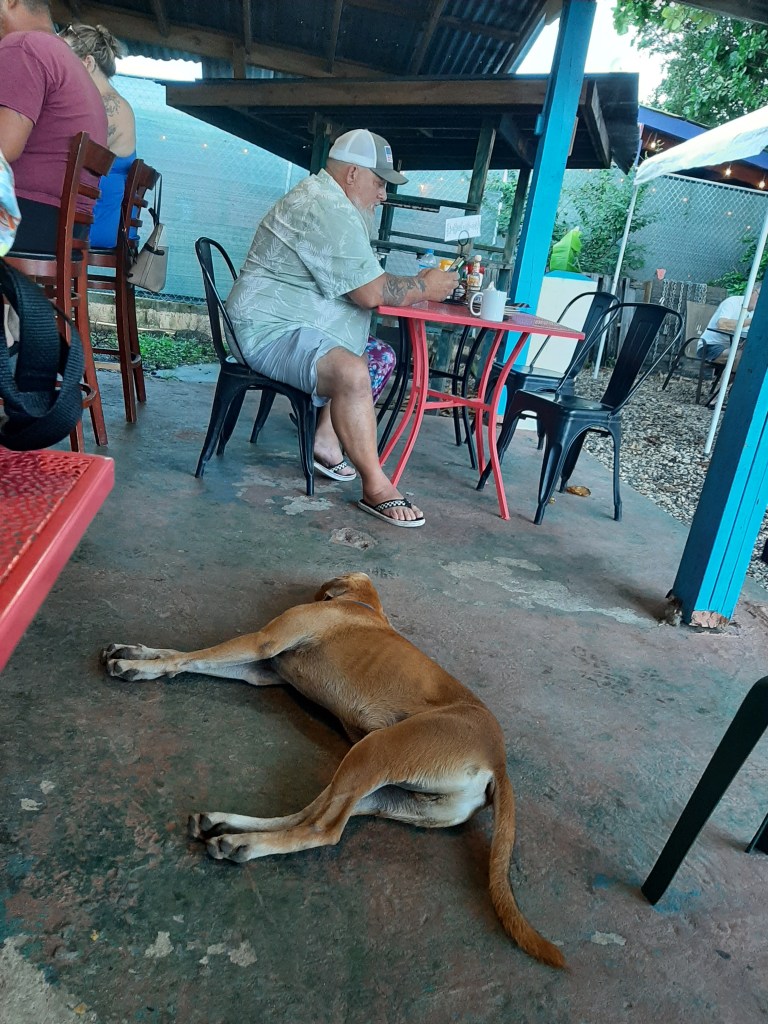
The clientele at our favorite breakfast place in Esperanza on Vieques Island. His name is Scooby. The dog, not the tourist guy.
The birding was good, but tough. Not being the breeding season the birds were not calling. Except the chickens who started about 5:30 AM. No vocalization means waiting for some movement to spot them. In forested areas the vegetation was thick, greatly reducing visibility. We both got over 30 new species for the year. Some were Puerto Rican endemics that were life birds for us. We would not have gotten that many species without the expert help of our guide Alcides Morales…who loves his home, even though he went three months without electricity after hurricane Maria.
Yet another post where I start off talking about how overdue my post is. This one is almost criminally overdue. But, sometimes things just conspire against you. Such is life. Suck it up and move on I guess.
I do have a medical reason for part of the delay. A note from my doctor if you will. A bit over a month ago I had cataract surgery. Cataracts, a fairly normal condition as one ages, is a clouding in the lens. The remedy is to break apart and remove the cloudy lens and replace it with a new clear lens. Instant brightness. Because I have some other eye issues they also did a little laser carving on my cornea. Which fixed my long distance vision but my close up vision is still miserably bad. Nowadays, both procedures are routine operations and event-less for most people. Emphasis on “most” people.
The procedure is done in two stages. Do one eye and a week later do the second eye. Seems logical. So I had the first eye done. Routine operation and nothing serious. Except I had one corrected eye and one not corrected eye. Which was highly interesting. By switching which eye I looked through I could get very different views of the world. The change in color intensity and brightness was stunning but more interesting was the actual change in color I saw. Especially on the lighter end of the spectrum. With the corrected eye, whites were brighter and almost had a bluish cast to them. Maybe the Rayleigh scattering that makes the sky blue? Looking through the uncorrected eye the same light colored object had a yellowish cast. Which makes me wonder – would Van Gogh see his pictures differently as he aged?
The vision difference between the two eyes made walking and driving difficult. So I popped the prescription lens for the corrected eye out of my glasses. My brain was still trying to process color differences between the eyes but at least the vision was now fairly similar between the eyes. In my shop I took off the glasses so I could cover both eyes with safety glasses. Which was fine until I was using a grinder to sharpen a tool. I had to look closely at the edge so I put the prescription glasses back on to look through the remaining bifocal. And then I turned around and went right back to grinding. With a missing lens. Sure enough, a few hours later my newly operated on eye was irritated.
When I went back to the eye surgeons they looked in my eye and informed me I had a tiny piece of metal in it. Even asked if I was grinding something. To remove the offending metal fragment they numbed my eye and put me in the examining fixture with my forehead and chin braced. Then a technician came up behind me and put her hand on the back of my head. No warm fuzzy feeling there. Next I saw the end of a stick coming at my eye and the doctor said, “I got it”. Then she looked again and said there was a rust trail in my eye that had to be removed. So she pulled out an eyeball dremel tool. Not much different than what a dentist uses in your mouth. Only this one requires a technician applying even more pressure to the back of your head to hold it in place.
Anyway, a couple days later I had the second eye operated on. Things seemed OK until a day later when Lise managed to elbow me in my newly operated on eye. Her pointy little elbow fit perfectly into my eye socket. It hurt. A lot. Nothing permanent, but it hurt.
As my eyes have been recovering from the surgery an interesting phenomenon has occurred. My eyes are cloudy when I get up in the mornings. Like I’m looking through a haze. By about noon the fog clears a good bit. The cloudiness is bad enough, but with increased light getting to my retina it can be blinding. For several weeks I couldn’t safely drive in the mornings. Or look at a bright computer or phone screen. My eyes would start watering. Your eyes have a layer of cells that transport fluid out of the eye. During the day, when your eyes are open, fluid can evaporate. All good. When you’re sleeping this layer of cells has to carry the fluid away. Lucky me, I have a very, very thin layer of cells and they can’t carry away the fluid. Not good. The fix is to have donor cells transplanted into your eyes. That just sounds like a lot of fun. Right now the condition seems to be slowly improving so we are in a wait and see mode. No pun intended.
Other than eyeball problems, our lives have been pretty hum-drum. Working around the house like building access ramps or painting the deck cover. I’d almost rather have eye surgery than do the painting. We’ve gotten a few short trips in and have entertained some visiting family and friends. The kinds of things that don’t allow time for writing blogs. We did get a trip back to Delaware for a week or so. Playing around in that artery clogging part of the country we enjoy so much
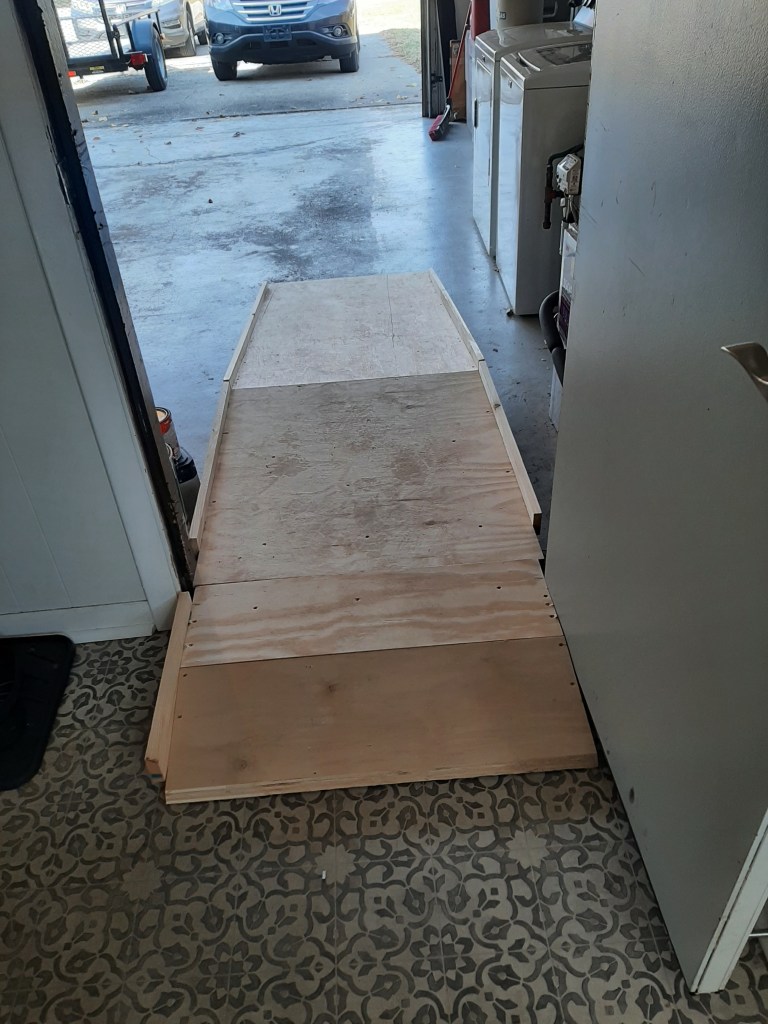
Handicap access ramp I built for the house
Lise painting the deck cover.
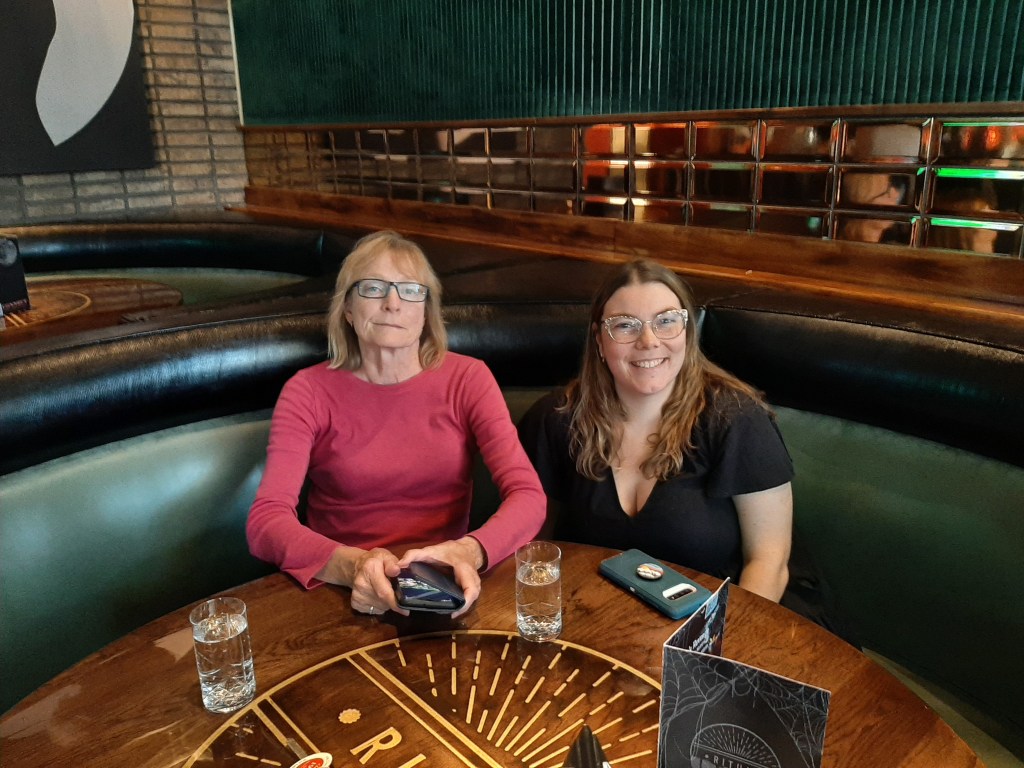
Entertaining our visiting friend Lindsay at Ritual cocktail bar, Lafayette, IN.
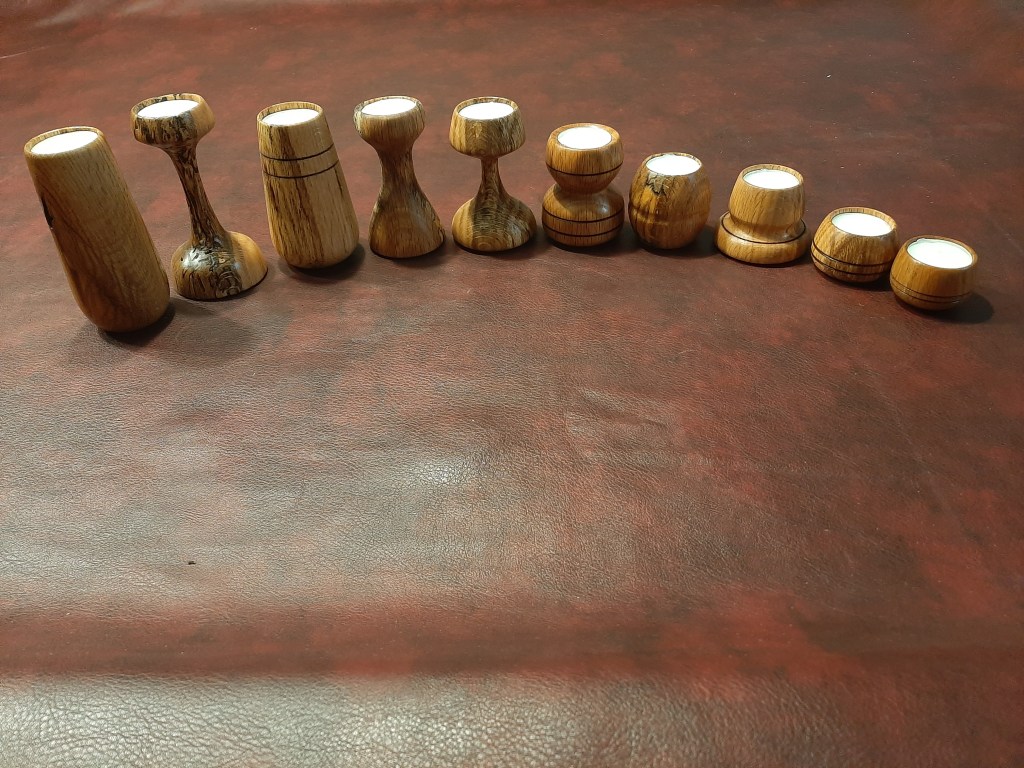
Tea candle holders I made for Lise’s annual Natural Gals trip.
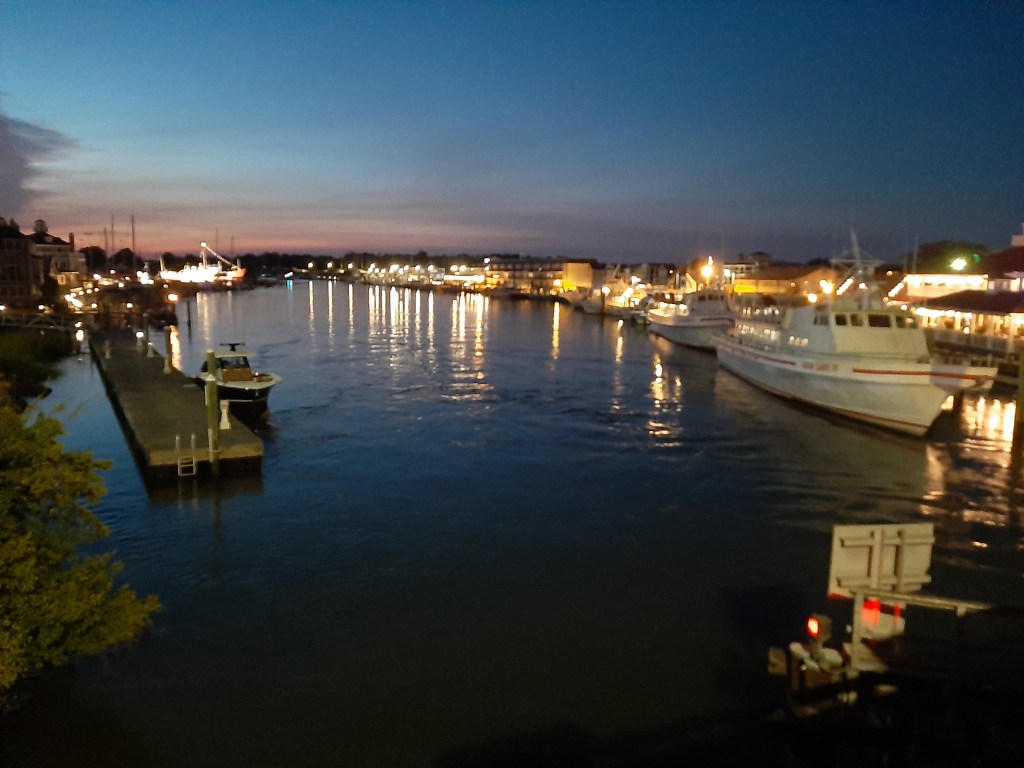
Looking down the Lewes – Rehobeth Canal in Lewes, DE.
Cape Henlopen State Park. The Delaware Bay to the left of the lighthouse, Atlantic Ocean to the right.
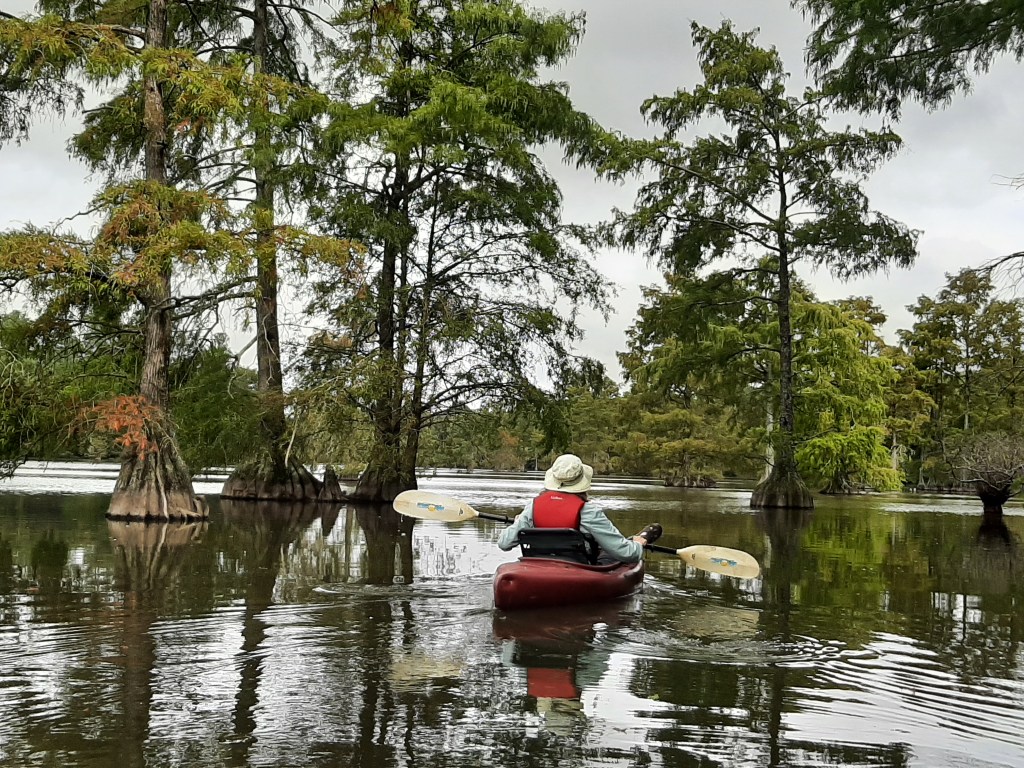
Paddling through the Cypress trees in Trap Pond State Park, DE
The regular breakfast guys at Heisey’s Diner, Lebanon PA. We stop in Lebanon to visit family when driving between Indiana and Delaware.
Then there’s the groundhog wars. Either I won or we are in a waiting mode until spring. Likely the latter. I had been putting cotton balls soaked in coyote urine around the shop and deck trying to scare them off. After an application they would disappear for a couple days. Then we would leave for a day and they would have re-excavated their entrances. Sometimes just a trip across town was enough for them to do their excavations. In early September, when we got back from our Delaware trip, they had naturally reopened their entrances. I switched to a spray urine application instead of the cotton balls. There was no activity for a week until I left the house for a couple hours. They reopened one entrance but they did it from the outside, not the inside. I sprayed again and after two weeks of no activity I filled the hole back in. I do leave one entrance in the back of the shop open so they are not trapped underground. There has been no sign of them since then. Either they have departed the area or have gone into hibernation. But September seems early for hibernation. Still a lot of light, warm weather, and plenty of tomatoes to ravage. I can hope the war is over but I need to wait until next spring to find out.
Greetings on Labor Day. A day set aside to celebrate the contributions of the Labor Movement and laborers that made America great. Now used primarily to mark the end of summer and an excuse to have Labor Day sales. So the laborers at the stores have to work on Labor Day.
This is yet another long overdue blog post. Two things are required for good writing. Inspiration and time. I haven’t been able to muster both of them up at the same time for weeks. Okay, pushing a couple months.
Well what’s been going on in Ed and Lise’s world since my last post? What’s been keeping me so busy that I can’t find time to write? I’m retired aren’t I? Isn’t that the passport to idle leisurely days? Well, plenty has been happening. We have been crazy busy and not the “sitting by the poolside with a drink” kind of busy.
So many little things suck your time away. Like, yesterday afternoon I got the most recent COVID booster shot. Only took a few minutes and was painless. Then I spent this morning in bed because I couldn’t drag myself out. Coincidence? I don’t think so.
I help with a local woodworkers non-profit group. Getting involved with nonprofits means entering the vortex. It always starts with just a small pull and the next thing you know you’re totally sucked in and spinning around. Need somebody to put the newsletter together? Sure, I can do that. Next thing you know you’re on the steering committee and you’re the communications director. How the hell did that happen?
If you really want to see your time disappear, try learning some new skills. In my case it’s two skills; woodturning and the Gaelic language. Neither of which have any overlap and both of which take a lot of unexciting practice. Not much to write about with either one. I take pieces of wood and turn them into smaller pieces of wood and large piles of wood shavings. Or, I take the Gaelic language and turn it into something unintelligible to a native Gaelic speaker.
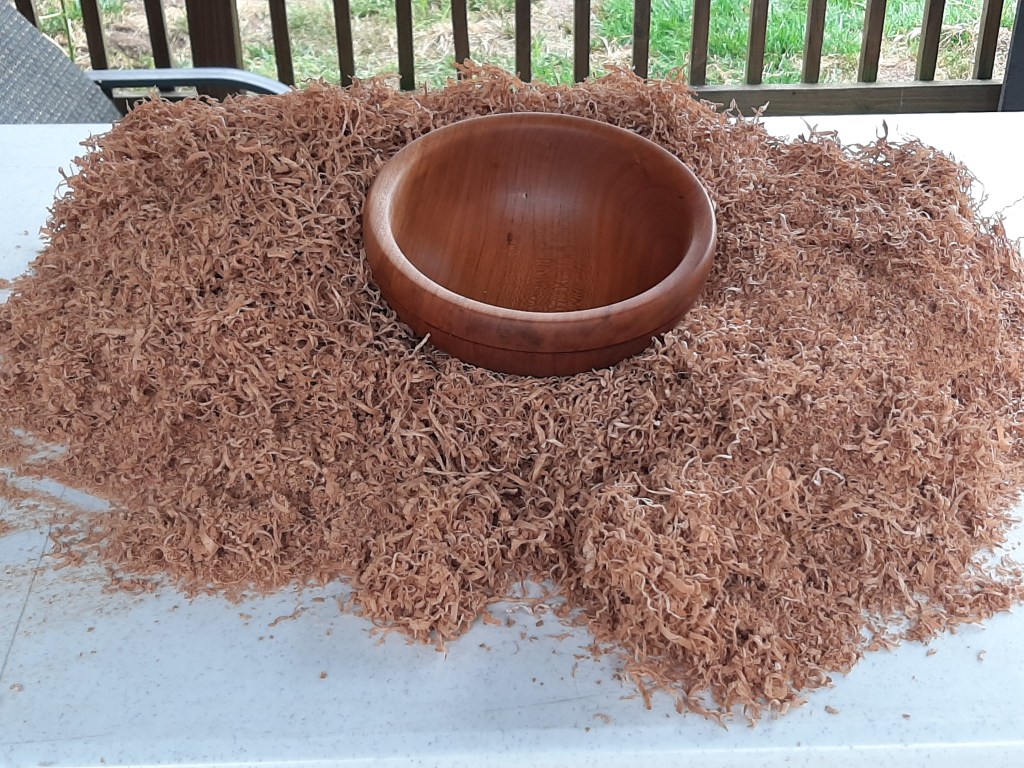
A cherry bowl surrounded by what was once attached to it.
A bowl and some candle holders looking for forever homes. I have successfully found homes for about ten bowls now. And not all in Lise’s office.
Measure twice, cut once. There’s a reason for that old adage. This is why we practice.
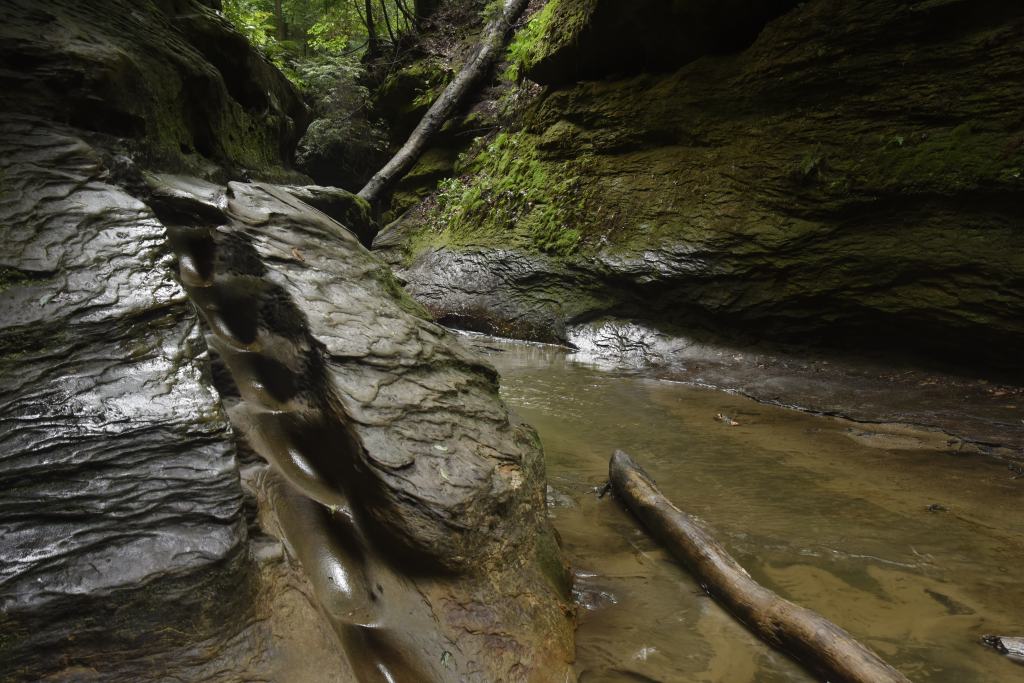
Lise’s work has been keeping her busy. The upside is that it has required short trips to Turkey Run State Park, Patoka Reservoir, Dunes State Park, Falls of the Ohio State Park, and Potato Creek State Park. I tag along to help with the driving and slip in some photography when possible. Turkey Run may be my favorite Indiana State Park. Driving I-70 across Indiana gives one the impression that Indiana is flat and boring. True to some extent, especially the I-70 corridor. Interstates are easiest built on flat and level terrain like much of Indiana. But Indiana has some tiny little easy to miss nuggets like Turkey Run.
The canyon at Turkey Run State Park.
Lake Michigan shoreline at Dunes State Park.
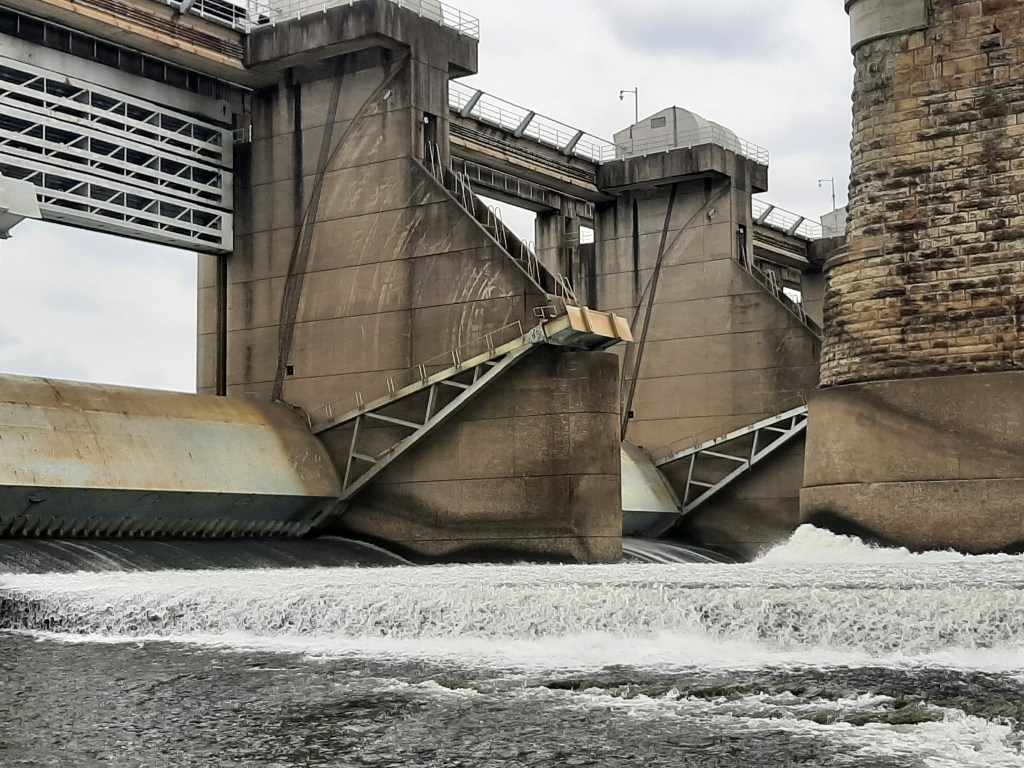
The Falls of the Ohio were once an impediment to travel on the Ohio River. The works that divert water from the Falls of the Ohio into a canal around the Falls, allowing all season transportation on the river.
Looking down the Falls of the Ohio which were really a series of rapids. Now completely controlled and managed.
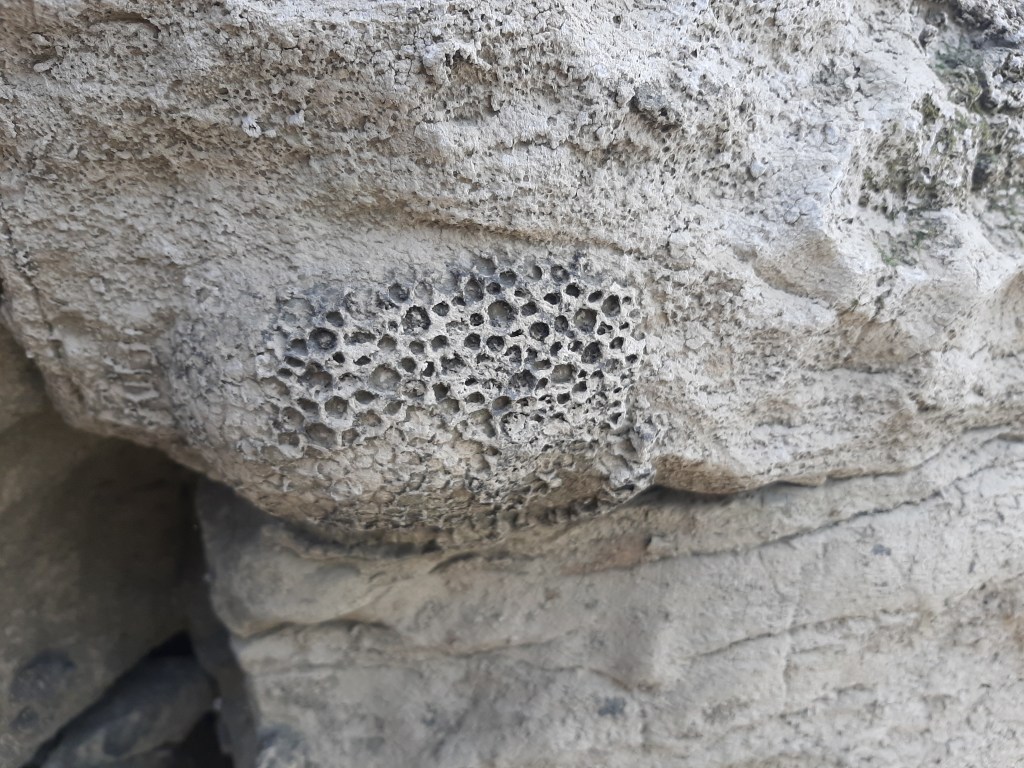
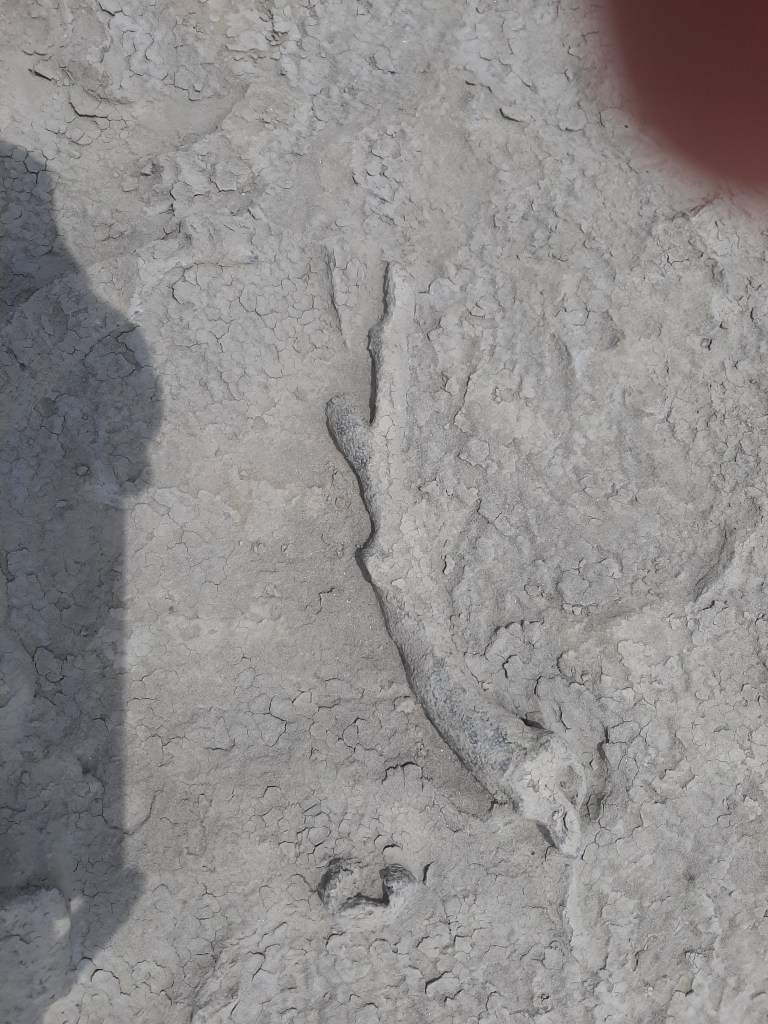
Fossils, and a golf ball, in the fossil beds at Falls of the Ohio
And then, there’s the ongoing groundhog war. It’s not going well on my part. I just ordered the second bottle of coyote urine. More of that in my next post.
Individually any one of these or any other niggly little time sinks are no big deal. The issue is taken collectively, you watch the days fly by without anything interesting to write about. It isn’t just the niggly little time sinks keeping me from writing too. A couple larger ones have done their part to kill my writing time.
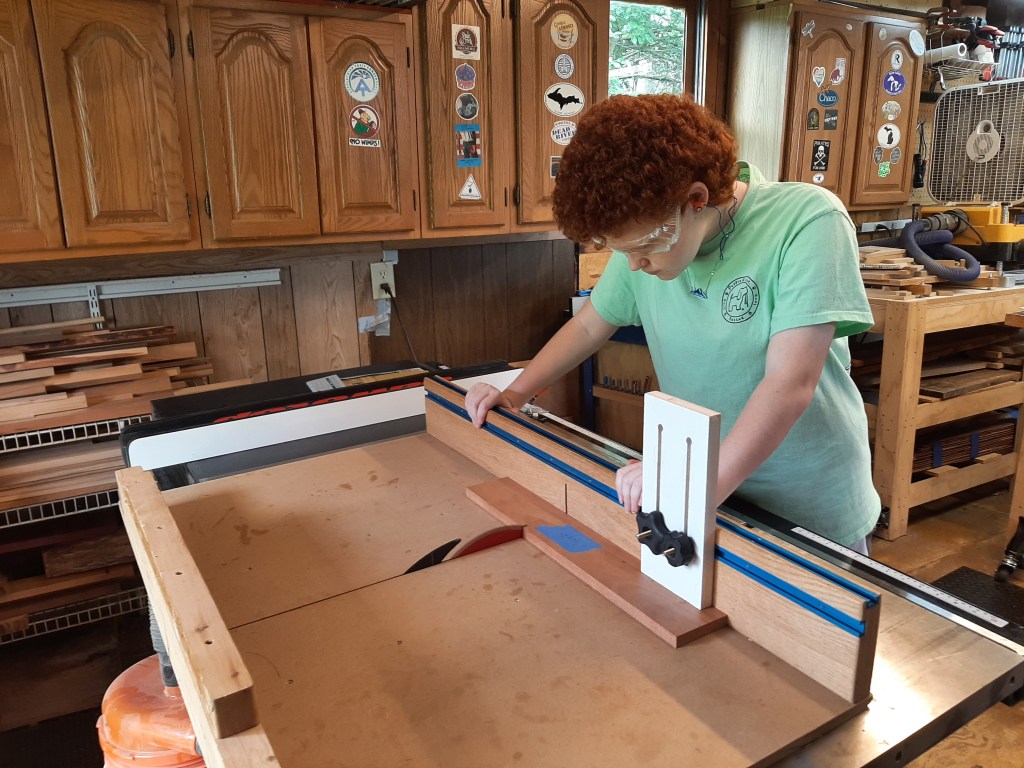
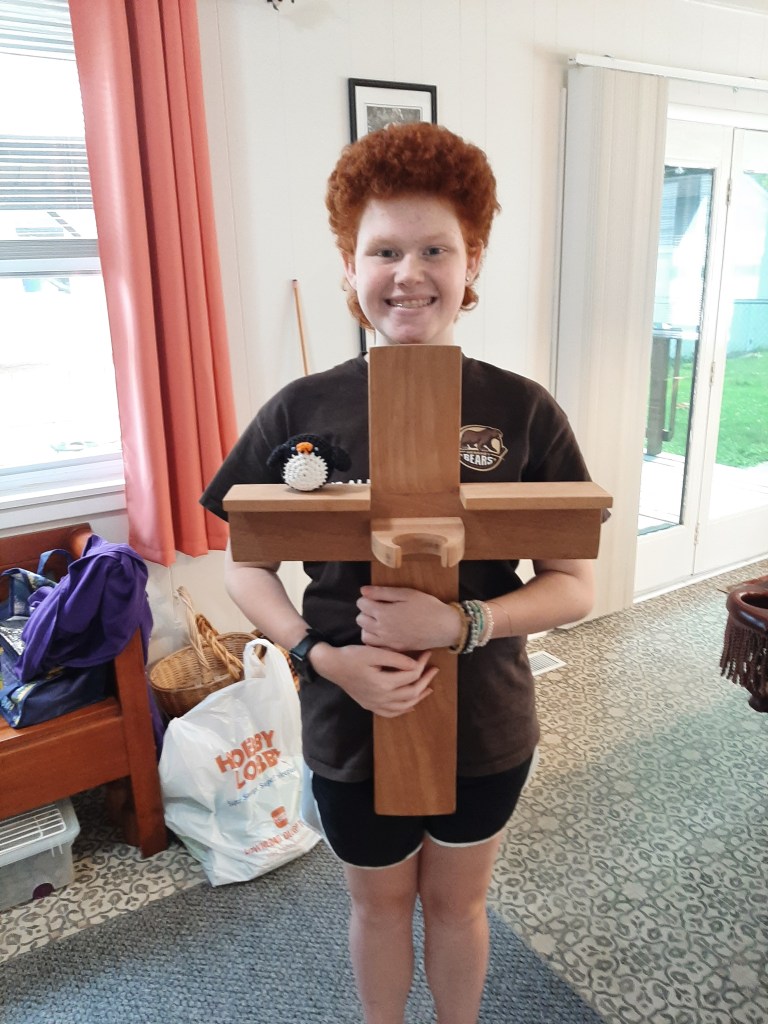
For starters, we hosted my 13 year old niece for a week. She took woodworking in school and enjoyed it. I invited her out here to work in my shop and she was game. She designed a wall-mounted guitar holder and we built it. It was truly a tag team effort. She did most of the design. I only stepped in with some practical advice. I showed her how to use the tools and she did most of the measuring and cutting. We both enjoyed the time. However, entertaining a 13 year old with power tools doesn’t leave much time for creative writing.
My niece using my table saw. I would also like to point out that at her age both I and her father had hair that color. Back when we actually had hair. Now, being a red-head is a good thing. It’s called being a “ginger”. When I had hair that color you were called “bricktop” or “carrot top”. Times and fashion change.
The finished project.
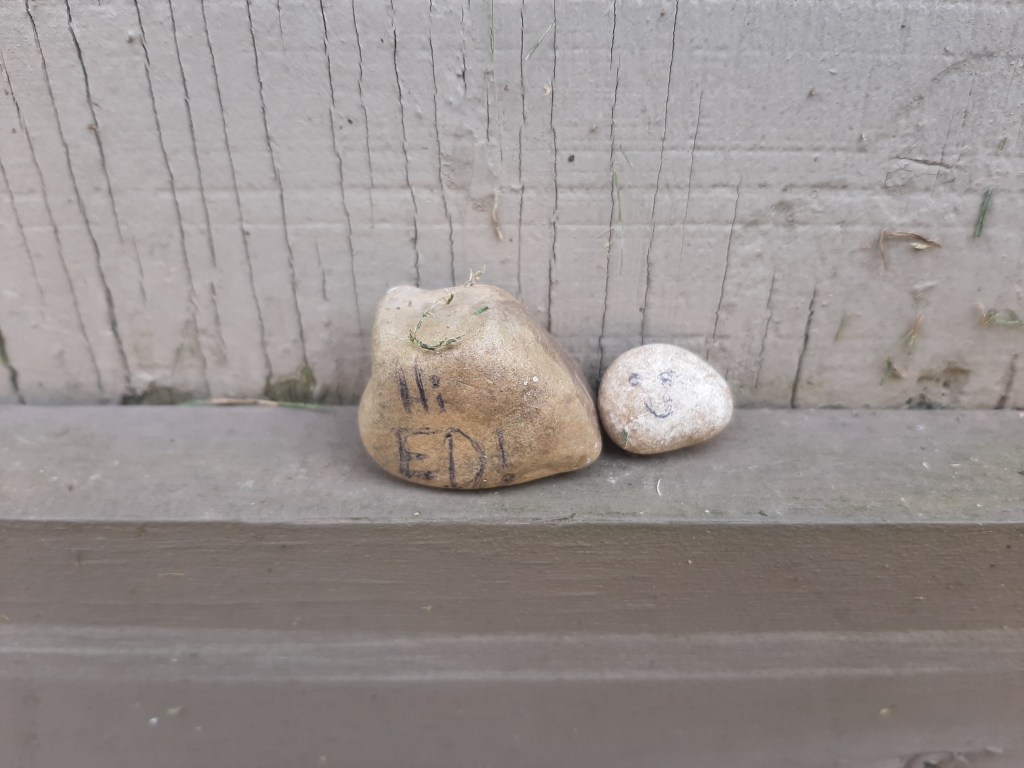
What you find around your shop in the weeks after your 13 year old niece leaves.
I got some long distance travel time in too. I took my niece back home to PA and then headed to Delaware for a few days. Spent some time working around our trailer, got in some birding and dragonfly photography, and soaked up the coastal culture. I can go coastal so easily. Given the U.S. interstate road network, and refrigerated trucks, one can get fresh oysters and clams within days of the little filter feeders coming out of the water. That’s still not as good as getting them a few hours after they come out of the water. I just can’t write when I’m going coastal. Too busy sucking up the experience.
Crabs and fried oysters at the Surfing Crab in Lewes, DE. Give me oysters and beer, for dinner any day of the year….. Jimmy Buffet
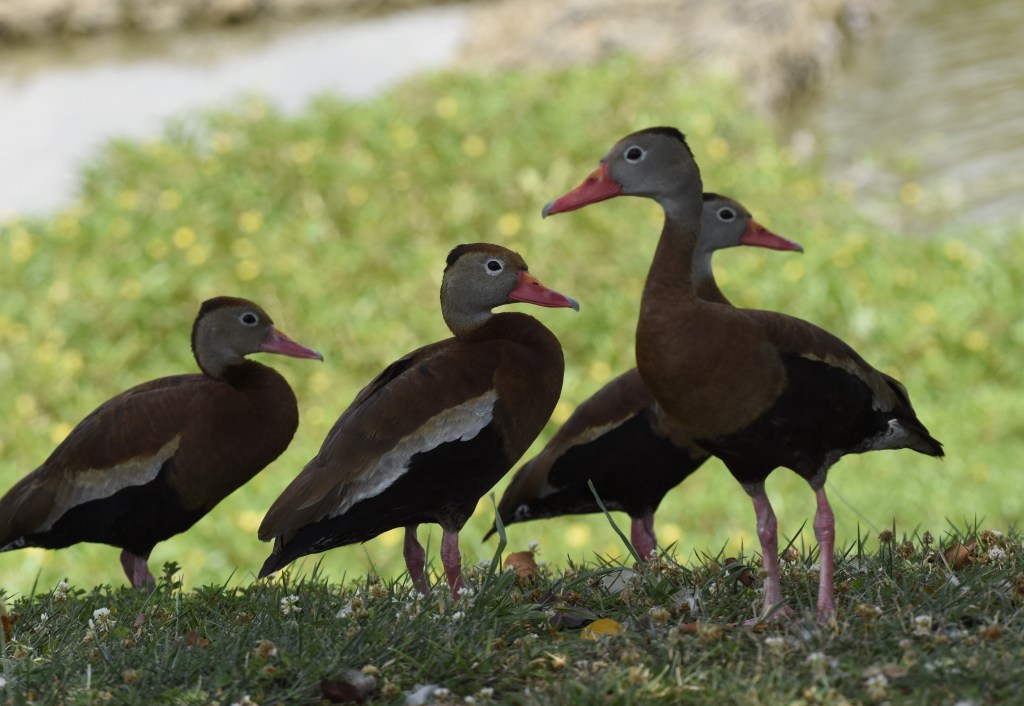
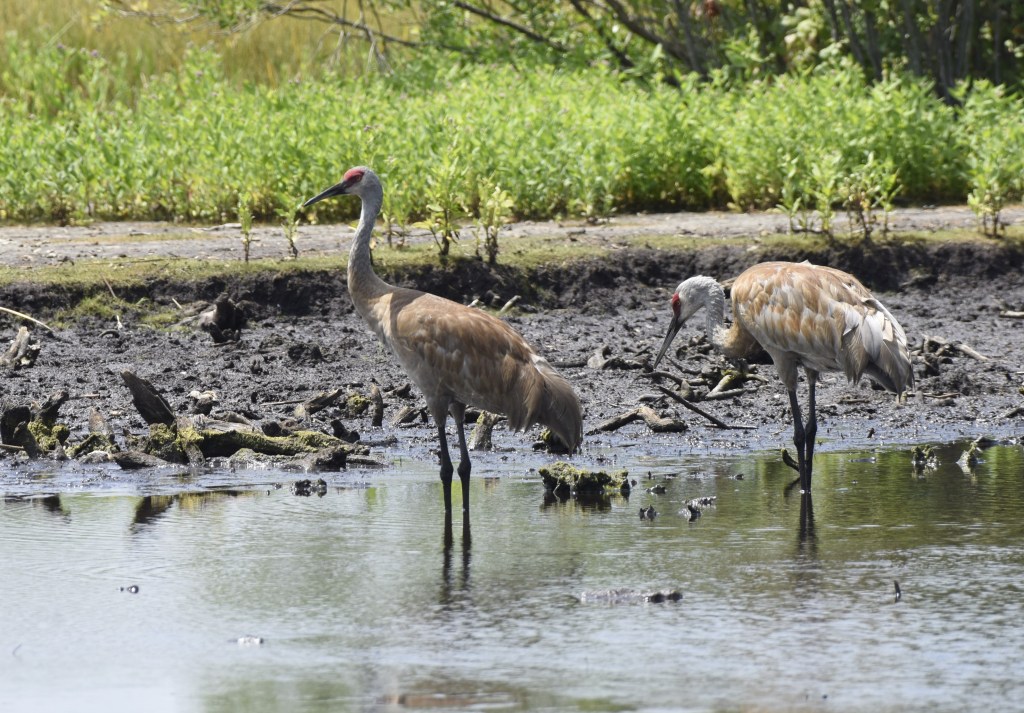
Coastal Delaware is a great place for birding. There’s ocean, beaches, miles of coastal marshes, freshwater systems, and forests, all in close proximity. I added a few more bird species to my year list. Including a couple species that apparently haven’t looked at their range maps in the field guides. Black-bellied whistling ducks that have come to the same subdivision stormwater retention pond for at least five years now. Apparently they are unaware that they are supposed to be on the Gulf Coast. And a couple sandhill cranes that have nested in Delaware, apparently unaware that they belong on the central flyway.
Black-bellied whistling ducks in a subdivision water retention pond.
Sandhill cranes at Bombay Hook National Wildlife Refuge.
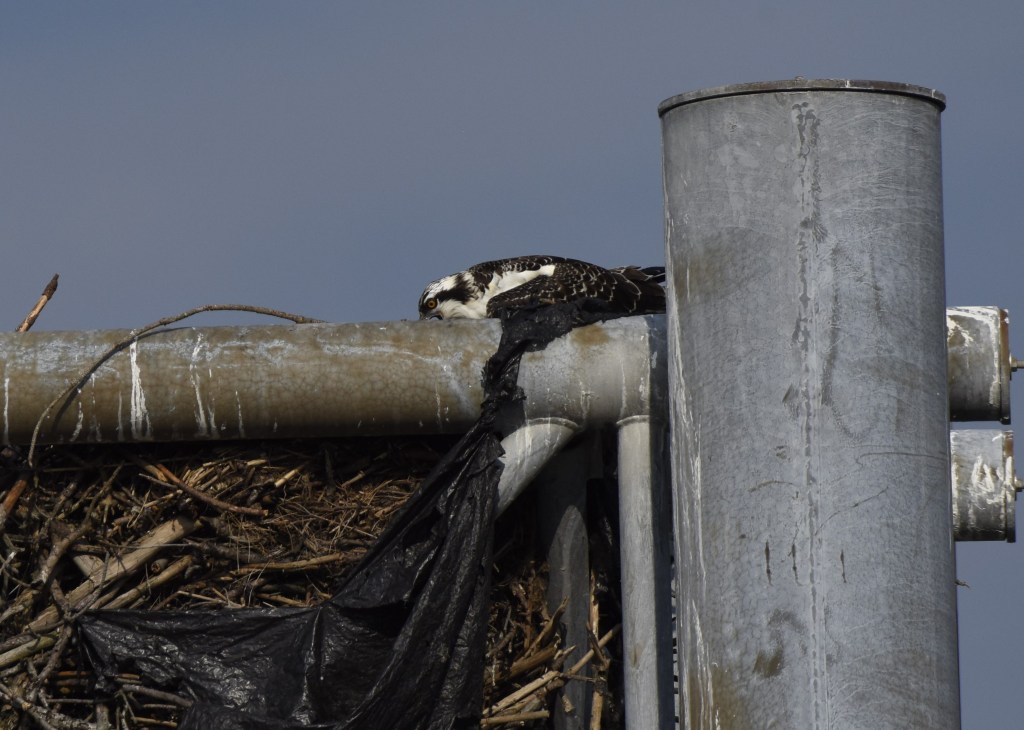
In the “animals can adapt” category we osprey nesting on a highway sign by the Lewes – Cape May ferry terminal.
And roosting in sailboat rigging along the Lewes – Rehobeth canal in Lewes.
Looking down the canal that goes right through Lewes. Connects Rehobeth Bay to the Delaware Bay.
Turkle Pond in Prime Hook National Wildlife Refuge. Good for birding and dragonflies.
We have managed a little bird chasing around here. We got word that some species unusual for this area were at Pine Creek Game Bird Management Area, about a half hour from here. Having a rare free morning we hopped in the car. We saw several new species for the year, the highlight of which was a buff-breasted sandpiper. Not a bird we see every year. Right now our yearly bird species list stands at 296 for me and 295 for Lise. Unless something drastic happens with a little effort we should hit 300 species for the year.
I haven’t done much dragonfly photography this season. A bit while on trips with Lise and in Delaware, and a bit locally. Only one new species for me, mostly just a few old friends.
Blue-fronted dancer damselfly.
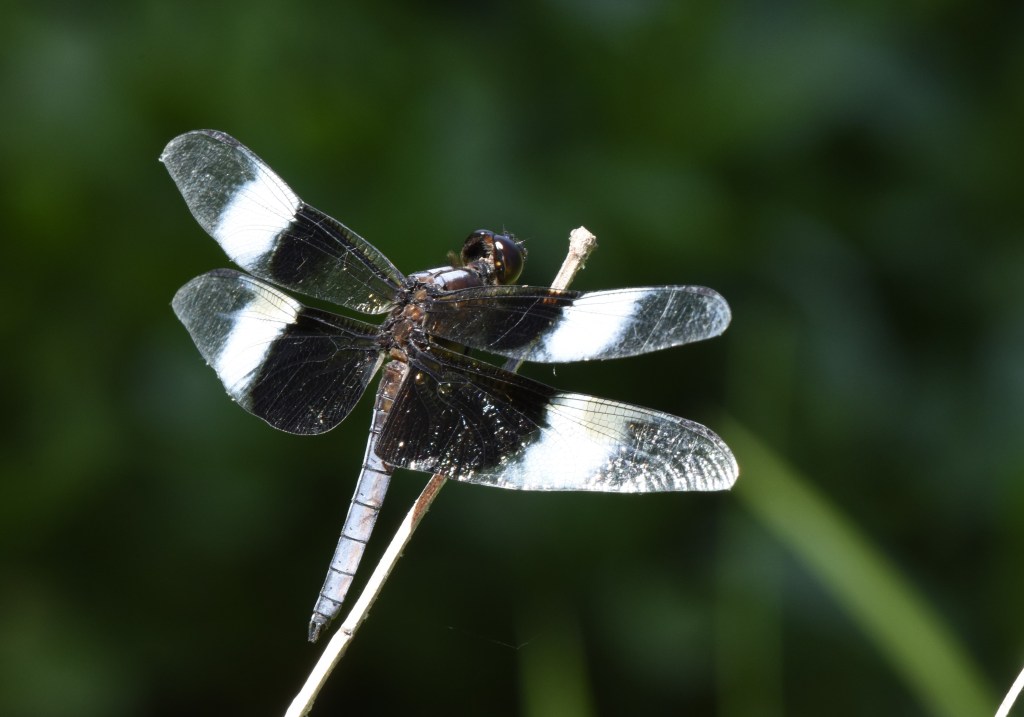
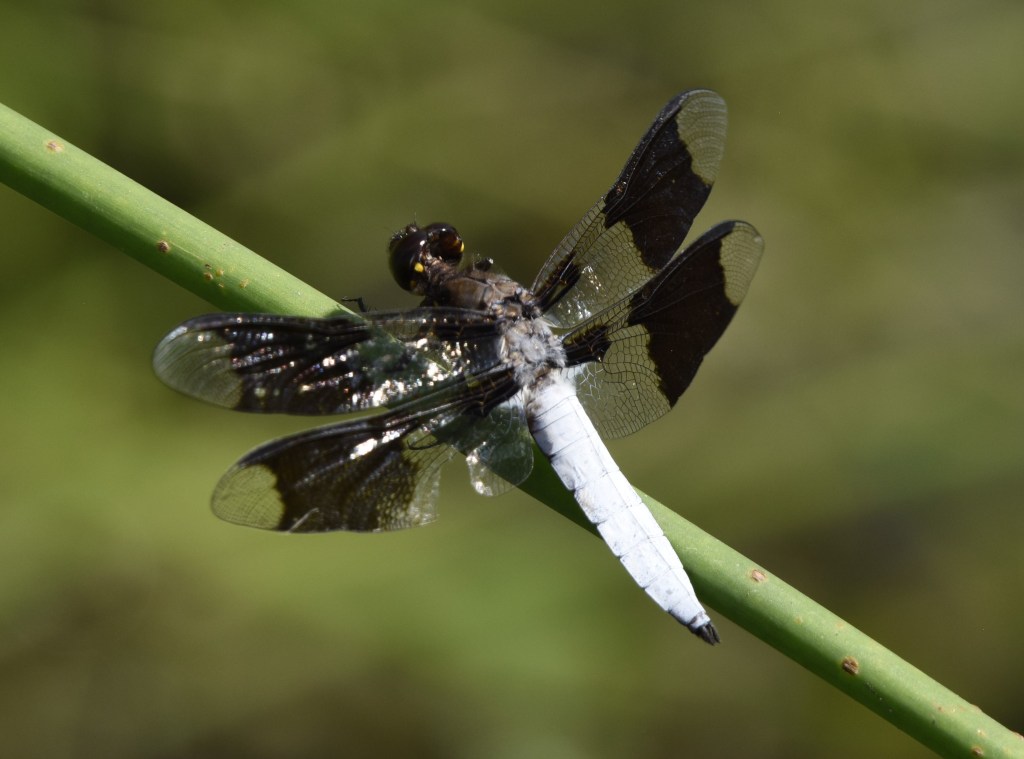
Widow skimmer.
Eastern pondhawk.
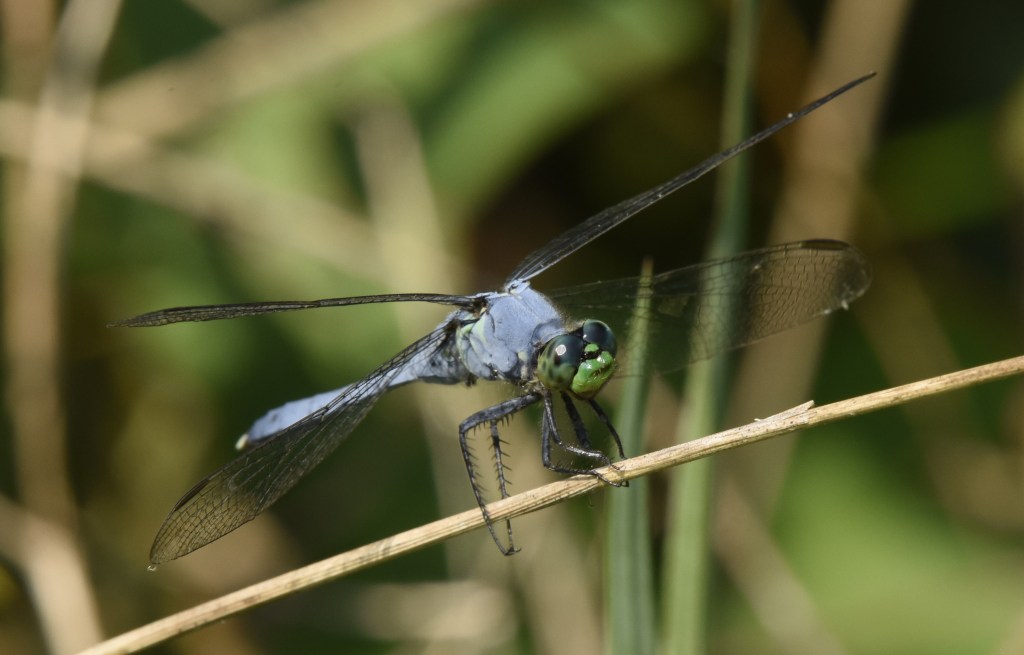
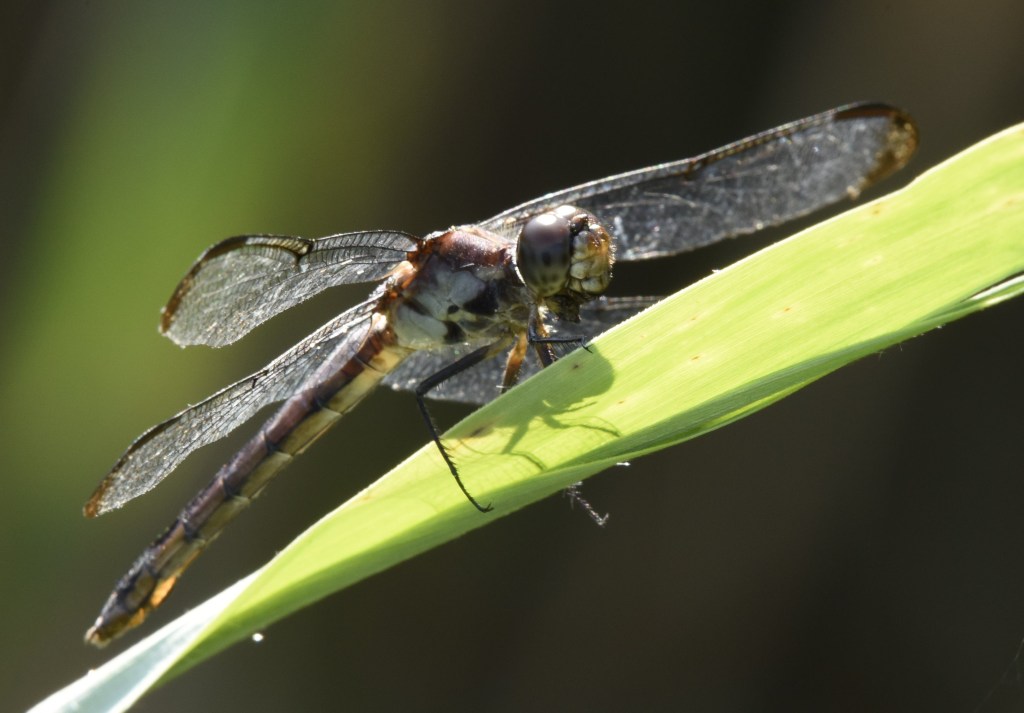
Slaty skimmer
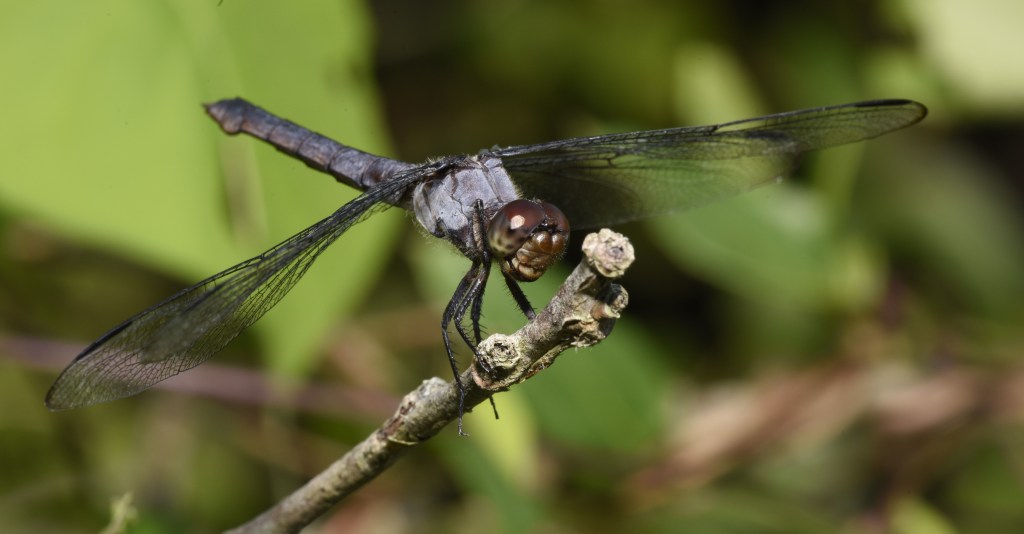
Not sure about this one just yet.
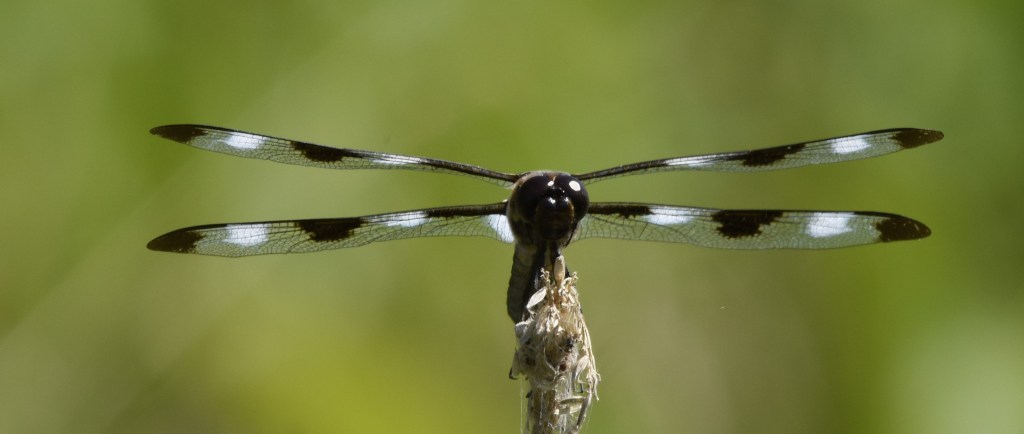
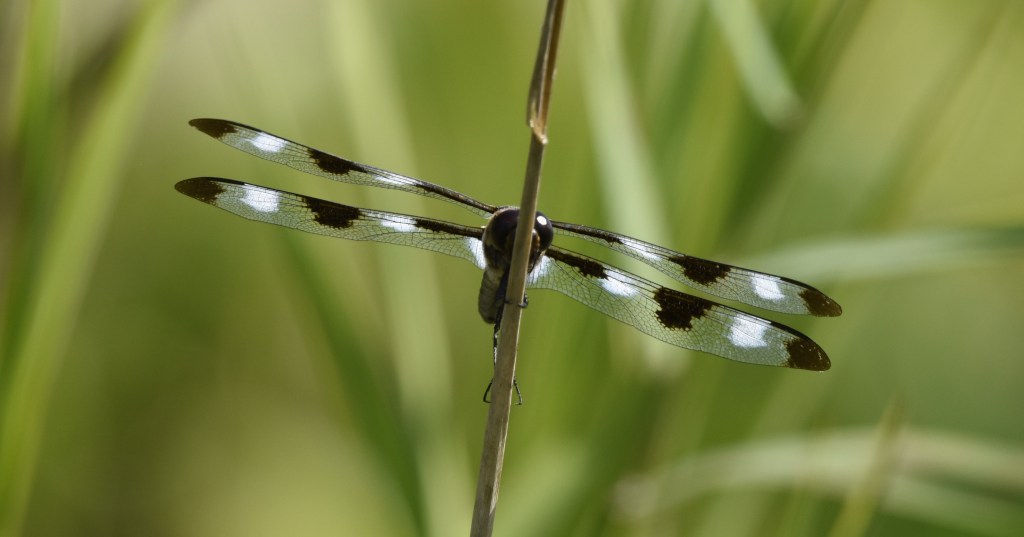
Twelve-spotted skimmer.
Common whitetail.
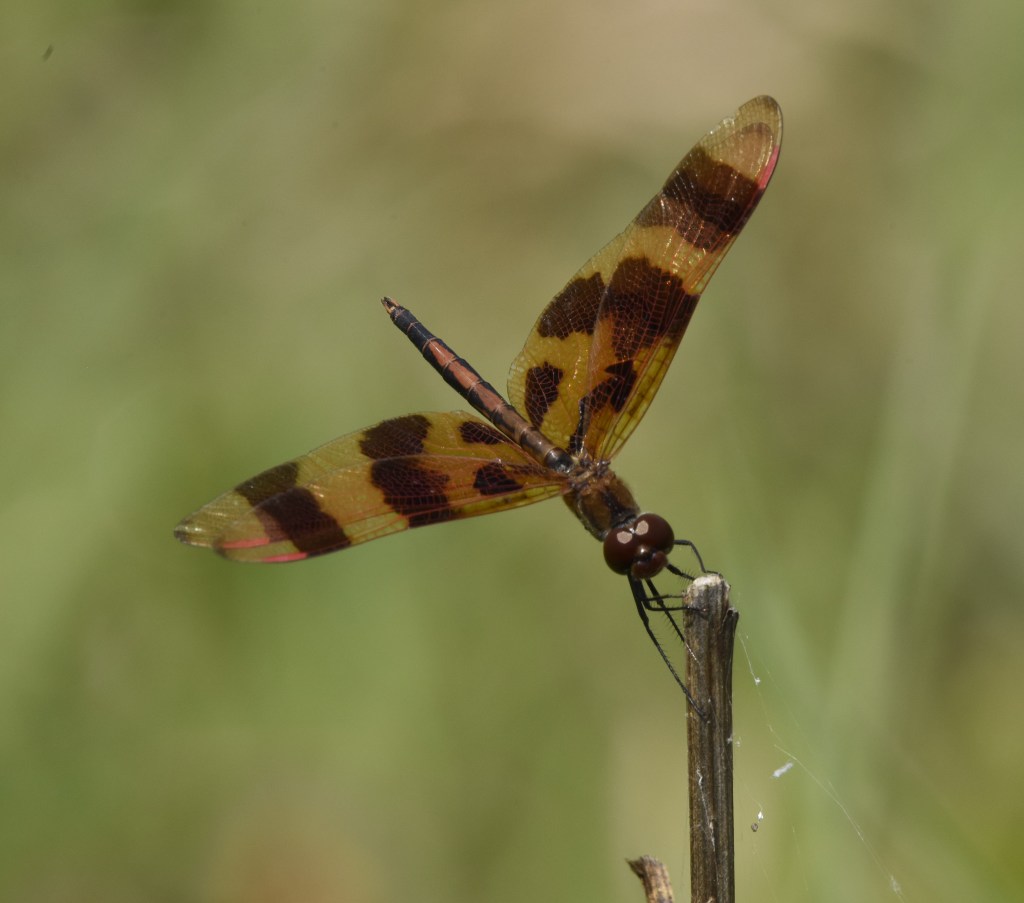
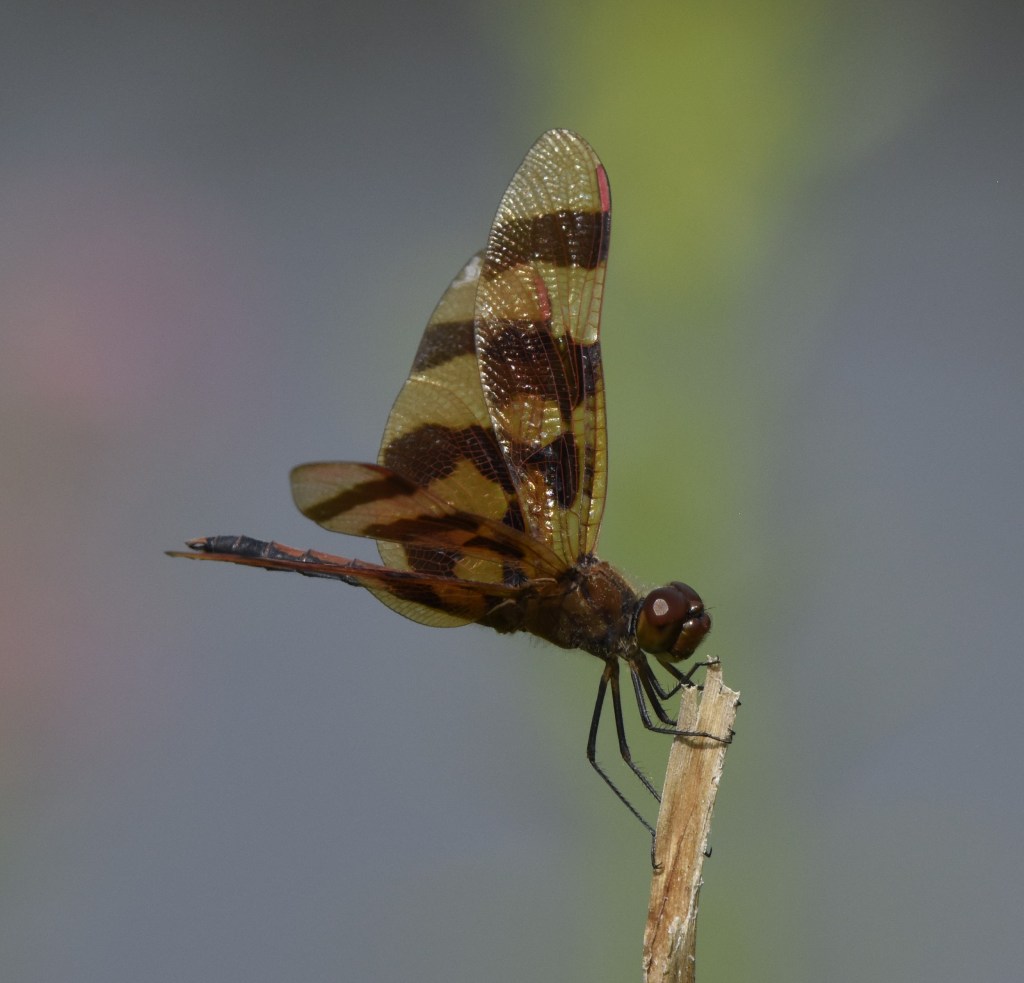
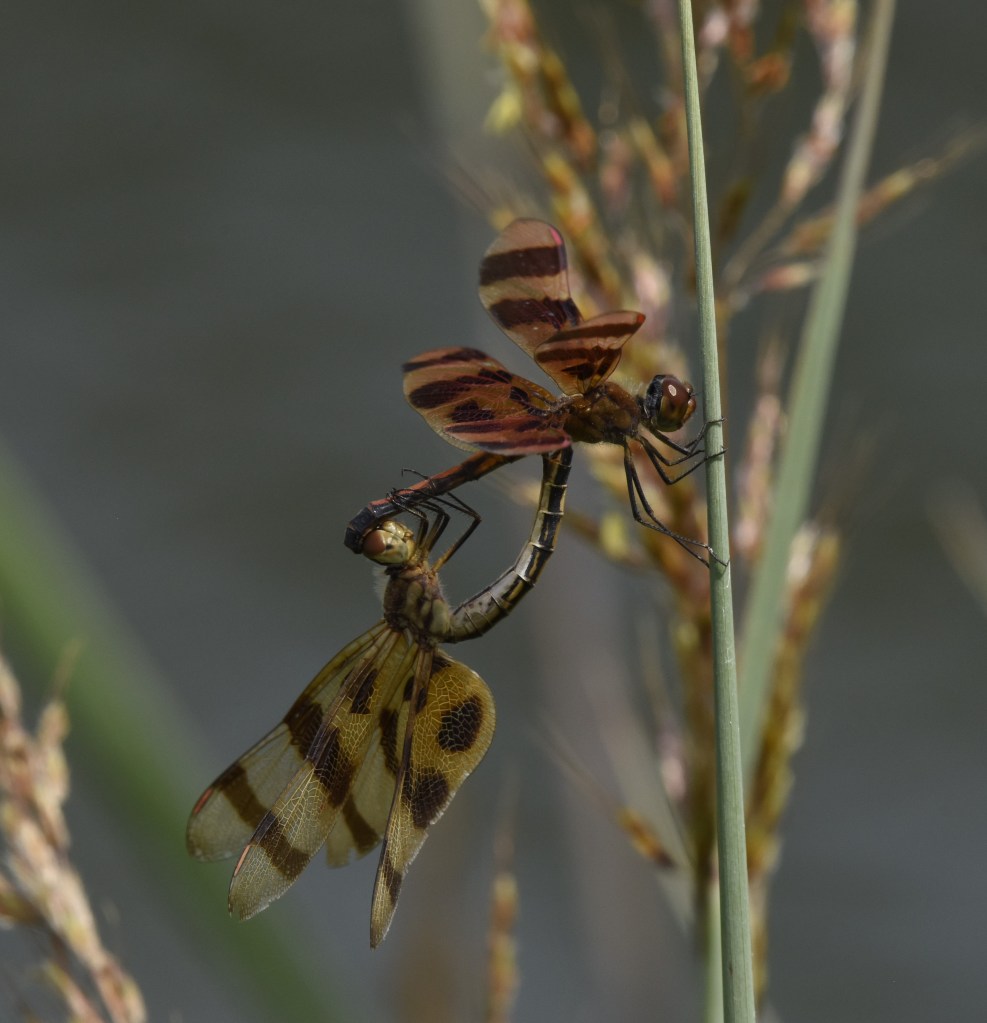
Halloween pennants
Band-winged meadowhawk. A new one for me, considered uncommon in Indiana.
So, I hope all the laborers, except those working retail, get to enjoy the holiday fruits that their labor has given us. For those of you working retail – thanks. You gotta sell out that summer themed junk to make room for the Halloween and Thanksgiving themed junk. That’s what keeps our consumer driven economy going and you’re on the front lines. And remember, Christmas shopping season is just around the corner.
I’ve been fighting groundhogs under my workshop for a couple years. Started innocuously. One seemingly harmless groundhog and a hole going under the workshop. The groundhog didn’t even create the hole. A raccoon was living under there first. I harassed the racoon away because of how destructive they can be. They don’t just eat the birdseed, they tear apart the feeders to get to the seed.
Sometime after the racoon left, the groundhog moved in. Didn’t really bother me too much. It ate the birdseed on the ground but didn’t seem to harm anything. Except maybe the tomatoes. Not sure if the groundhog was responsible for eating all of them. There were other potential culprits hanging around like rabbits and opossums, but the groundhog was a prime suspect.
Then came the babies. Cute little critters but they unfortunately become big critters. The next thing I know there are several tunnels going under the workshop. Most of last summer I battled them. I would pour ammonia or other vile liquids down the holes, then fill the holes, and pour more nasty liquids on top of the fill. I always left the main entrance open so they could leave. I didn’t want to trap anyone under the shop.
A couple times I thought I was successful. They appeared to have moved into my neighbor’s woods behind us. I would go a couple weeks without seeing them run under the workshop. Then the entrances would appear again and it was back to business as usual. Finally, towards the end of last summer it appears that the young ones left to find their fortunes. Then I lost sight of the big one. Once again I filled all the entrances except the main one. Just in case something was still living under there.
This Spring I thought I was free of them. We went way into the warm weather before I saw the fat one arise from under the workshop. Followed a few days later by three young ones. So it was back to the same ol’ trench warfare routine. I fill the holes, they dig them out. Then they escalated the war. They dug a new tunnel entrance under our deck.
I really am a live and let live kind of guy. I don’t care that they eat the birdseed on the ground. They don’t climb up into the feeders like the squirrels or knock the feeders down like the raccoons. But they keep digging and expanding. They’re as bad as real estate developers. I don’t want to kill them, I just want them to stop living under my shop.
Desperate times demand desperate responses. I could try piping Barry Manilow music into their tunnels or I could go chemical. I went chemical because I thought it was more humane. I bought a bottle of genuine coyote urine. And some rubber gloves to handle the stuff. It smells really, really bad. Like walking through the New York City subway system kind of bad. I don’t even want to think about how they got the stuff either. Maybe kennel some coyotes and give them all the Budweiser they want? But apparently it’s the real thing, not some chemical substitute. Just to let the record show, I did try using my own urine last summer. The groundhogs ignored it. You get what you pay or I guess. Hopefully the coyote piss is more effective than mine was.
This has got to be one of the weirder occupations I can think of. “What do you do for a living”? I pump coyotes dry “. Do they store this stuff in tanks?
I haven’t just been battling groundhogs and chasing squirrels off bird feeders since we got back from Arizona. I’ve been putting the skills I learned during my week at the Marc Adams Woodworking School into practice. I’ve been using my lathe to make cylindrical objects from the ton of not cylindrical red oak I have laying around. I do mean a ton. At the rate I make these things I have enough red oak to last a lifetime. Unfortunately it’s one of the worst woods for learning woodturning. But, that’s what I got so that’s what I go with. Now I need to start finding homes for this stuff. Like getting rid of the extra zucchinis from your garden. You just start looking for unlocked cars.
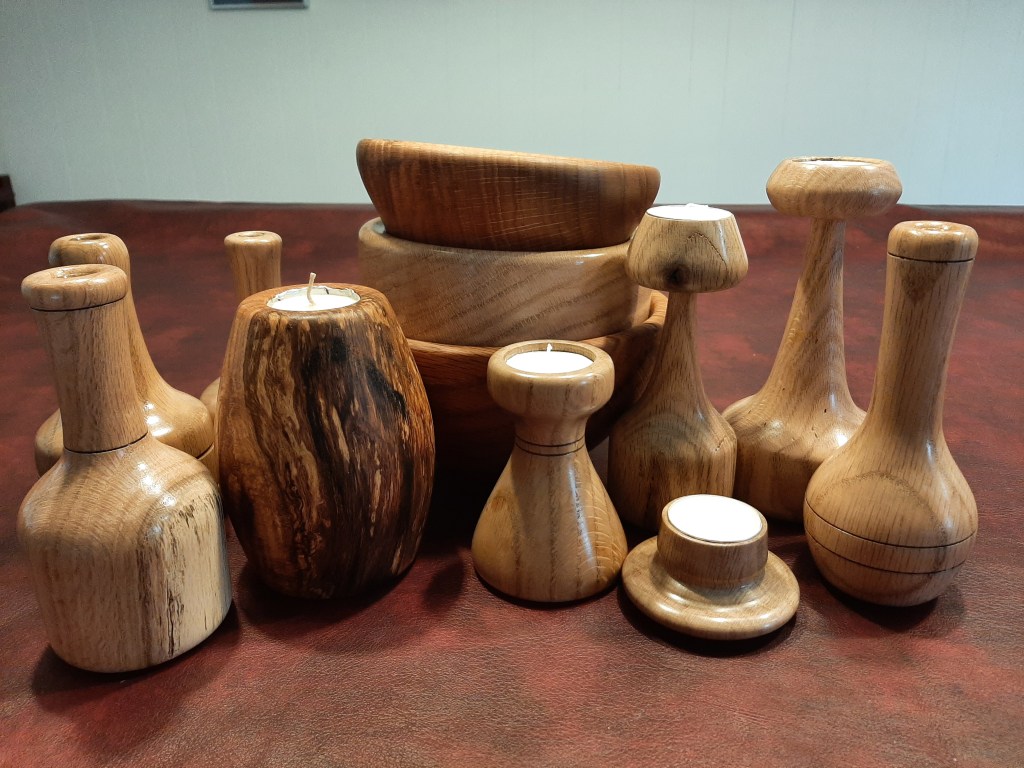
Bowls, bud vases, and tea candle holders, looking for their forever homes.
We are back home after a ten day trip to Arizona. It was a good trip, mostly focused on birding. We had some time around Tucson and Green Valley but most of the trip was spent in the Portal area.
Lise and Anita in West Lafayette’s own Triple XXX diner for breakfast before heading to the Indy airport.
We flew a Boeing aircraft and it looked like they put duct tape on a hatch window. Doesn’t give one warm fuzzy feelings.
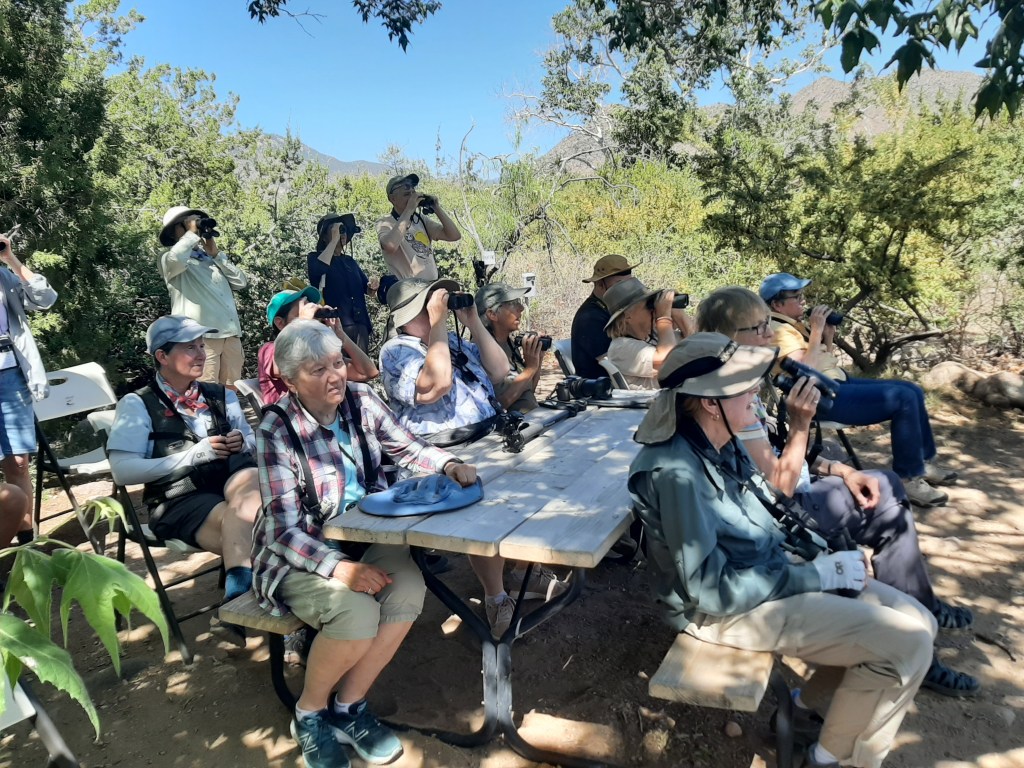
This was a Road Scholar trip. Road Scholar was once called ElderHostel so that should give you a good idea of the clientele. Nothing too strenuous. Not our typical birding excursion but my sister Anita wanted to do the trip so we joined her. There were 17 participants and two guides. Temperatures were on the high side. High as in, hovering around 100+ Fahrenheit every day. One day we were going up to about 8,000 feet and were told it would be 20 degrees cooler. It was cooler but it was still 85 degrees.
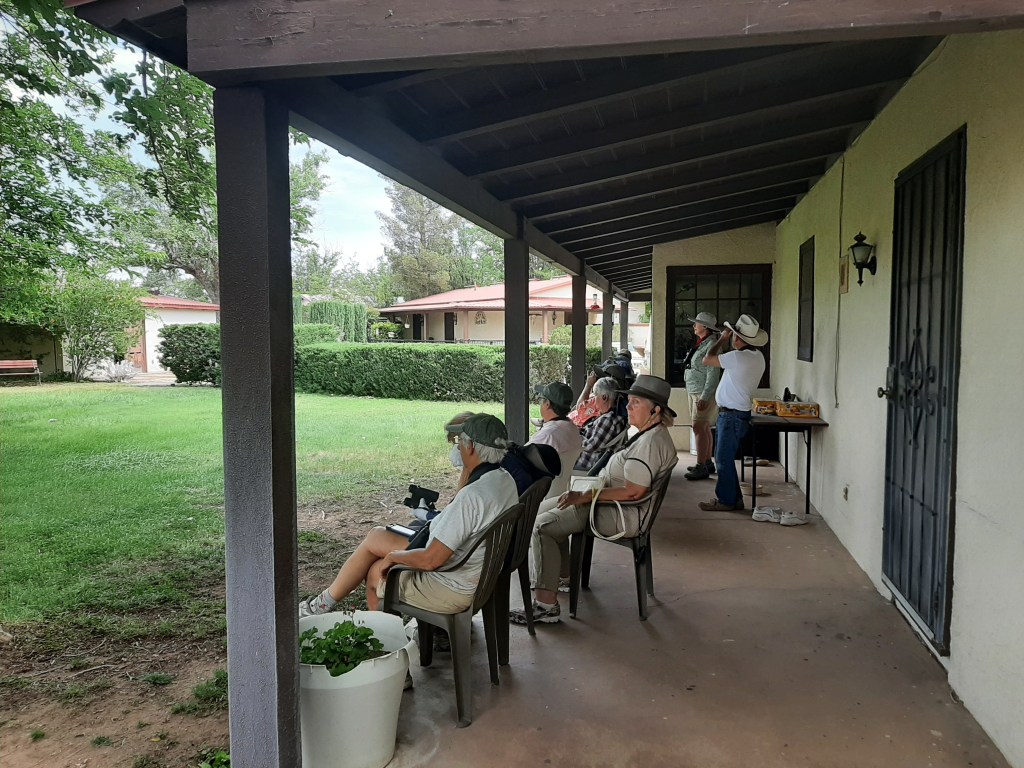
Birding Road Scholar style. Only thing missing is gin and tonics.
Portal is way out in southeastern Arizona, just a couple miles from New Mexico. Think of wide open spaces and a really tough environment. Not everyone would want to live there. The nearest grocery store to Portal is over fifty miles away. God knows how far it is to a Starbucks. On a busy day Portal has a population of around 700 if you include the larger metropolitan area. It’s in the Chiricahua Mountains, at an elevation of about 4,760 feet, right at the mouth of Cave Creek Canyon. Up the canyon a bit is the Southwest Research Stations where I spent a little time in 2012. One of the Portal “neighborhoods” is a dark sky community of about 40 people living on 400 acres. They have no outside night lights and have celestial telescope observatories built in their homes.
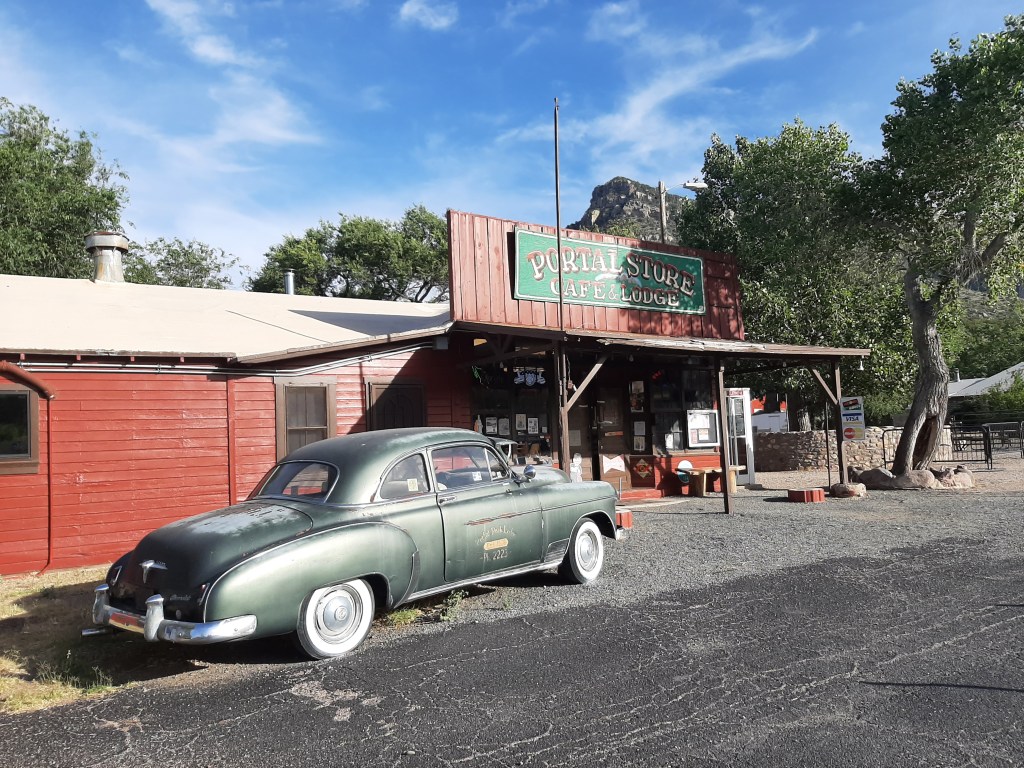
The social center of Portal is the Portal Store, Cafe, and Lodge. Which was our lodging while we were there. Simple, but quite adequate. While it looks humble, they fed well and did a great job of catering to a variety of dietary restrictions. Portal residents would drift in and out for a meal or drink. There was usually someone working on a car. I’m guessing the lodge had the only pair of jack stands in Portal. Mostly though, it was birders staying there.
The Portal Cafe and Lodge
Portal is a birding mecca. There are a number of eBird birding hotspots in the Portal area including Bob Rodriguez’s yard (Dave Jasper’s old yard) and the Jasper/Moisan feeders. Which is Dave Jasper’s new yard. Both of these yards are world famous birding hotspots. Birding tourism is a major income stream for Portal and numerous other feeder spots are in easy walking distance from the lodge. The locals don’t bat an eye when they see people with binoculars and spotting scopes walking up the street and looking in their yards.
Bob Rodriguez’s yard. I recognize the table holding a feeder as an old Craftsman table saw.
Our tour also took us to Paradise, AZ, about five miles and a half hour drive from Portal. At the turn of the 20th century, Paradise was a mining boom town with close to a thousand miners, stores, bars, and a red-light district. The mining lasted only a bit over a decade and the town was eventually mostly abandoned. Now the permanent population is somewhere under ten residents. But we did get an extremely rare white-eared hummingbird there, compliments of the George Walker House bird feeding station. And they rent rooms to birders.
We also did a trip to the Slaughter Ranch (San Bernardino Ranch), about 17 miles east of Douglas, AZ. A good nine of those miles are on rough dirt road. It’s named Slaughter Ranch for “Texas John” Slaughter, a legendary lawman that bought 65,000 acres in the 1880s. Two-thirds of the original ranch was south of the border with Mexico. The ranch buildings are now owned by the Johnson Historical Museum and most of the north of the border acreage is part of the San Bernardino National Wildlife Refuge. And, being right on the border, the border wall runs along the back of the ranch buildings. This part of the wall was built with louvers so the Border Patrol can drive along it and see through it into Mexico. The migrants have figured out that a motorcycle tire can be jammed into the louver. Then you stand on that tire and jam another one on top of it. You stand on the second tire and jam another one on top of that. Continuing to the top. Essentially we built a couple hundred miles of potential ladders over the border.
Slaughter Ranch with the see through border wall right behind it.
Birding wise, I would say we had a successful trip. We got around 80 species for the year. Lise and I both got some lifers. Not much time for photography when shuffling people in and out of tour buses, but the birding was good. In addition to birds we saw various insects, reptiles, and mammals that can live in a harsh environment.
Birds and other critters.
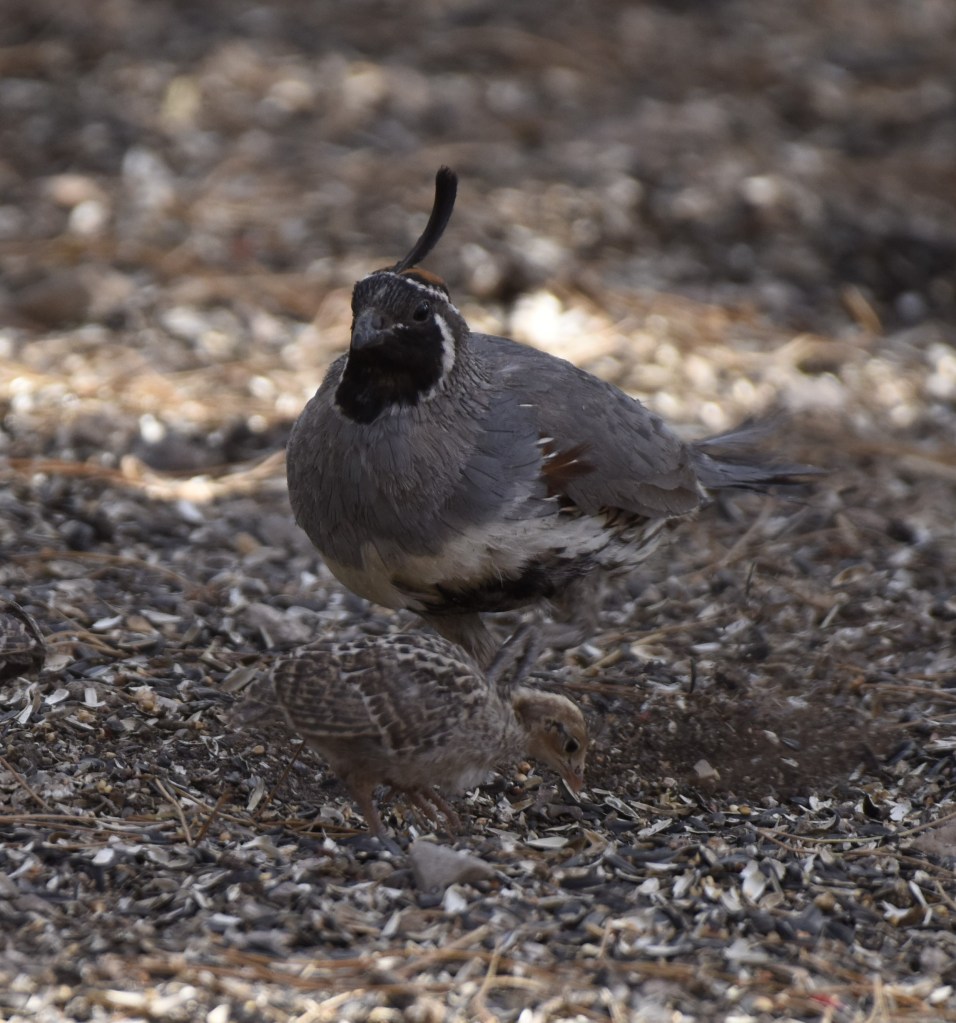
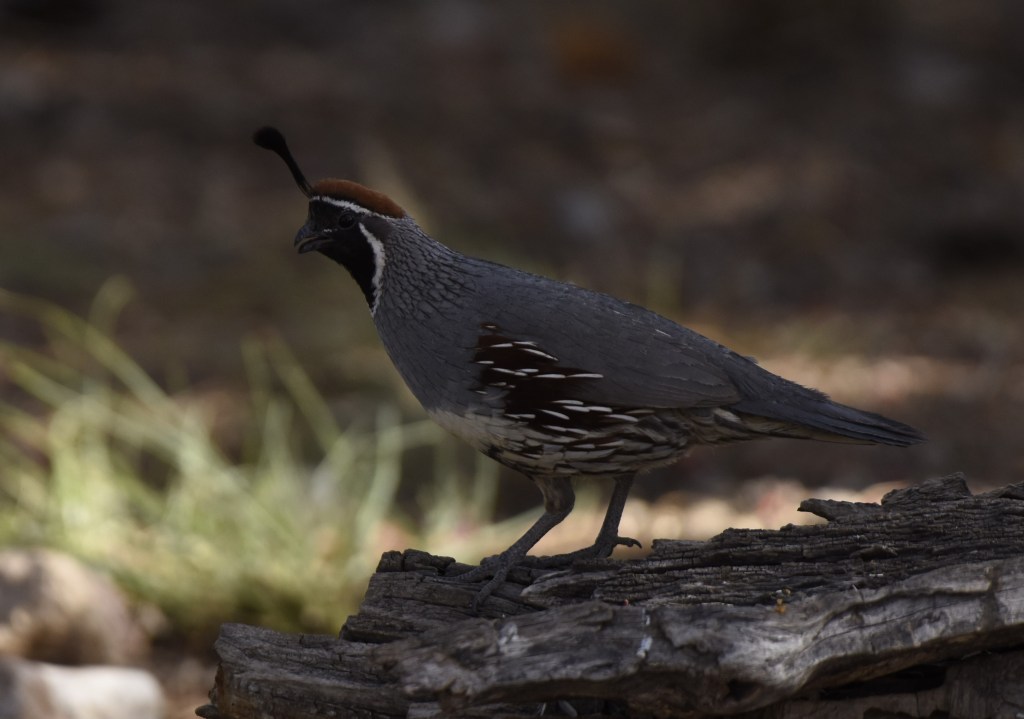
Gambel’s quail
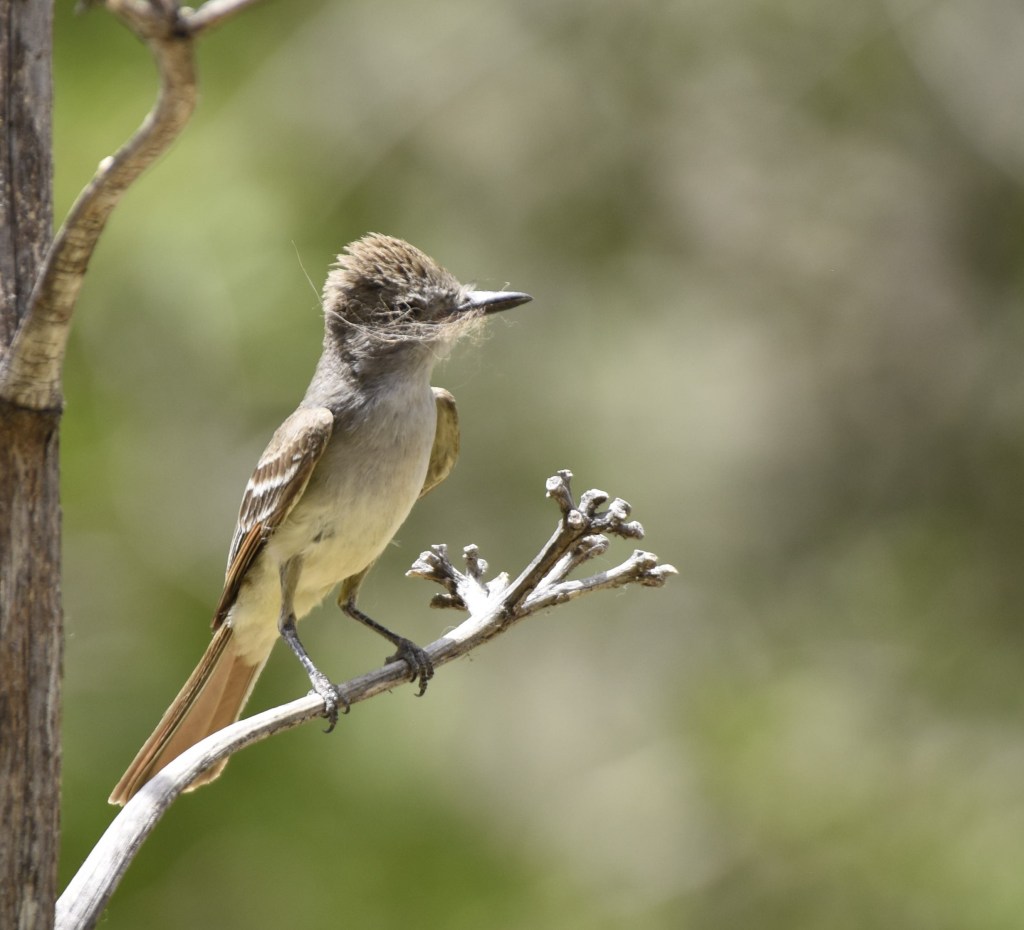
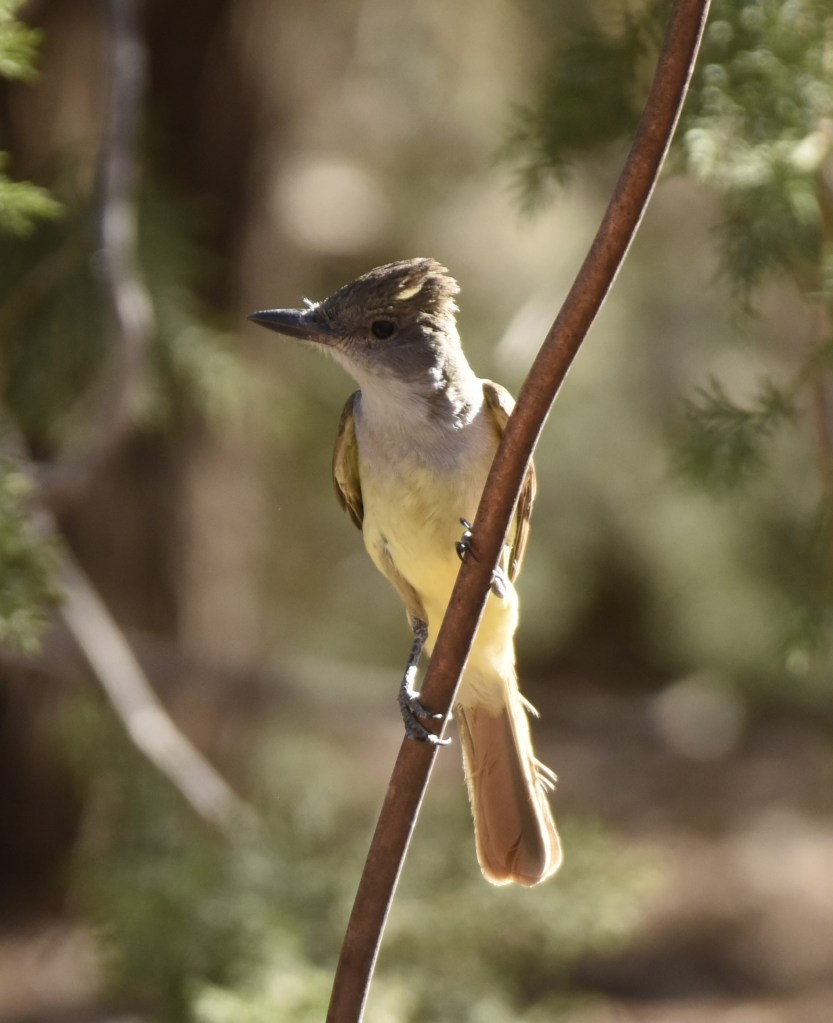
One of the flycatchers
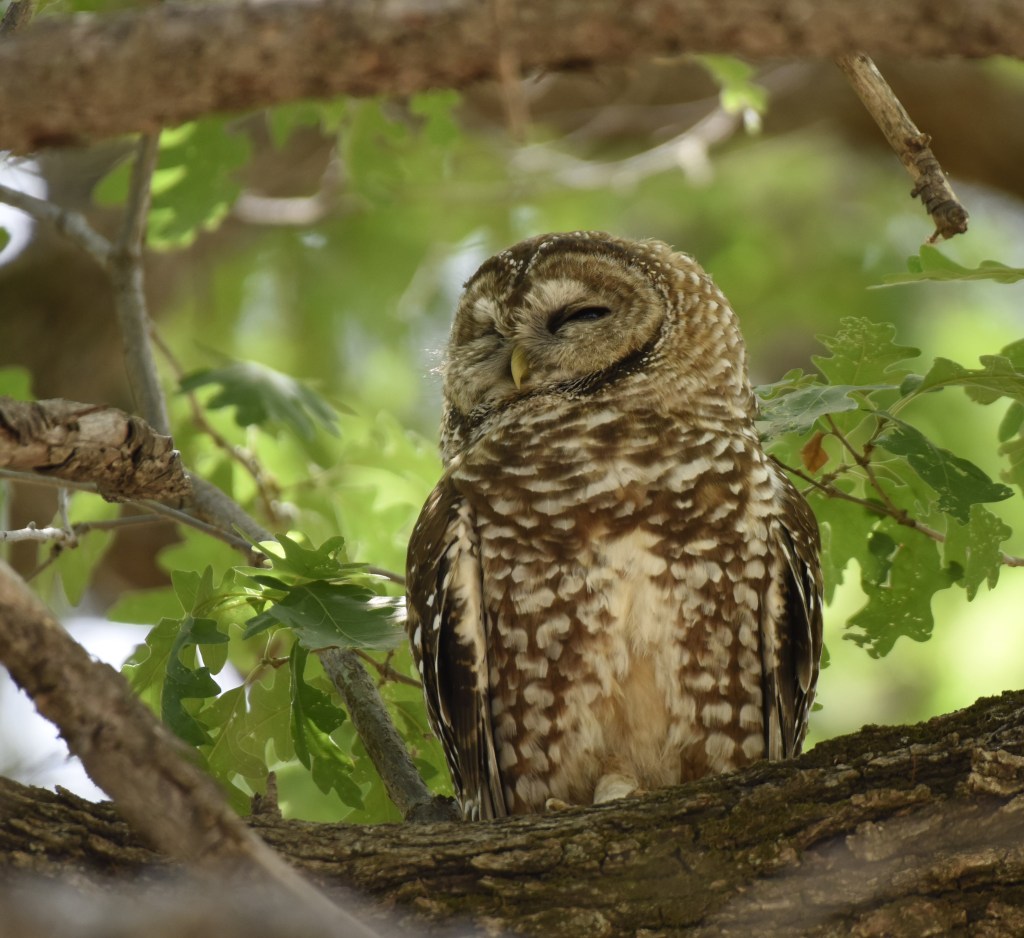
Mexican spotted owl
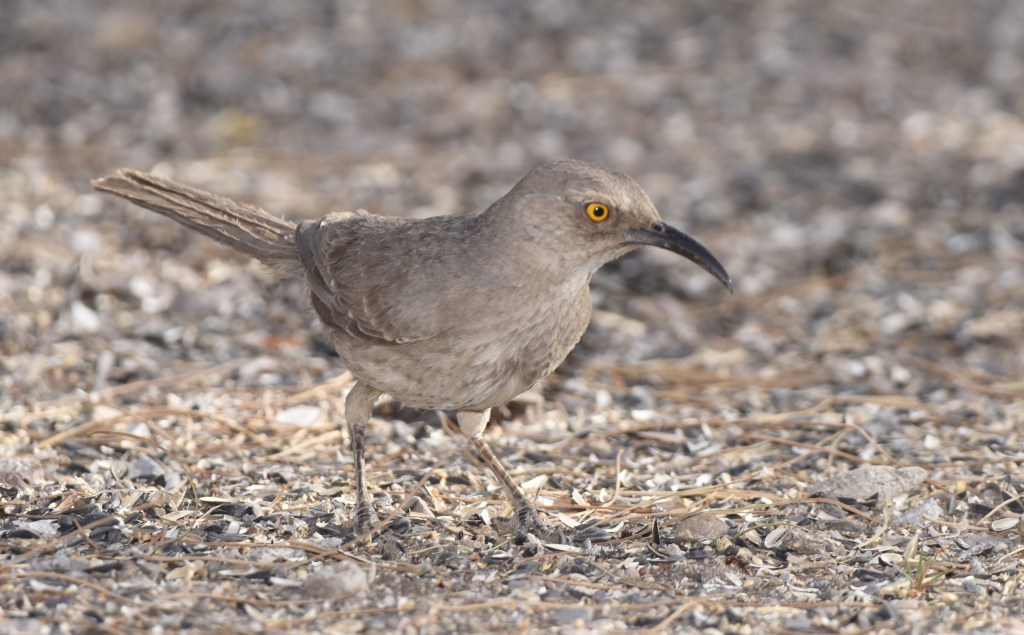
Curve-billed thrasher
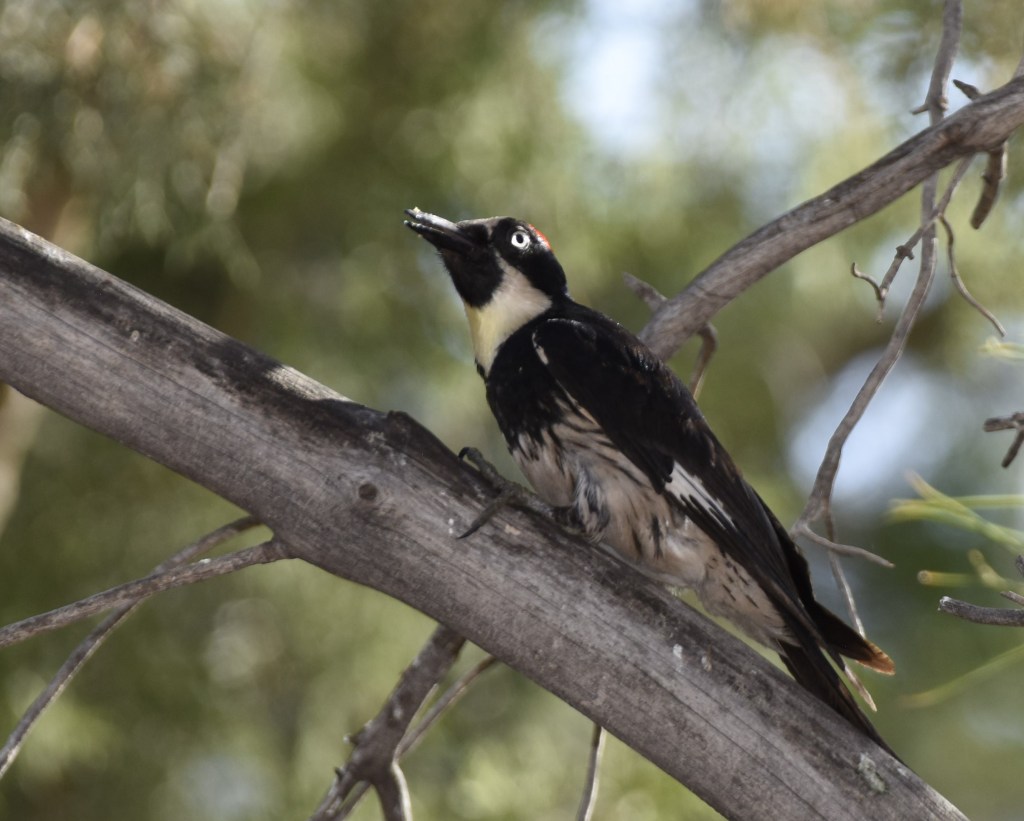
The ubiquitous acorn woodpecker.
Desert firetail damselfly
Familiar bluet.
Some kind of lizard, out looking for a babe.
Some kind of chipmunk or ground squirrel.
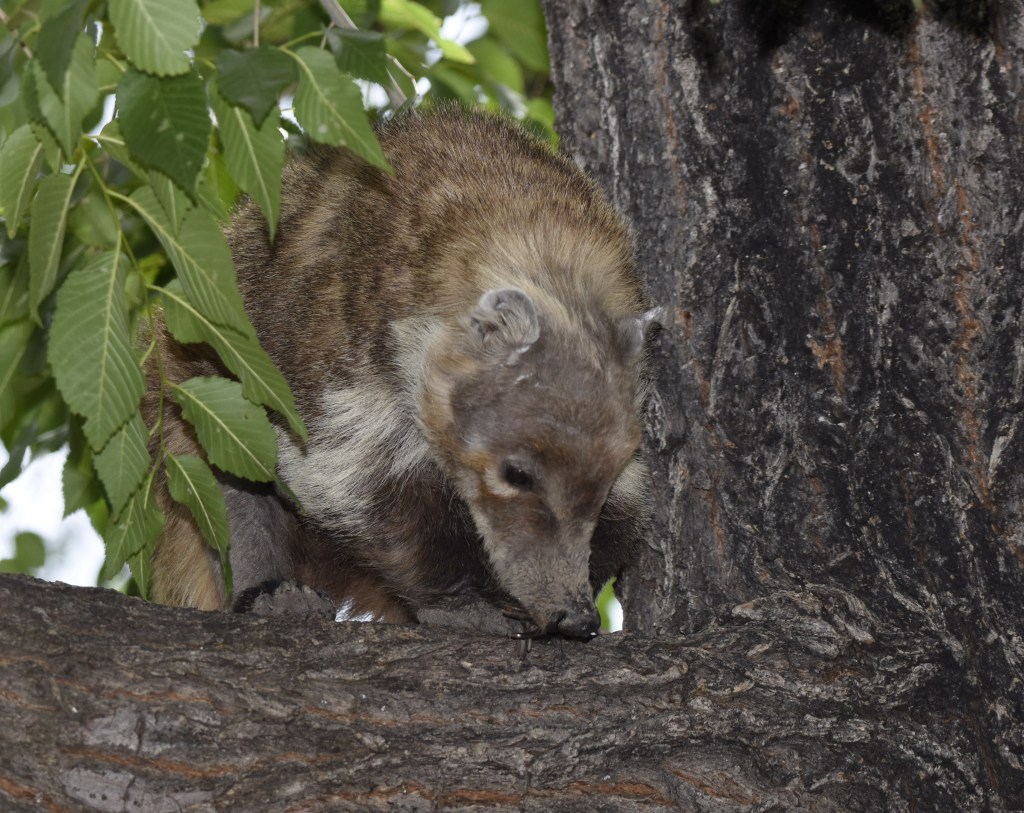
Coati. These guys got some mean looking claws and an attitude. You don’t want to try petting one.
And we got some time in very different terrain than here in Indiana. Living east of the Mississippi one can get spoiled. You’re rarely far from a gas station or a good cup of dark roast coffee. It’s hard to comprehend the open spaces and the tough environment of a place like Portal. No Starbucks on every corner. It takes a special kind of person to live in a place like that. Someone with a sense of humor.
The Minions – lit up at night for your enjoyment.
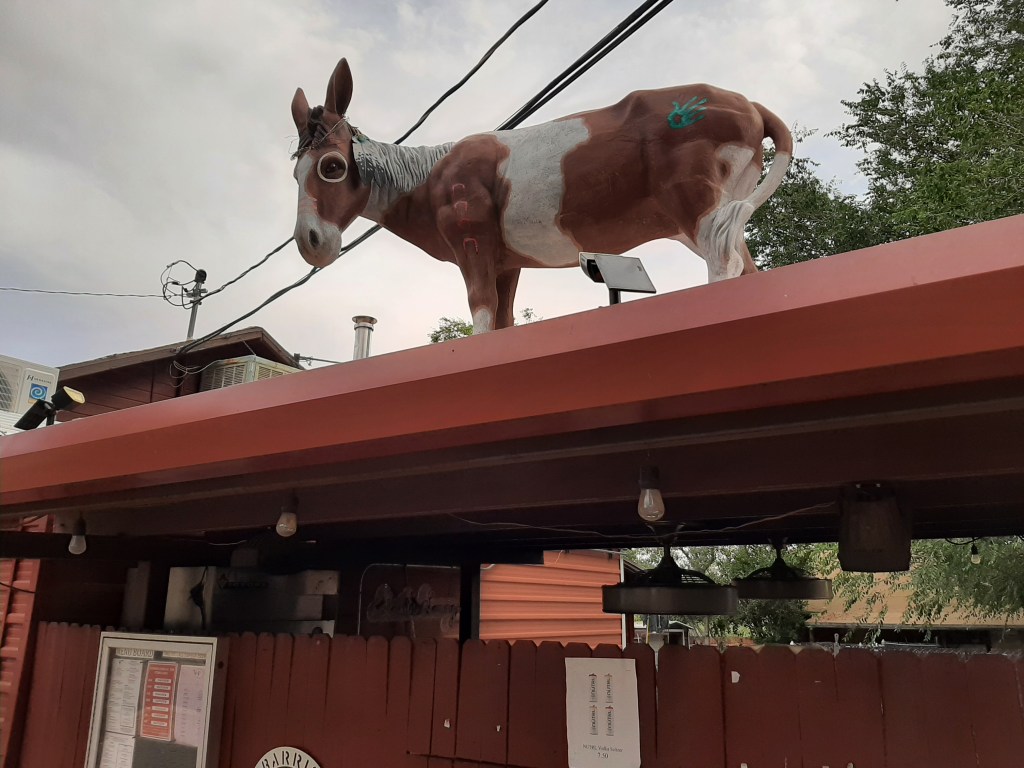
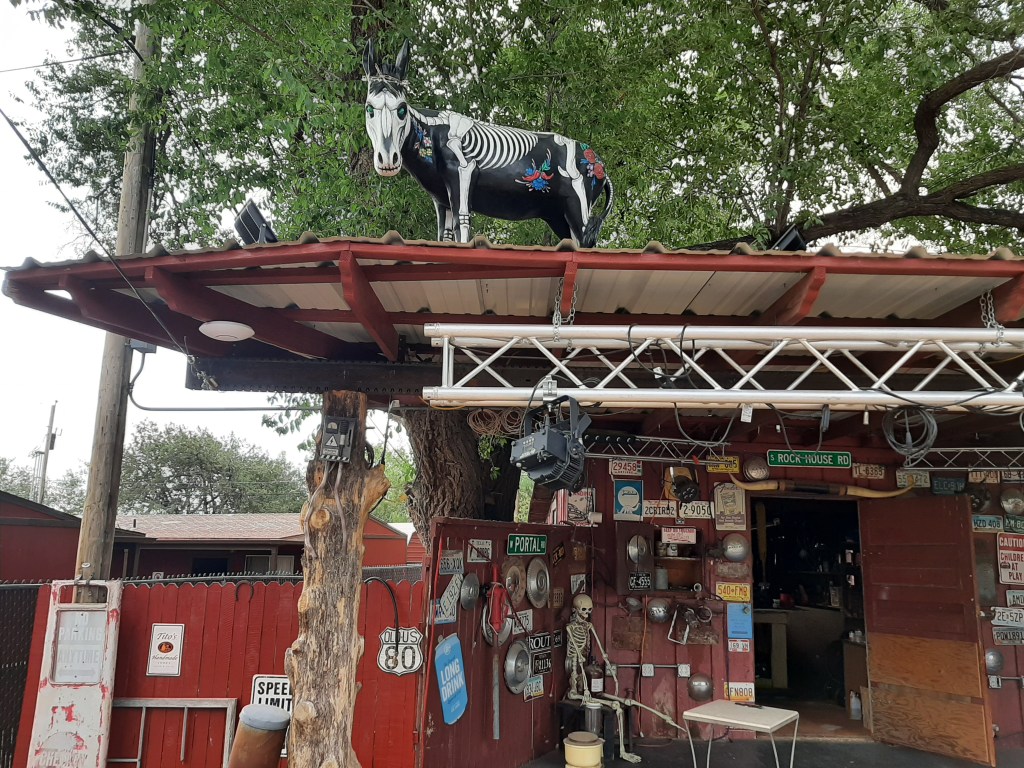
Pony rides. On the way to Slaughter Ranch.
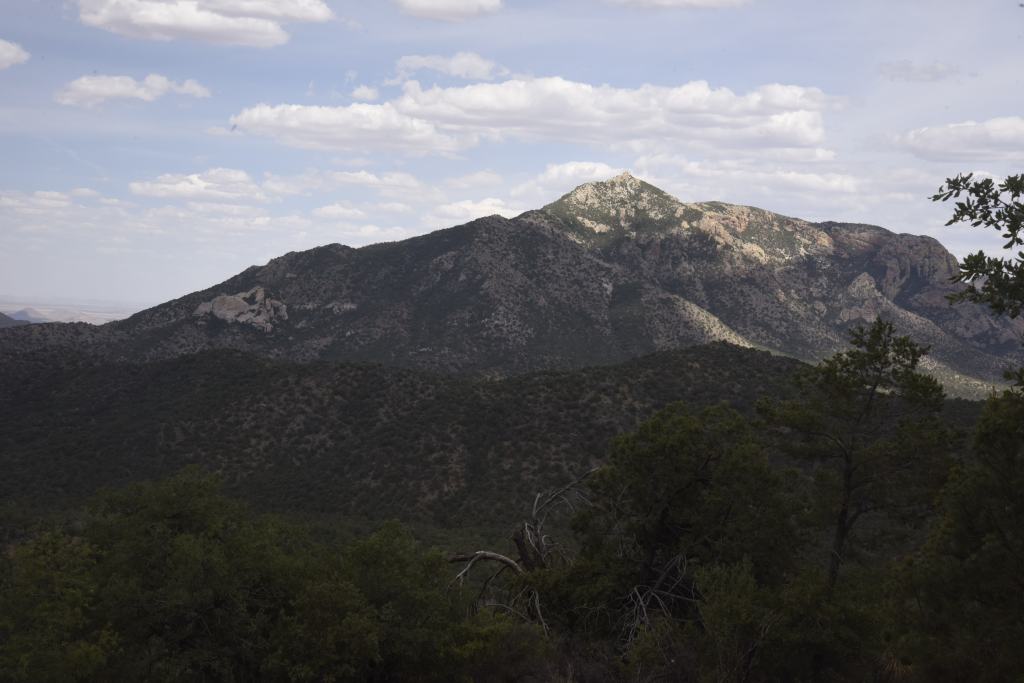
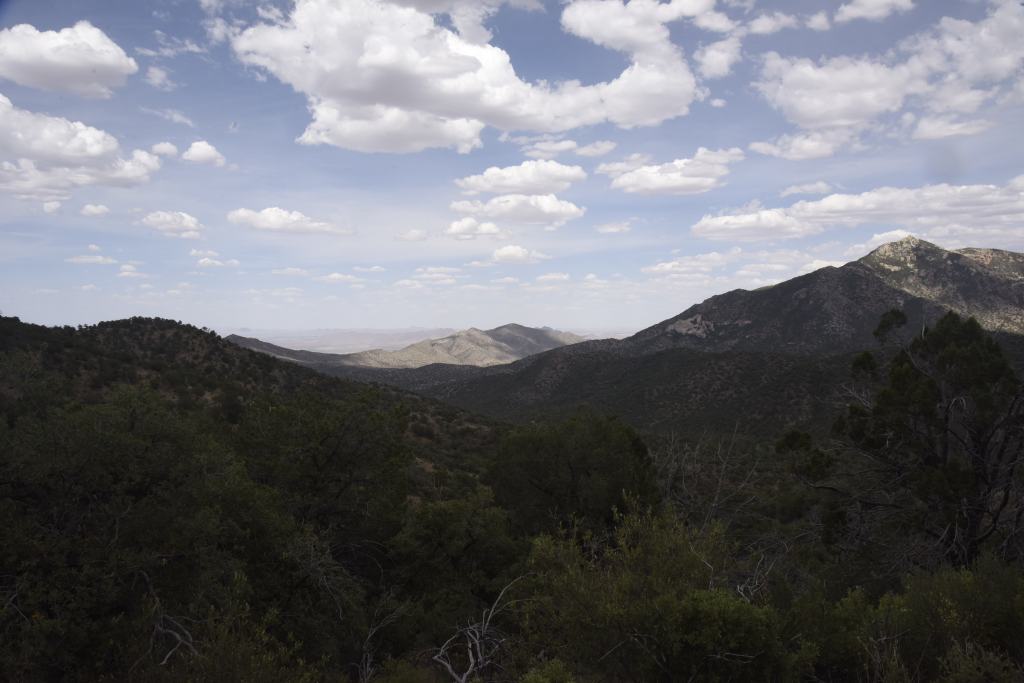
Chiricahua Mountains
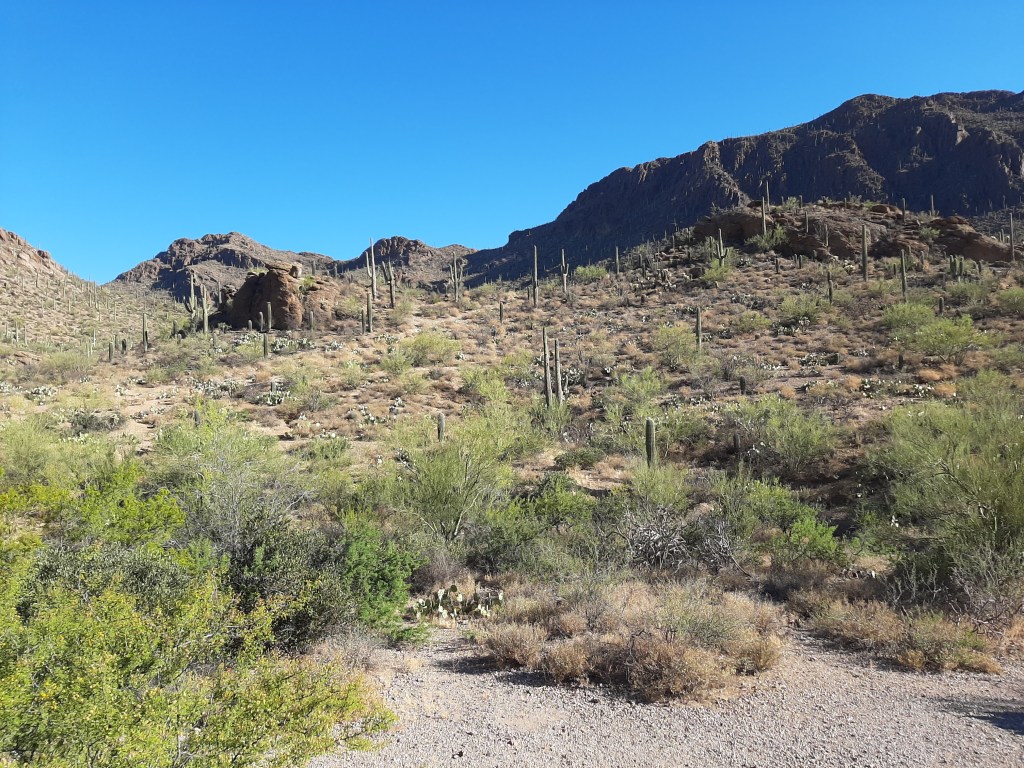
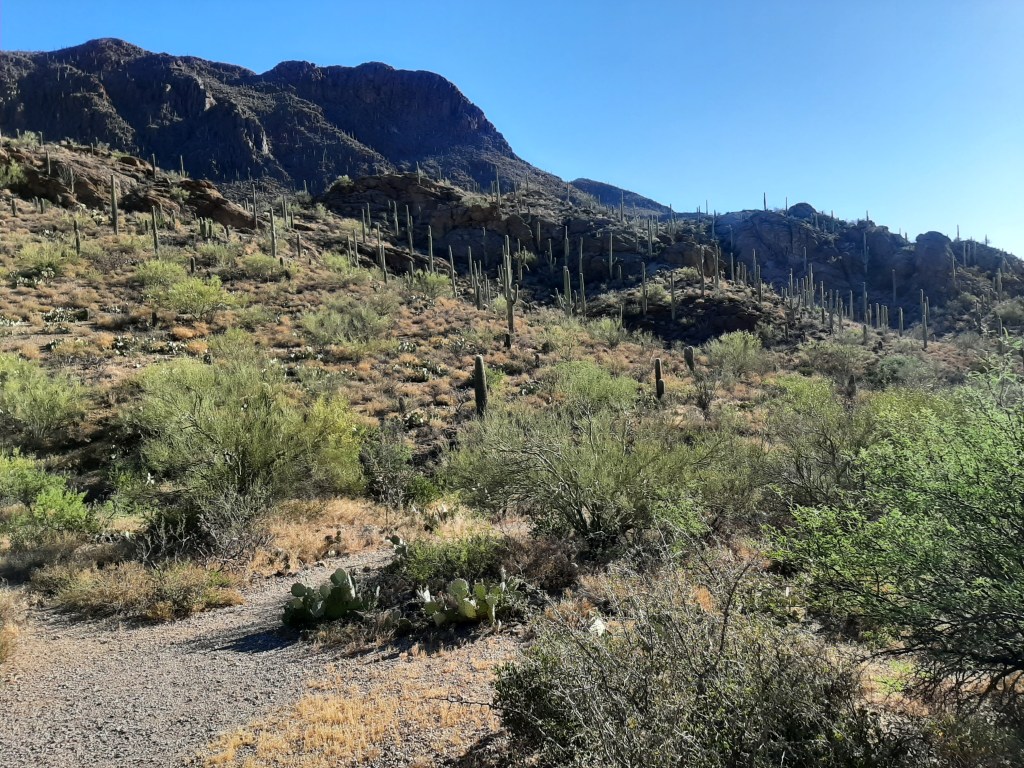
Desert around Tucson
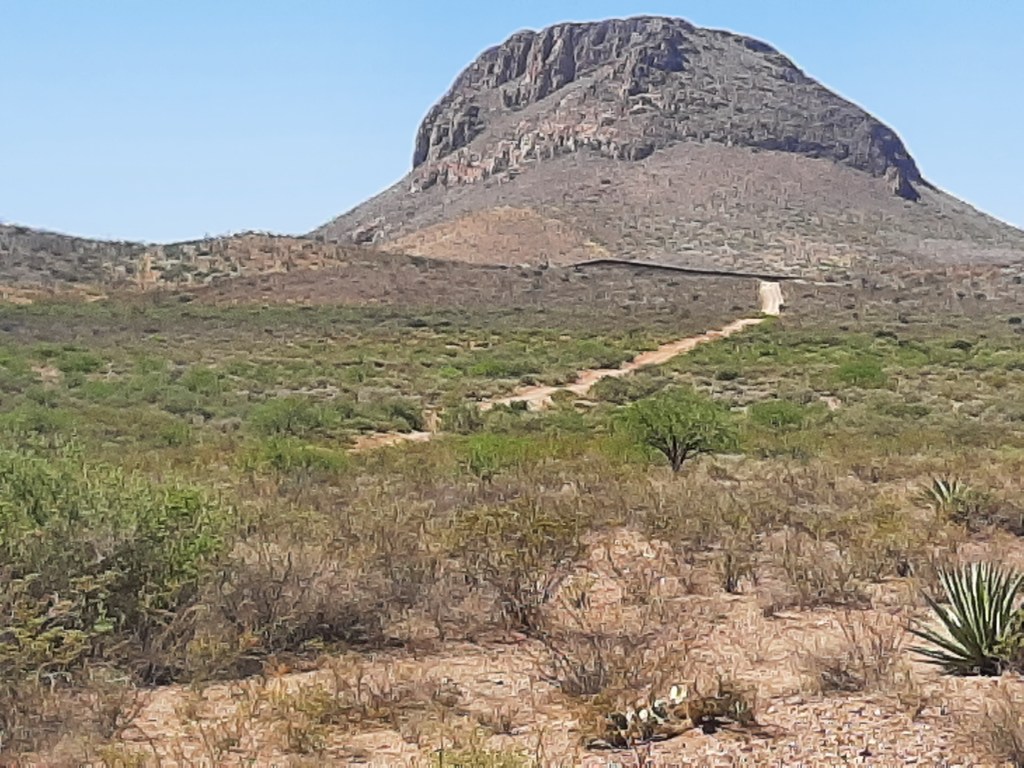
Somewhere out in the desert.
A cactus I liked.
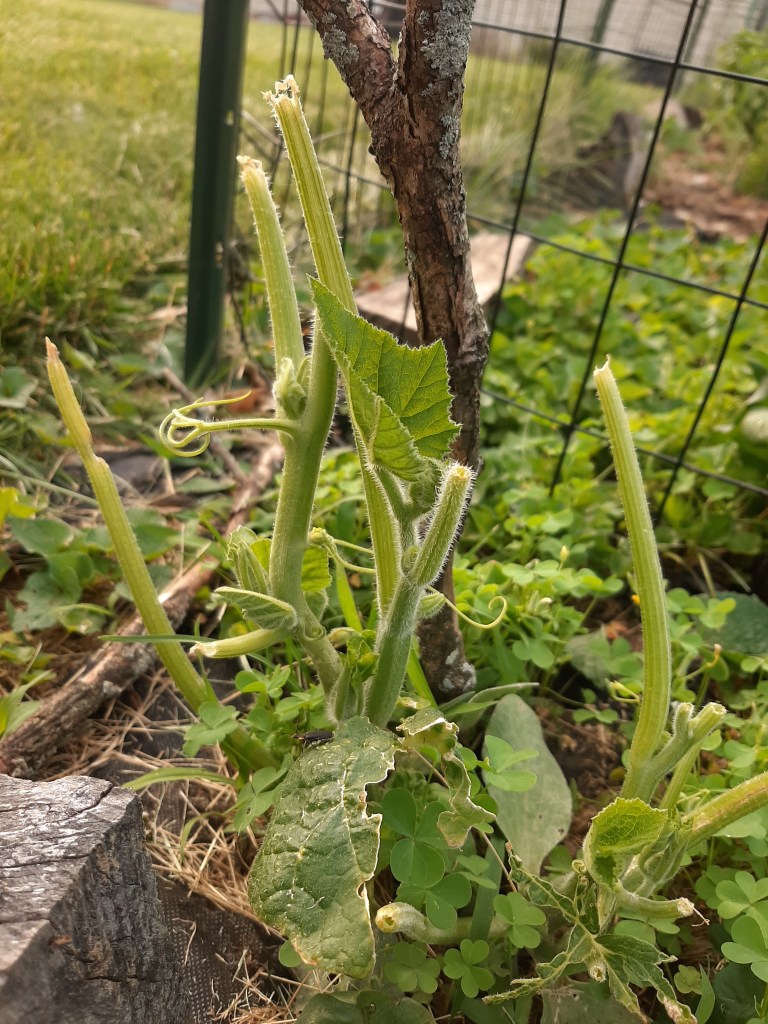
While we were gone the groundhogs residing under my workshop dined quite well. The hostas by my workshop were nibbled into leafless stalks. Some garden plants were munched into non-existence. There was a hole where a pumpkin plant once resided. I sprayed the plants with a varmint repellant before we left. Apparently it served as Cajun seasoning to the groundhogs. Might be time to get serious on these guys.
Munched on pumpkin plants.
Hosta stalks.
In the weird wonders of wildlife category – a brown booby has shown up in a southern Indiana State Park pond. Brown boobies are tropical seabirds. Not sure how the pond at Spring Mill State Park could be mistaken for the Atlantic Ocean but I guess anything is possible. It seems quite happy there too. No sharks, salt free, and lots of bluegills easy to catch. Maybe that’s better than fighting tropical storms. Needless to say, birders and non-birders alike were flocking to see it.
We are now back in West Lafayette after a trip to Delaware. Good birding, some hiking and kayaking, a little photography and some great eating. This trip was mostly play time. Usually I program in maintenance time on the trailer. Not this trip. It was pretty much just go go go.
While in Delaware a friend from Bloomington visited for a couple days. Always interesting to see a place you’re familiar with through new eyes. When she left we dropped her off at Baltimore-Washington International Airport on our way back to Indiana. Which means I hauled a ten-foot trailer loaded with kayaks and bicycles through the BWI departure area. Not recommended. Almost as much fun as driving it through the Philadelphia city center.
Coastal Delaware is becoming highly developed. My family has had an association with the Lewes-Rehoboth area for about 50 years and the area has changed significantly in that time. At one time Lewes dried up in the winter. Think tumbleweeds blowing down the street. Now Lewes has a high end tequila bar the town is open all year. While Lewes and Rehoboth themselves aren’t growing, the immediate surrounding area has become a poster child for poor planning. I hate the over-development, but there is still the Delaware Bay, the Atlantic Ocean and miles and miles of coastline, coastal estuaries, and salt marshes. Protected by National Wildlife Refuges, State parks, and other protected areas that keep bringing us back.
Salt marshes off Oyster Rocks Road, near Lewes, DE
We planned this trip to coincide with the Atlantic Seaboard northbound shorebird migration. Shorebirds migrate up from places south of the equator to arctic nesting areas. Delaware Bay is a key staging area for the migration. The shorebirds time their migration to coincide with the horseshoe crabs coming ashore to lay their eggs. The peak is around the full moon in May. This perfect timing has been happening for many millennia. Shorebird numbers have been declining the past couple decades but on the order of a million shorebirds will lay over in the Delaware Bay during the migration. All hoping to get enough energy from horseshoe crab eggs to make it to the arctic and reproduce. One can only imagine the numbers before human impacts caused their numbers to drop.
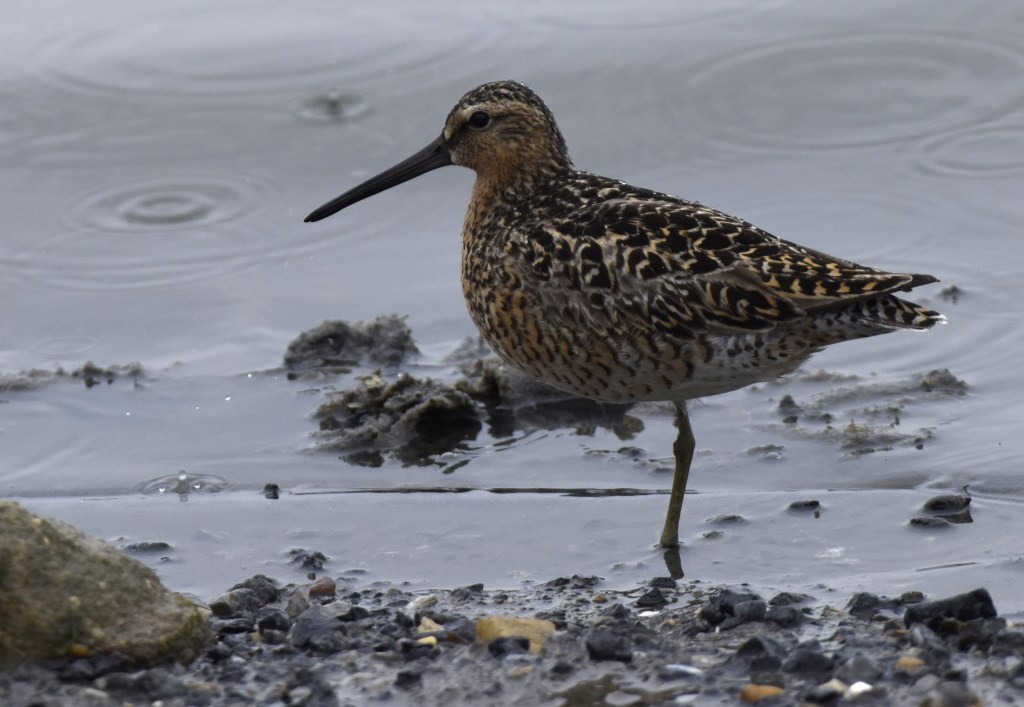
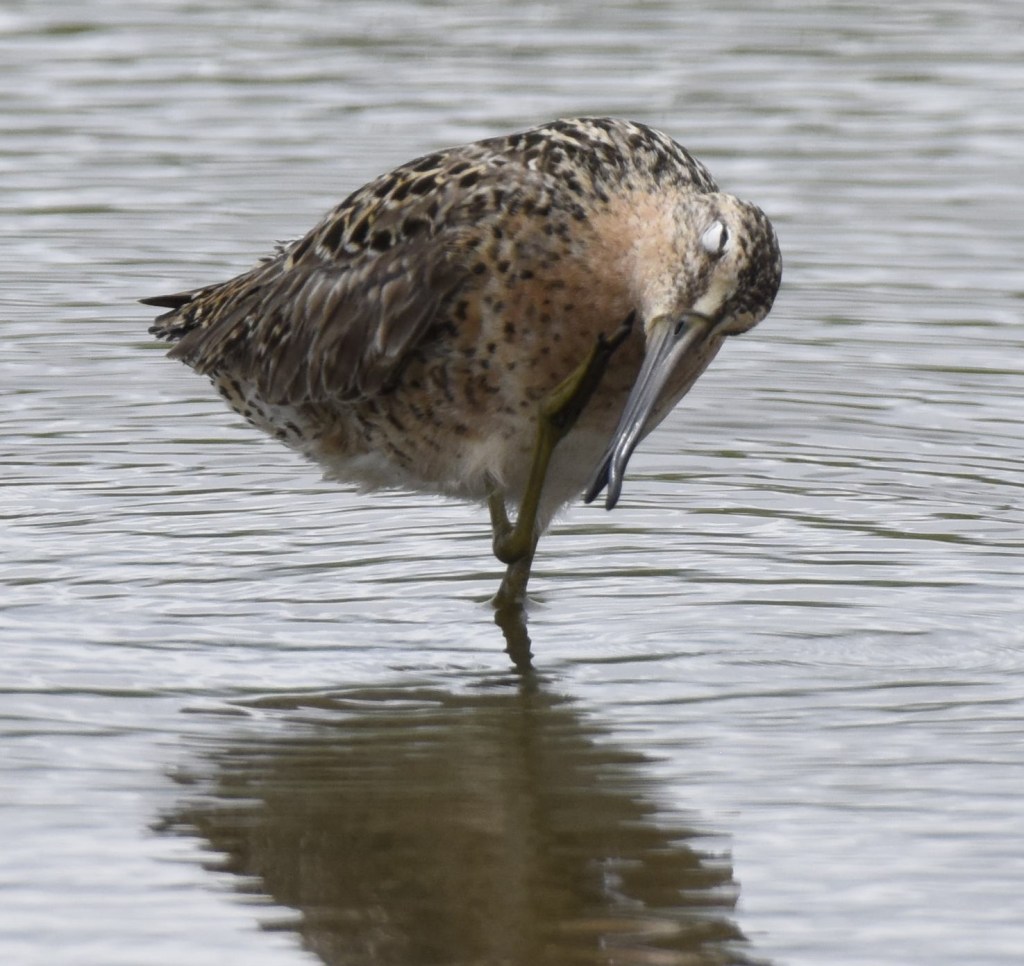
Short-billed dowitcher at Mispillion River Inlet and Oyster Rocks Road.
Ruddy turnstones at Mispillion River Inlet.
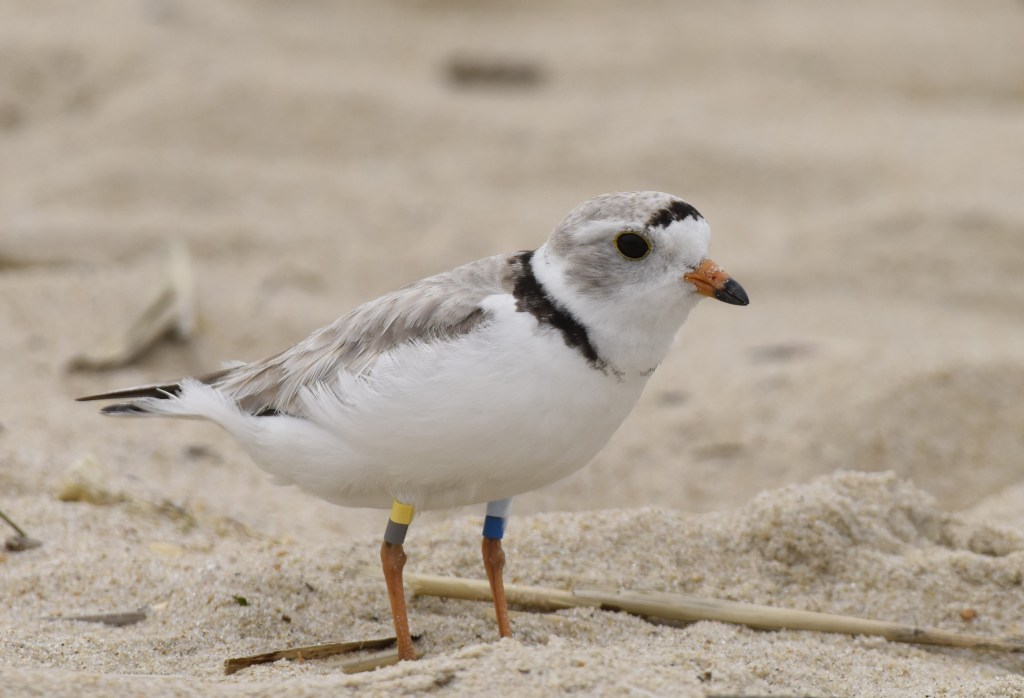
Piping plover (Federally Endangered), at Cape Henlopen State Park.
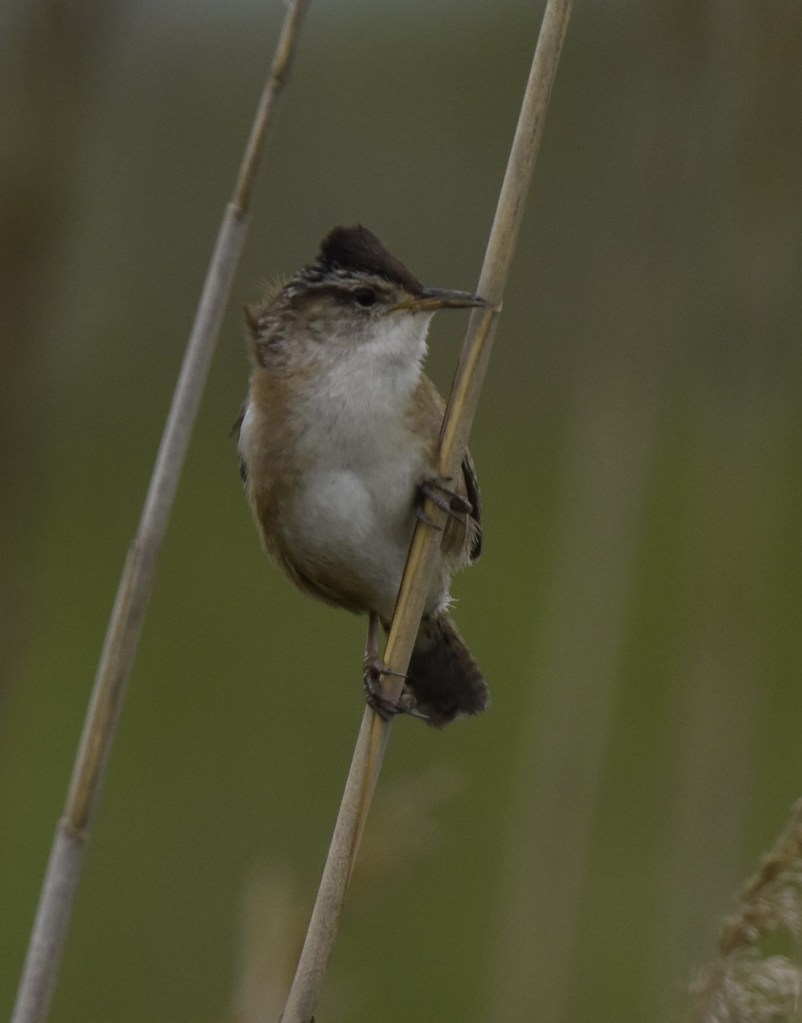
A wind-blown marsh wren, at Bombay Hook National Wildlife Refuge.
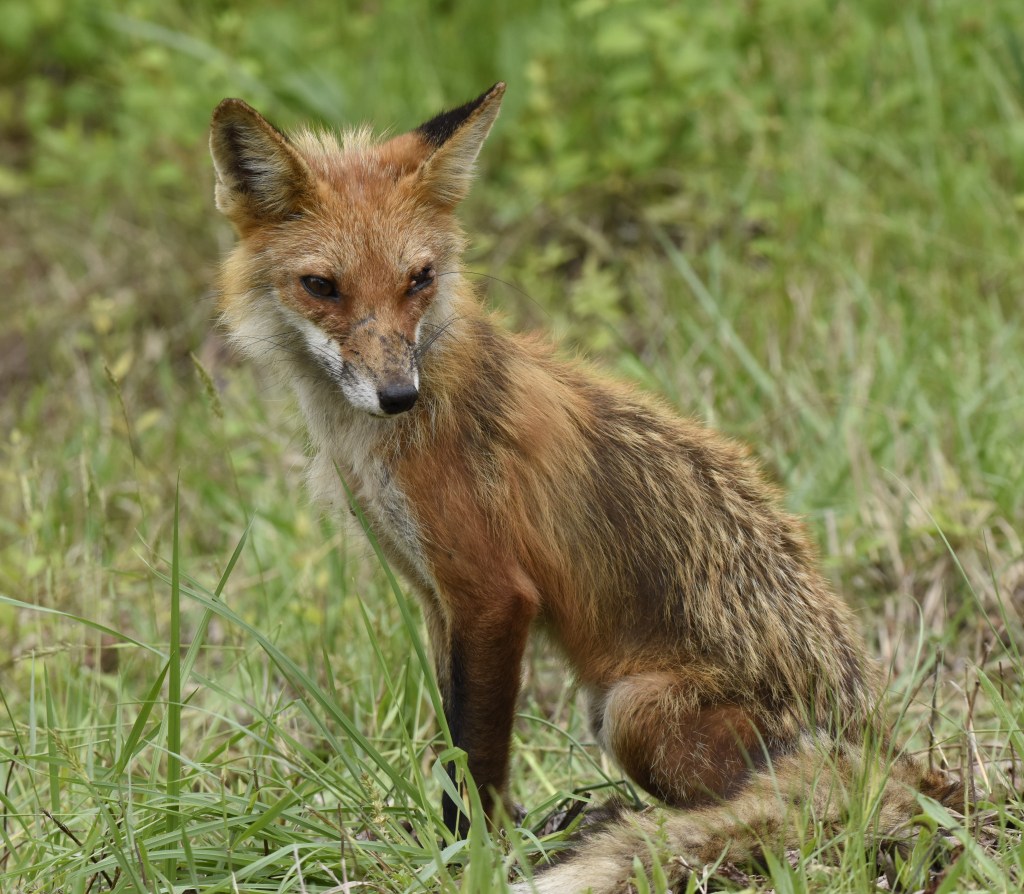
A non-bird red fox at Bombay Hook National Wildlife Refuge.
We did some hiking and kayaking too. We kayaked two places we were familiar with, Fleetwood Pond in Prime Hook National Wildlife Refuge and the Trapp Pond State Park Cypress Swamp Trail. Both places are within an easy drive for a couple million people, but we had them to ourselves.
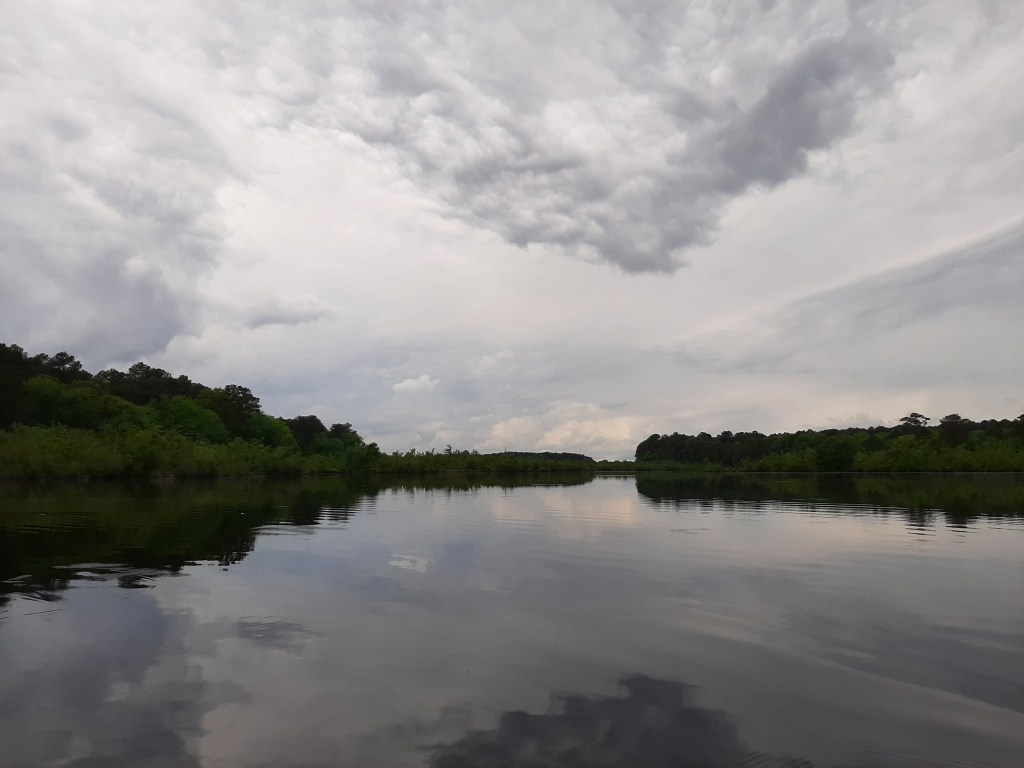
Outrunning a thunderstorm at Fleetwood Pond.
A very friendly black racer (we believe) at Fleetwood Pond.
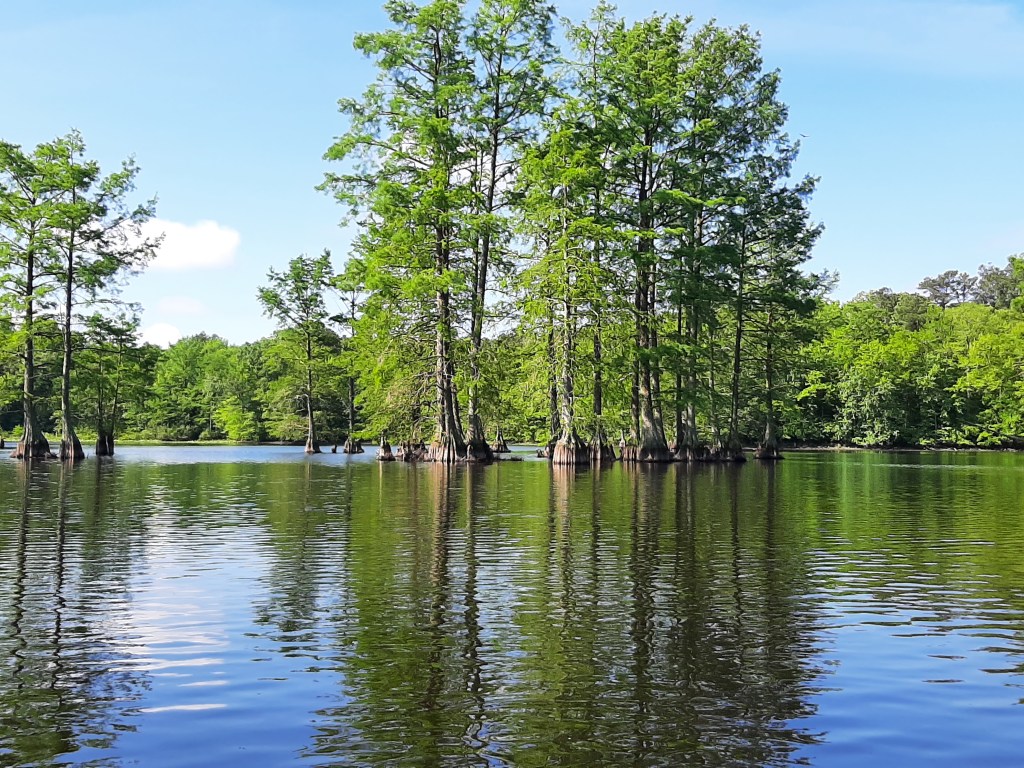
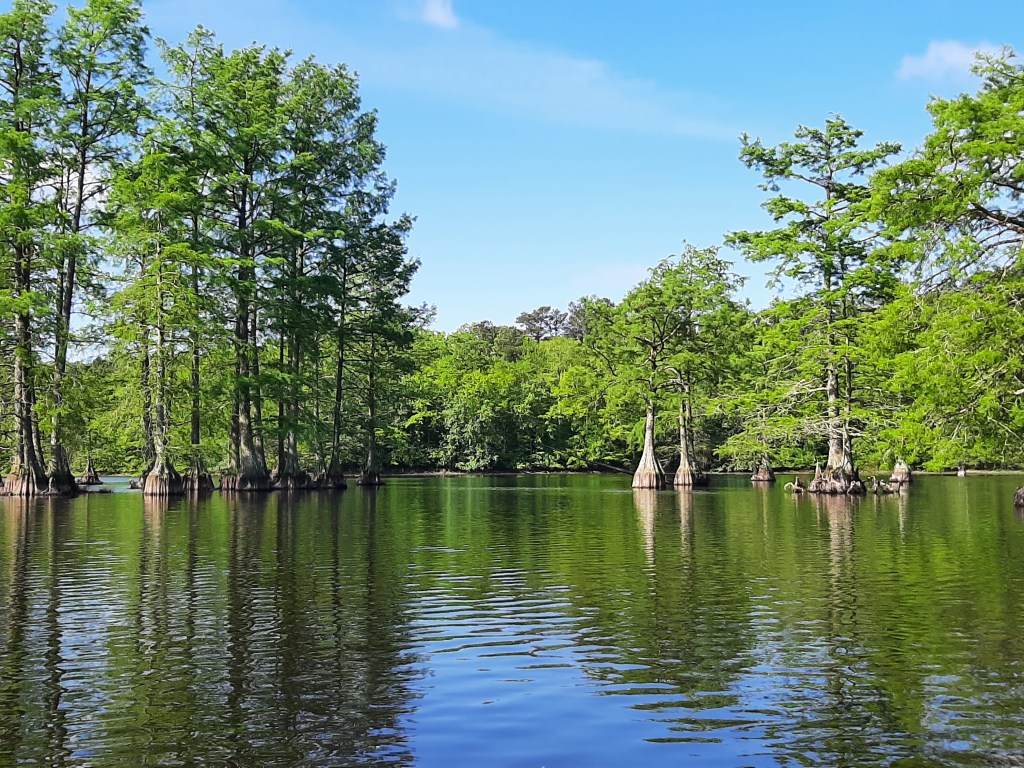
Kayaking the cypress swamp at Trapp Pond State Park. I believe this is the northernmost cypress swamp in North America.
The skeletal remains of a racoon found on a trail in Cape Henlopen State Park. We don’t know what ate it, we just know we don’t want to meet it on the trail.
And we did some great eating. With today’s interstates and refrigerated trucks I’m sure one can get crabs, clams, and oysters reasonably fresh and safe to eat in the Midwest. But I just can’t bring myself to accept that. If you want good shellfish you need to be close to the source. Indiana is not. Even with climate change and ocean rise, Indiana isn’t going to be coastal for a long, long time. Indiana can give you great breaded pork tenderloin sandwiches.They win that one. But sorry, no, I’m not buying oysters and clams in Indiana.
Fried oysters at The Surfing Crab restaurant. Along with hush puppies and cheesy grits. Kind of a corn squared thing. The restaurant is a small cinder-block building with plain painted walls where you will find the best crabs and fried oysters in Delaware. About five minutes from our trailer.
Slo & Lo BBQ. A weekend only pop-up barbecue place in Lewes. A couple of old retired guys with nothing to do on their weekends except make some of the best barbecue you will eat. About five minutes from our trailer.
It always takes a couple days after a trip to get things back to a semblance of normal. Laundry, back mail, restocking the refrigerator, processing photos, writing blogs. We came home to a yard that looked something like an alfalfa crop.
Time to harvest the crops.
And, it looks like the groundhog war has heated up. A few weeks ago Fat Boy, the resident groundhog, emerged from hibernation under my shop. He has been hanging around for a couple weeks, finding something to eat in the yard or woods behind us. Thus far being pretty benign. During the winter I closed off all the entrances going under my shop except his main one. He seemed fine with that. We went a couple weeks with no new construction going on. I thought maybe we had come to some kind of agreement. He can live peacefully under the shop as long as the tomatoes go unmolested and no new tunnels appear. I should have known better. We were greeted with three young groundhogs running around. And, either Fat Boy and his progeny, or their rabbit allies, have opened up the tunnels I closed off. This of course means war.
I have been horribly remiss in my writing. I can come up with lots of excuses, some of them with a touch of validity.
I was wicked sick for a couple weeks. I spent about a week when all I wanted to do was sleep. I was really happy just laying in bed. To the point where I was starting to worry about bed sores. That was followed by another week just feeling bad. I went to a prompt care center where they did a number of tests. I tested negative for COVID, flu, and some other disease. So they shook some bones out of a cup and told me I had “some kind of respiratory viral infection and I should just go home and rest”. I was more than happy to comply.
Travel has figured into my writing delay too. We did a Delaware trip in early March for some birding and just being by the ocean. After driving back here to Indiana, I took a day off, then did a four day trip to Omaha and back. After which I got sick. See above.
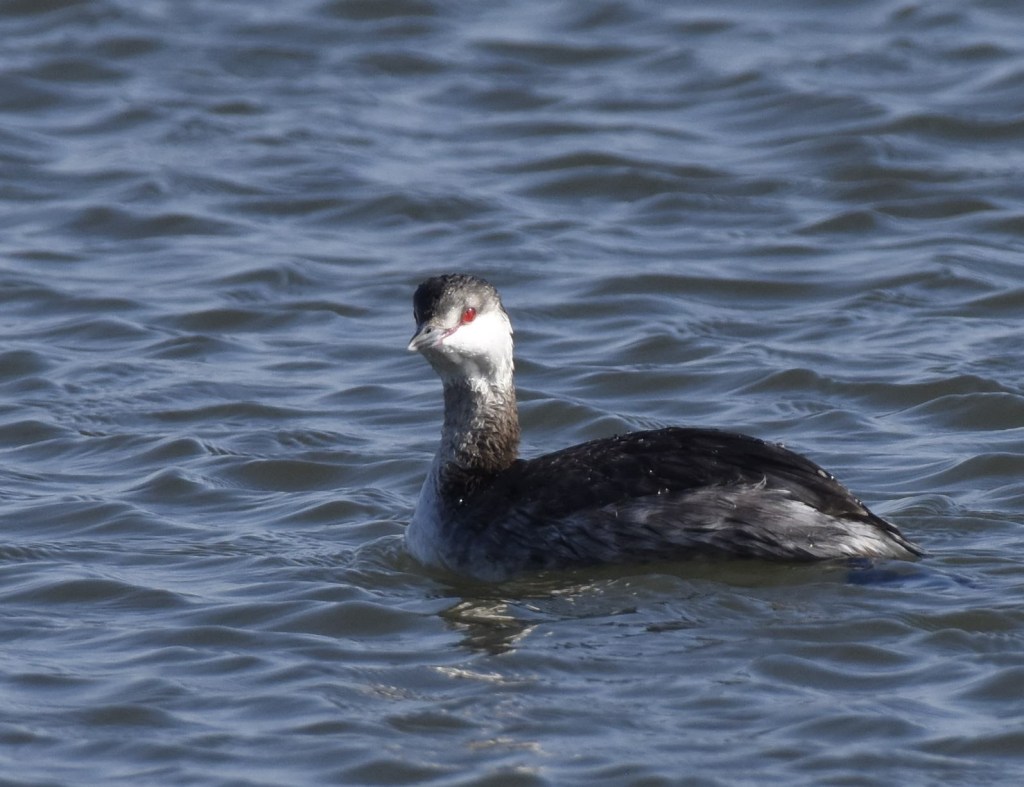
Winter plumage red-necked grebe. The only bird in Delaware that let me get close enough to photograph. And he was not happy at that.
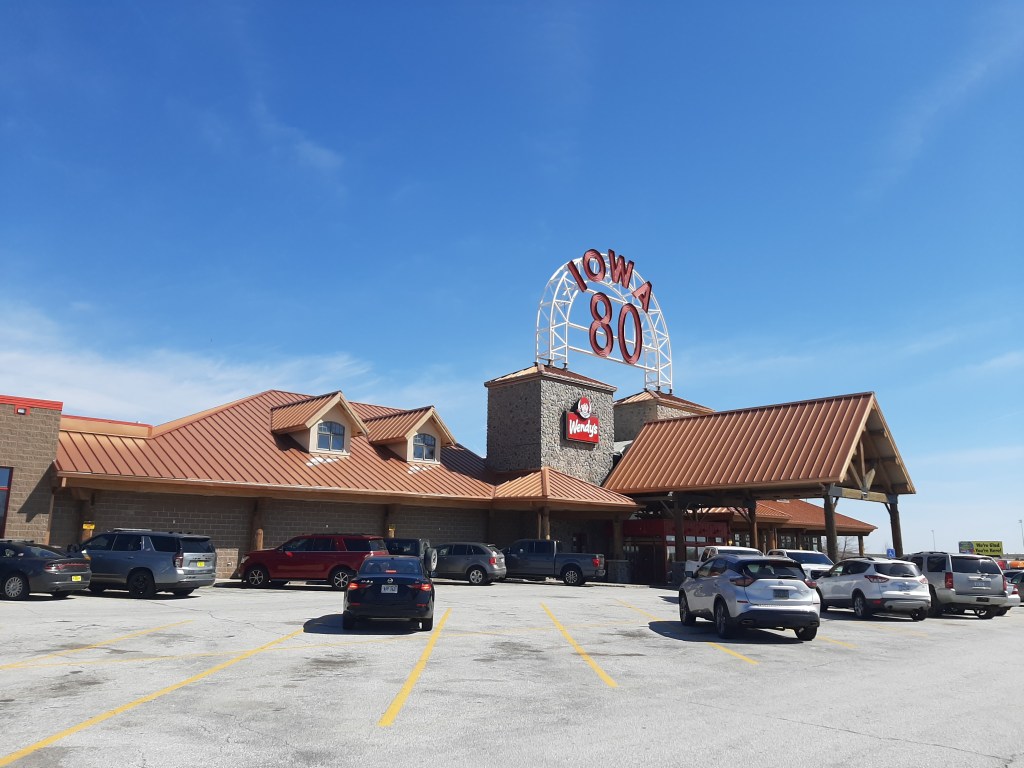
The Iowa I-80 truck stop/tourist trap between home and Omaha. One of the more interesting truck stops I’ve ever seen. They have a barber and a dentist on hand. Hopefully not both the same person. No appointments needed.
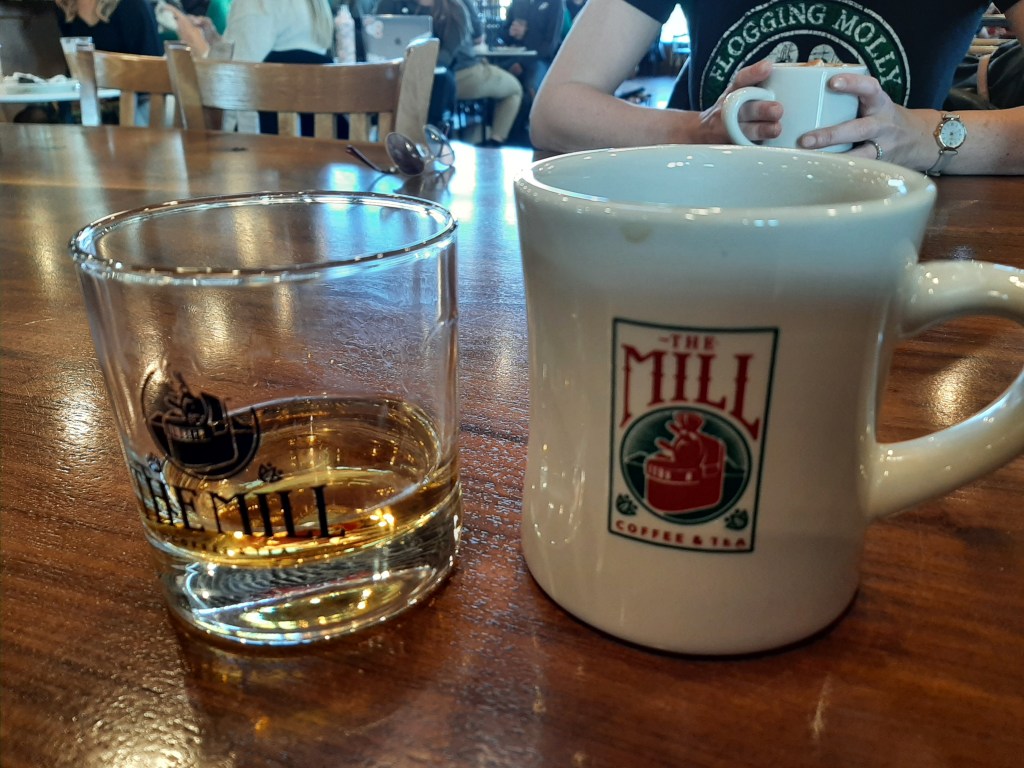
The Mill coffee shop in Omaha. Great coffee shop, and they have a cocktail bar. Allowing one to get their coffee and Red Breast whiskey on St. Patrick’s day.
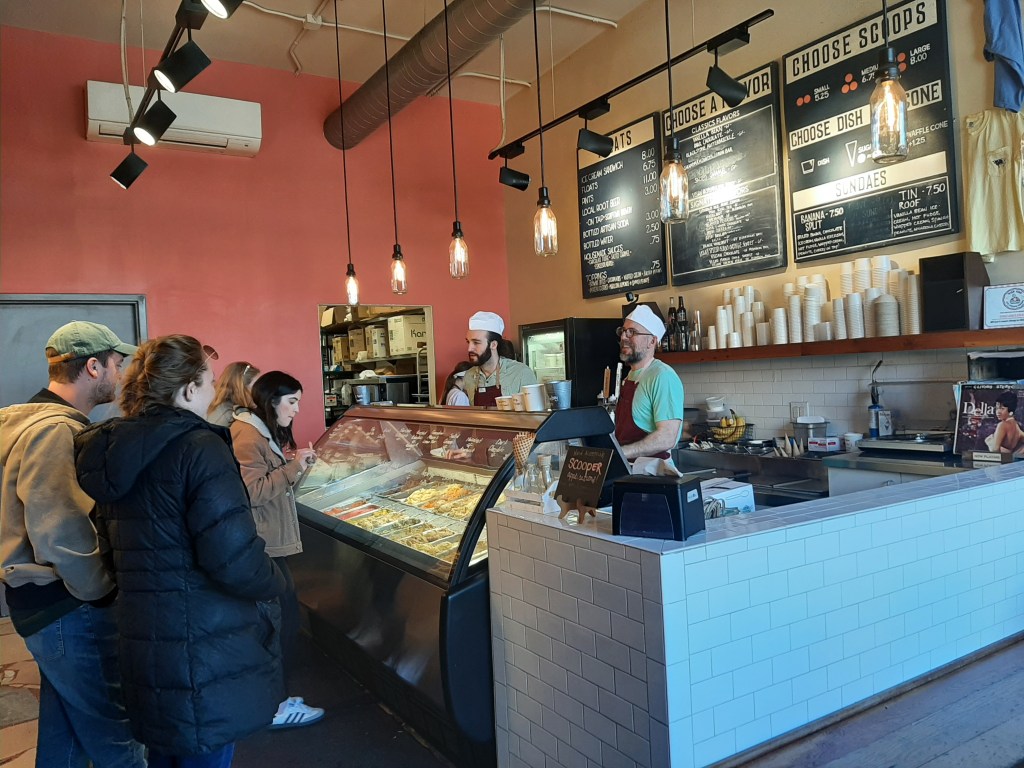
Proving that size isn’t everything there is Coneflower Creamery in Omaha. One of the top 10 ice cream places in the United States.
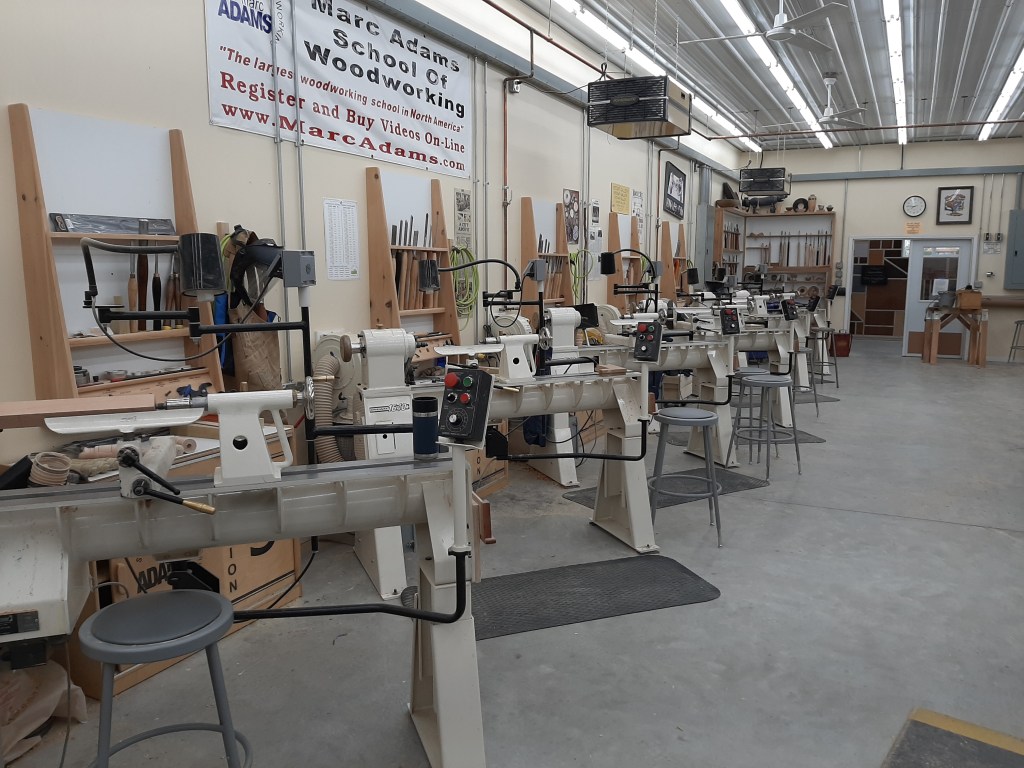
I spent another week learning woodturning on a lathe at the Marc Adams School of Woodworking in Franklin Indiana. That was my birthday present from Lise. The class was intense. Five days, at least eight hours each, at the lathe. Almost like working for a living but enjoyable.
A black walnut bowl I was in the process of turning.
The Marc Adams School is well known in woodworking circles.They teach all kinds of “time honored crafts” but their main focus is woodworking. It’s a crazy complex of well stocked buildings that have been added on to as the school expands. The lathe room has over 20 lathes costing around $5,000 each. The school brings in instructors from all over the world.On display is a piece turned by an Israeli lathe instructor. The twin piece is on display in the Louvre.
Woodworker heaven.
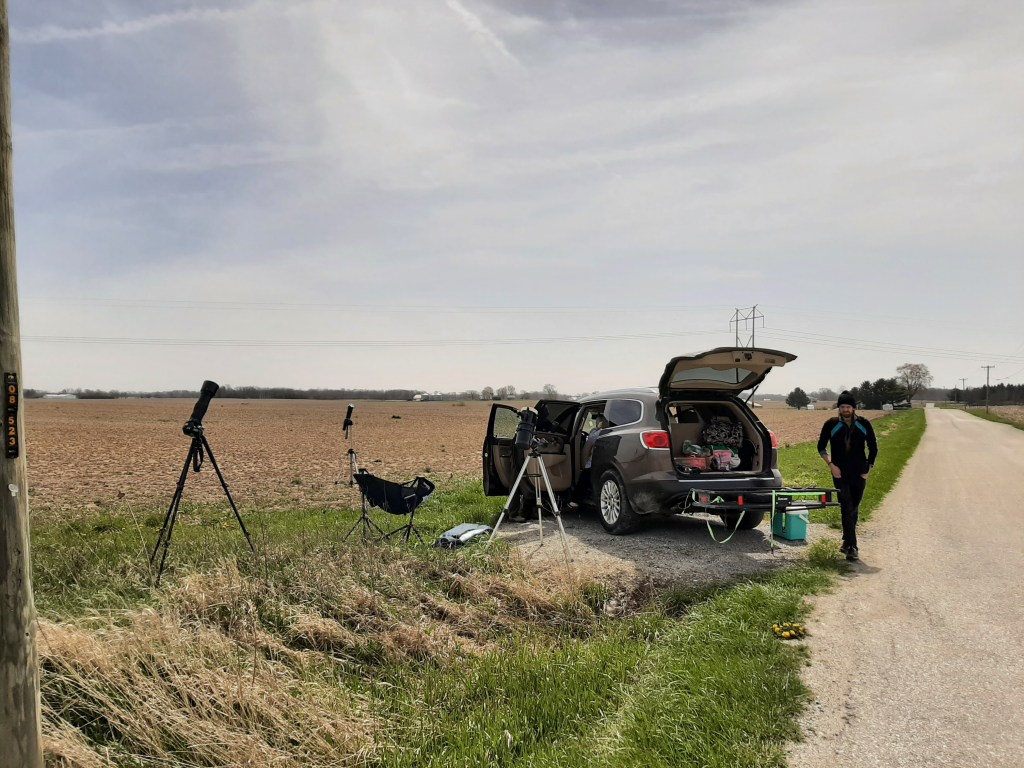
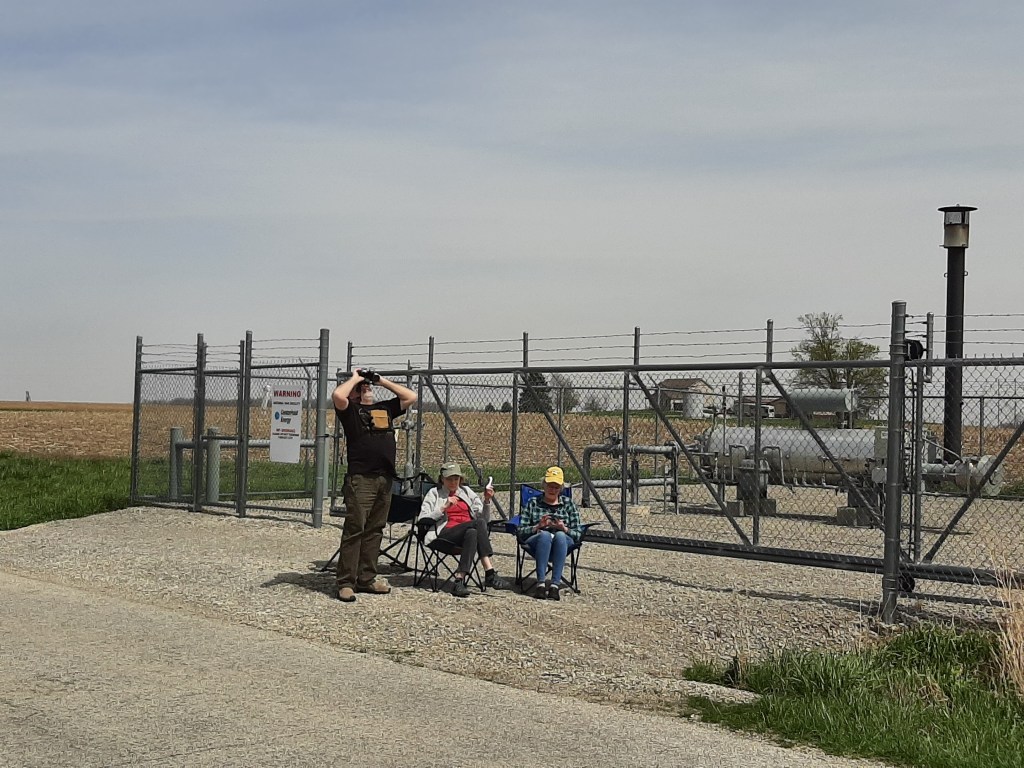
Oh, and there’s the eclipse. My brother Rich and Sister-in-law Amy came down from Mllwaukee, picking up my nephew Zack in Chicago on the way. We went south and east of Crawfordsville to avoid crowds. About a 45 minute drive. We were all by ourselves, out on country roads. There was enough space out there to accommodate half of Chicago but only one other car was near us. Consider that in the eclipse path every State Park campground and Inn was booked solid for over two years. They had campers from 45 U.S. States, and several Canadian Provinces camping there. People from multiple countries came to the State Parks for the sole purpose of viewing the eclipse. More than 50,000 people jammed into the Indianapolis Motor Speedway to view it.
I much preferred our viewing experience. Just a small group of family members. No crowds, no fireworks, no bands, just us and an incredibly moving celestial event. The periodicity of eclipses was known by the ancient Babalonians and Assayrians. We now know what causes an eclipse, know when they will occur, know the eclipse path, and know the moment when totality occurs. Even with this knowledge there was something indescribable about it. I can understand how eclipses would disturb ancient cultures, turn the tide of battles, and generally scare the bejesus out of someone.
Our viewing experience.
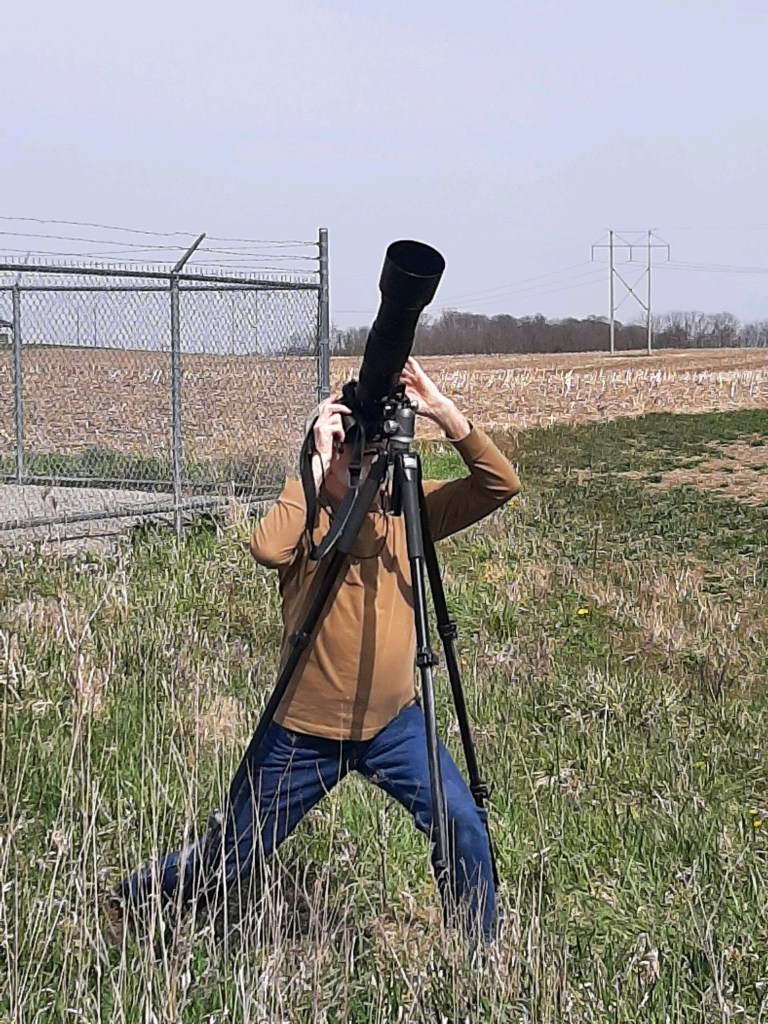
Eclipse yoga. Me trying to take eclipse pictures.
Like, totality man.
I have some other excuses for not writing; time in the shop, family commitments, keeping up a house, yadda, yadda, yadda,….. But, the real reason hit me while in the woodworking class. The instructor was talking about other instructors and each one’s unique take on woodturning. He then demonstrated how to make lidded boxes on the lathe. Showing us examples of his work he said, “Doing boxes is where I finally got my voice in wood turning”. It struck me that that’s the reason I haven’t been writing. I lost my voice. I didn’t have anything unique to say any more.
I started this blog as a way to document our mini big birding year. I was trying to see 350 bird species in a single year. Which I managed to do with lots of help. Along the way the blog has evolved into a documentation of other life experiences for Lise and I. Currently, we’re at a place in our lives where we aren’t getting many unique experiences. Lately it seems a big day for us is getting Wordle in three, Quordle in six, and Connections in four. Starting the day with those scores is enough to send me out to buy lottery tickets. That my friends is a pretty damn low bar to jump over. I’m not unhappy where we’re at, in terms of location or lifestyle. We find ways to amuse ourselves. I’m just having problems finding something unique enough to say about our life right now.
And, there may be some relief in sight. Fat Boy, the furry tsunami of a groundhog has emerged from hibernation from beneath my workshop. Right now there are no signs of further tunneling. If the situation stays like that, fine, we’re in a truce. If not, war will resume and the battle will be joined.
Leap year is an attempt to align celestial time with human time. Most of the world uses the Gregorian Calendar which is based on celestial events. Like the time it takes the earth to orbit the sun and the time it takes for the moon to orbit the earth. There are other calendars out there and they too are based on celestial events. This is not a new concept. Even before writing, prehistoric peoples figured out that there was a cycle to the way the seasons occurred and it was related to the sun. Eventually, they erected monuments that helped them determine when they would be getting more or less sun and the seasons would change.
Fast forward to writing and number systems. Various cultures began to calculate the periodicity of the celestial events. Like the number of days occurring between the two equinoxes. This is important if you have festivals or religious events timed to coincide with celestial events. Like throwing a virgin in a volcano on the winter solstice to make sure the days keep getting longer.
Humans prefer predictable things. It’s a species trait. We don’t want to unnecessarily be throwing our virgins into volcanoes. The guys in charge of the virgin tossing want to know that the winter solstice is going to happen on the same day every year in our calendar system. But there is a fundamental problem. The basic unit of our calendars is the day. But, celestial events do not occur with whole units of our calendar units. For instance, our calendar is based on 365 days, but it takes 365.25 days for earth to circle the sun. So if we want the winter solstice to predictably fall on the same calendar day every year, say December 21, there’s a problem. Every few years the solstice will fall a day later on our calendar. Not much of a problem for a couple years, but a noticeable problem over decades. Especially when you toss the virgin in the volcano on December 21, but the days keep getting shorter, not longer. Real credibility issue.
To keep the human calendar in line with celestial events, in 45 BC, Julius Caesar decreed a day would be added to the calendar every four years. It works and isn’t really an issue unless you’re Frederic in the Pirates of Penzance and born on February 29. You only have a birthday every four years.
Other cultures using different calendars also add in days or months, whatever is appropriate for their system. Personally I think it’s only a matter of time before our culture makes Leap Year Day another Hallmark Holiday. Yet another reason for sappy cards and mega sales events.
Regardless of what the celestial calendar is up to right now, we can see changes toward spring. We have had some crazy warm days for February, followed by quick temperature drops to be expected February temperatures. Like 70F one day followed by 30F the next day. Summer bird species are starting to migrate back into the area. We have red-winged blackbirds and brown-headed cowbirds at our feeders. Flights of sandhill cranes have been migrating north. And, the Groundhog Wars may begin soon. The one under my workshop made a brief appearance and then quickly went back underground. Probably thought it was March 1 only to find out it’s February 29.
Ruby one of two screech owls regularly appearing at Celery Bog. The other is a gray phase screech owl named Grayson.
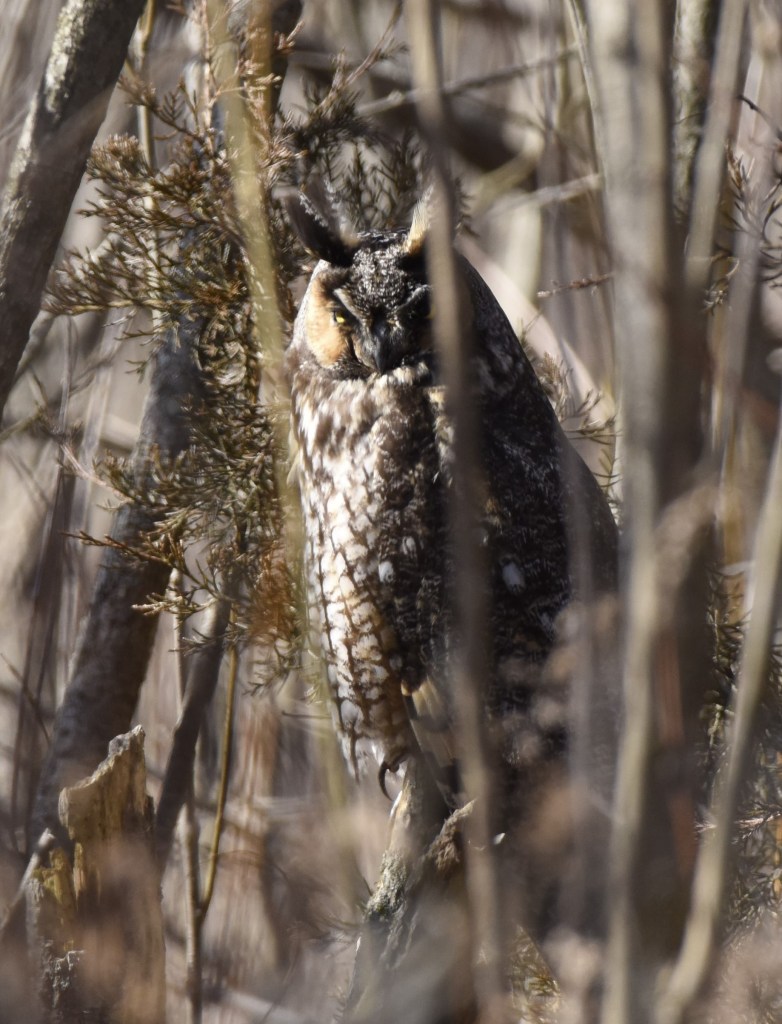
A long-eared owl hiding in the underbrush at Prophetstown State Park.
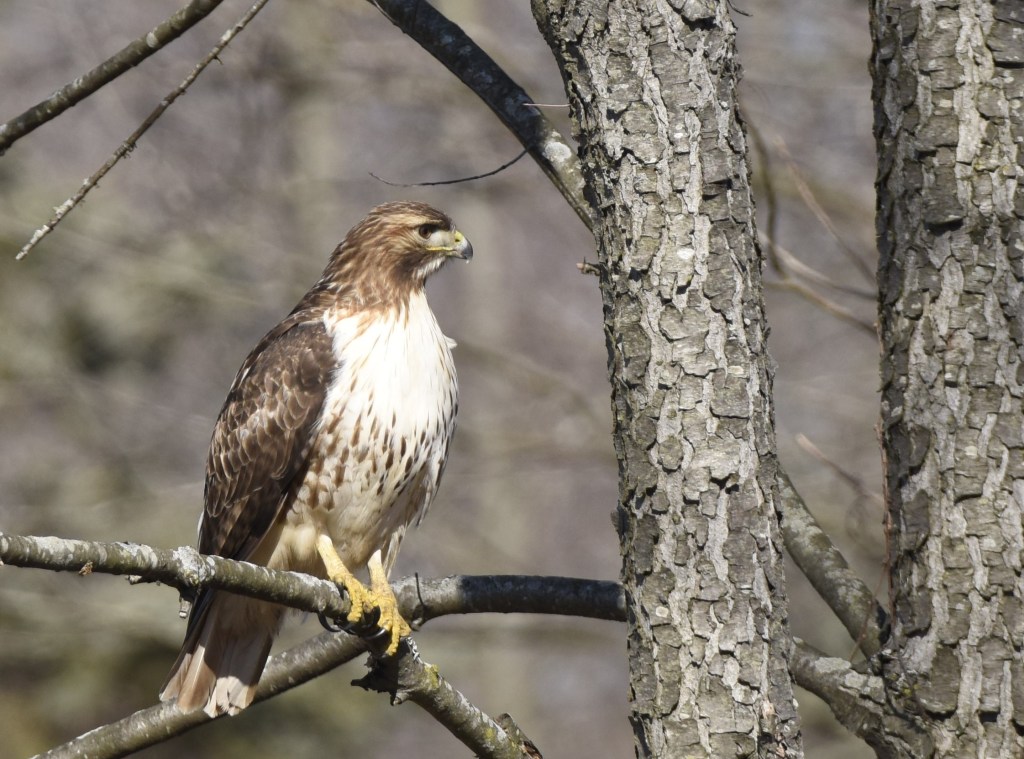
A red-tailed hawk, also at Prophetstown State Park.
After a dreary January things have picked up a bit in our lives. For starters, we seem to be past the sub-zero temperatures. We’ve had a few spring-like days. Kind of scary warm for February days. And, Punxsutawney Phil did not see his shadow on Groundhog’s Day, predicting only six more weeks of winter. How can you go wrong with a groundhog predicting the weather?
Last week we got to do our annual Eastern Upper Peninsula winter bird trip. The one we tried to do in mid-January, but the weather thwarted. We drove up to St. Ignace, Michigan, and our friend Joanna came over from Marquette to meet us.
This year was very different from the past 20 or so years we’ve done this trip. The weather was weirdly warm for this time of year. We have done this trip in single digit temperatures. There’s always a lot of snow cover. This year the temps were in the mid-thirties Fahrenheit and there was very little snow cover. We were driving on gravel roads that in the past were snow-packed. We didn’t know they were gravel until this year. On the up side, there were no snowmobiles. The warm temperatures produced fog and beautiful hoarfrost in the mornings. The fog made for low visibility and some tough birding.
Beyond those frost-covered, fog-shrouded, trees is miles of open space. Our visibility range was maybe 20 yards at best.
Overall the birding was so-so. This area is known for snowy owls in the winter. We ran into multiple group outings and numerous individuals, looking for winter birds and in particular snowy owls. One loop we drive typically produces over 20 owls. This year there was only one known snowy owl in the area. Many people were looking for that individual. We finally saw it, with help from someone who spotted it and waited by the road to point it out. Too far away for good pictures, but we got our snowy owl for the year.
The much sought for snowy owl. It looked better in the spotting scope.
We saw other winter species too, but we had to work for them. Overall the number of species and the number of individuals seemed to be low. Very possibly because the low snow cover didn’t concentrate the birds as in other years. And, even if we didn’t get any new species for the year, it would have been a great trip. Getting north of the Mackinac Bridge and spending time with a good friend helps rejuvenate the soul.









































































 Ed's and Lise's Biggish Years